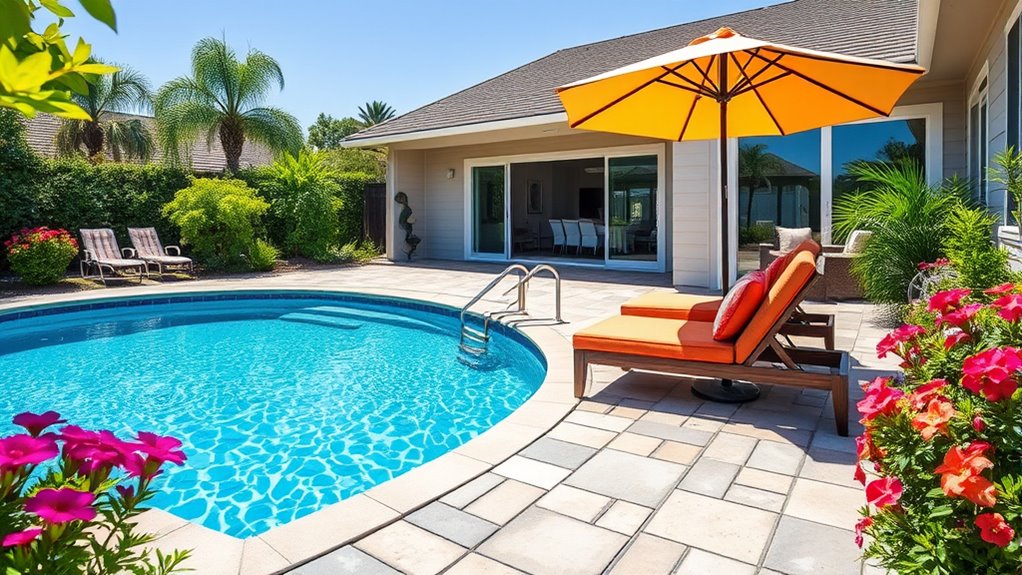

Adding a pool can boost your home’s value, but how much depends on factors like design, energy efficiency, and your neighborhood. In warm climates or areas that embrace outdoor living, pools tend to deliver a higher return. Well-designed, integrated pools that complement your landscaping can make your property more appealing to buyers. To maximize your investment, focus on quality and neighborhood trends—there’s more to weigh when you want the best outcome.
Key Takeaways
- Pools can boost home value especially in warm climates and outdoor-living-focused neighborhoods.
- Proper landscaping and aesthetic integration enhance pool appeal and potential ROI.
- Energy-efficient equipment and sustainable features reduce ongoing costs and increase attractiveness to buyers.
- Poorly designed or mismatched pools may negatively impact home value and curb appeal.
- Strategic planning aligning pool features with market preferences maximizes return on investment.
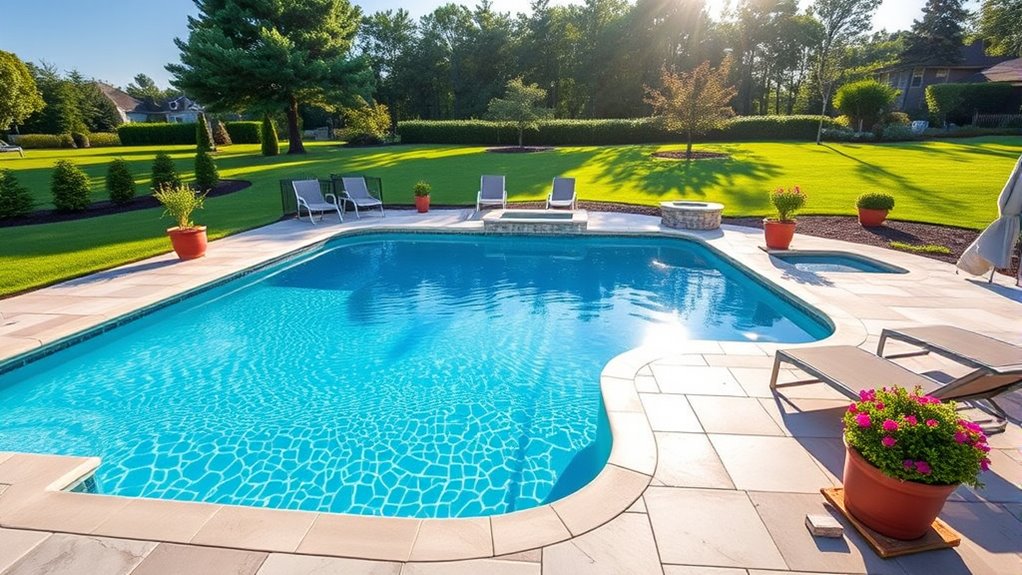
Have you ever wondered how to measure whether your investments are truly paying off? When it comes to home improvements, understanding the return on investment (ROI) can help you make smarter choices. Adding a pool might seem like a great way to boost your property’s appeal, but it’s essential to consider how it impacts your home’s overall value and the factors that influence that return. One aspect often overlooked is landscaping design. A well-thought-out landscaping design not only enhances curb appeal but also complements features like a pool, creating a cohesive outdoor space that potential buyers will appreciate. When your landscaping is attractive and functional, it can elevate the perceived value of your home, making the investment in a pool more worthwhile.
Thoughtful landscaping enhances curb appeal and increases your pool’s value in the eyes of potential buyers.
Energy efficiency is another critical factor that can considerably influence your ROI. Pools can be energy-intensive, with pumps, heaters, and lighting adding to your utility bills. However, modern energy-efficient equipment can reduce these costs substantially. Investing in solar pool heaters or energy-efficient pumps demonstrates a commitment to sustainability and can lower ongoing expenses, making the addition more financially justifiable. When you prioritize energy efficiency in your pool setup, it not only benefits the environment but also enhances your home’s overall appeal to eco-conscious buyers. These improvements can translate into a higher valuation, especially if your home already features energy-efficient appliances and good insulation.
Beyond these technical aspects, it’s important to consider the local market and your neighborhood’s characteristics. In some areas, a pool might be a must-have that increases home value, particularly in warm climates or communities where outdoor living is highly valued. Conversely, in regions with colder weather or where pools are less common, the investment might not pay off as expected. You should also think about how the pool fits into your landscaping design. A poorly integrated pool can seem like an afterthought, detracting from your home’s aesthetic and potentially decreasing its value. Conversely, a custom-designed pool that complements your landscaping can serve as a focal point, boosting your home’s desirability.
Ultimately, measuring ROI involves weighing costs against potential benefits. By carefully planning your landscaping design and investing in energy-efficient features, you improve your chances of recouping your investment when it’s time to sell. A thoughtfully integrated pool can indeed increase your home’s value, but only if it aligns with the overall style, energy efficiency, and market preferences of your area. When you approach this addition strategically, you’re more likely to enjoy both the benefits of your outdoor oasis and a higher resale value down the line.
Frequently Asked Questions
Do Pools Increase Home Value in All Neighborhoods?
Pools don’t automatically increase your home’s value in all neighborhoods. In luxury areas, a well-designed pool with upscale features and landscaping enhancements can boost appeal and value. However, in more modest neighborhoods, a pool might not add significant worth and could even be a liability. Consider your neighborhood’s standards and preferences before investing, ensuring your luxury features and landscaping enhancements align with local expectations to maximize your investment.
How Does Pool Size Affect ROI?
A larger pool can boost your ROI, but only if it’s well-integrated with landscaping and includes safety features. Bigger pools create inviting spaces, enhance visual appeal, and provide more recreation, increasing your home’s value. Small pools may offer charm but might not deliver the same impact. Focus on balancing size with thoughtful design, safety, and landscape harmony to maximize your investment and enjoyment.
Are There Specific Pool Designs That Add More Value?
Yes, certain pool designs with luxury features and premium pool accessories add more value to your home. Opt for elegant shapes, built-in spas, and customized lighting to attract buyers. Incorporating high-end finishes, waterfalls, or tanning ledges can elevate the pool’s appeal. These design choices not only enhance aesthetics but also signal quality and luxury, making your property more attractive and potentially increasing its market value.
How Does Climate Influence Pool ROI?
Don’t assume climate isn’t a factor; it directly impacts your pool’s ROI. In areas with favorable climates, pools offer better seasonal adaptability, encouraging year-round use, which boosts value. Conversely, seasonal variations in colder regions may reduce appeal and usage, limiting your investment’s return. You should consider local climate and how adaptable your pool design is to seasonal changes to maximize your home’s value.
What Maintenance Costs Impact Overall ROI?
Maintenance costs like landscaping upgrades and pool safety features substantially impact your overall ROI. Regular landscaping enhances curb appeal and keeps the area attractive, but it costs money. Pool safety features, such as fences and alarms, are essential for safety but add to expenses. Balancing these costs ensures your pool stays inviting and safe without eroding your investment, helping you maximize your home’s value over time.
Conclusion
A pool can boost your home’s value, enhance your outdoor space, and elevate your lifestyle. It’s an investment that offers enjoyment, appeal, and potential return. But remember, it’s about more than just the initial cost—it’s about the lasting impact, the memories made, and the future comfort you create. So, weigh the benefits, consider your needs, and decide if a pool will bring you happiness, value, and a true return on your investment.