
TL;DR

Get pool and patio gear delivered free with Prime
- Fast, free delivery on millions of items
- Prime Video, Amazon Music and more included
- Member-only deals all year
A Homes & Gardens report recommends shutting down and draining outdoor drip irrigation before the first hard frost to reduce the risk of freeze damage. Its five steps cover shutting off water, draining lines, storing the timer and removable parts, and protecting exposed valves and backflow equipment.
A Homes & Gardens report has outlined five steps for winterizing outdoor drip irrigation, advising homeowners to shut off and drain the system before the first hard frost. The guidance, based on comments from irrigation specialists Heather Todd and Justin Wilson, is intended to reduce the risk that freezing water will damage lines, valves, or backflow equipment.
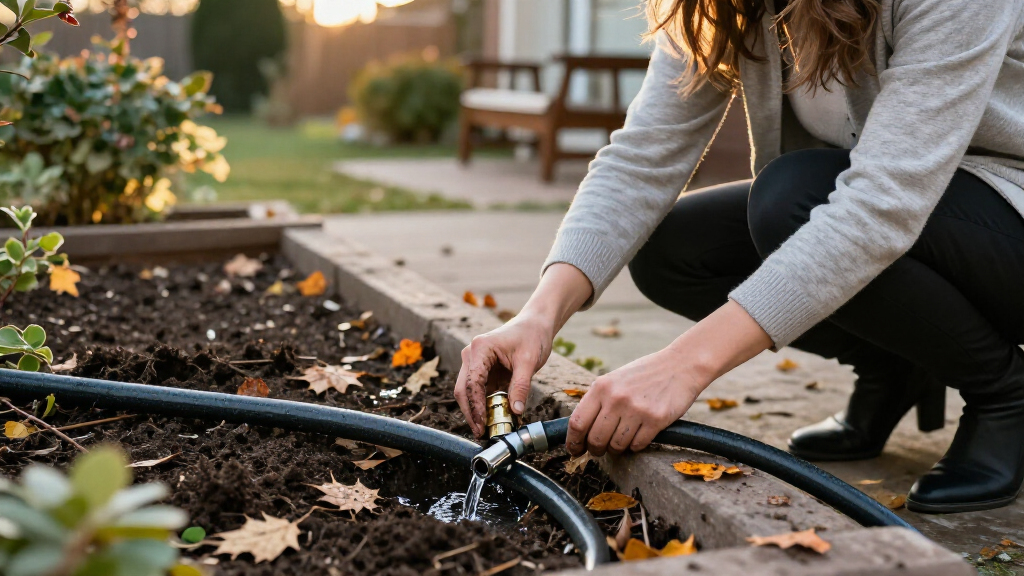
The first steps are to turn off the water supply at the system’s source, tap, or shut-off valve, then remove water from the lines. The report advises taking off end caps or plugs and raising sections of tubing so water can drain by gravity. It says professional winterization services can use pressurized air to clear lines, but cautions that improper use can damage pipes.
Next, disconnect any irrigation timer, remove its batteries, and store it in a dry, protected place. Drain and insulate exposed backflow preventers and valves; where the setup permits, the report says a backflow component may instead be removed and stored somewhere warm. Foam pipe insulation or insulating tape are among the materials it mentions for protecting exposed equipment.
The fifth step is to check and store removable parts, including tubing, drippers, control valves, and fittings. The report recommends checking for cracks or other damage and keeping components in a dry, frost-free place such as a shed or garage. Labeling storage boxes can make parts easier to locate when the system is put back into use.
How Freezing Can Damage Irrigation
Water expands as it freezes, and water left inside irrigation lines or equipment can crack pipes or damage valves and backflow assemblies, according to Todd, brand president of Conserva Irrigation. Damage to exposed components can also lead to leaks. The report says a burst pipe or backflow preventer may require shutting off a home’s water supply to stop the leak, citing Wilson, owner of American Irrigation Repair.
Winterizing is a preventive measure, not a guarantee against every problem. Draining and protecting the system may help avoid repairs to irrigation equipment and water leaks, while leaving components organized for spring use. The exact steps needed depend on the system’s design and which parts can be safely removed.
Products Worth Considering

Philips Hue Festavia Globe Outdoor String Lights, 8 Bulbs, 22 ft

eufy Security Essential Alarm System, 7-Piece

Shark IQ Robot Self-Empty XL Robot Vacuum with Home Mapping, Self-Cleaning Brushroll, and Wi-Fi, Black
As an affiliate, we earn on qualifying purchases.
Timing Depends on Local Frosts
The report recommends preparing the system before the first freeze, rather than waiting until temperatures have already fallen. Frost timing varies by location: it may arrive between early October and December in parts of the United States, while Wilson says hard freezes in his Central Texas service area typically come in January and February, and some years may have none.
Those examples are not a forecast for every region. Todd recommends winterizing before the first freeze, while Wilson advises watching local forecasts and getting ahead of expected hard freezes. The report’s central advice is to base timing on conditions where the system is installed, not on a single nationwide date.
“Water left in irrigation lines or backflow preventers can freeze and expand, potentially cracking pipes, damaging valves, or causing backflow assembly failures.”
— Heather Todd, brand president of Conserva Irrigation, as quoted in Homes & Gardens
System Needs Vary by Setup
The report does not establish a single winterization method for every drip irrigation system. It does not specify system-by-system pressure settings or instructions for using compressed air, and warns that pressurized air can damage pipes if handled improperly. Homeowners should not assume that a general checklist replaces the manufacturer’s directions or advice from a qualified irrigation professional.
The timing of the first damaging freeze also remains location-dependent. The examples in the report do not predict conditions for other areas, and the source does not provide a universal temperature threshold or calendar date. Whether parts can be removed for indoor storage depends on the installation.
Check Forecasts Before Frost
Homeowners should check local short- and longer-range forecasts and complete shutdown and drainage before a hard freeze is expected. They can then inspect the system for visible damage and store removable pieces in a dry, frost-free location. If the system requires a compressed-air blowout, or if its layout makes drainage unclear, the report’s guidance points to consulting a professional rather than improvising.
Before restarting the system in spring, owners will need to retrieve and reconnect stored components and check for damage or leaks. The report does not give a spring startup schedule; that will depend on local conditions and the equipment’s instructions.
Key Questions
When should I winterize a drip irrigation system?
Do it before the first hard freeze expected where the system is installed. Frost dates vary, so check local forecasts rather than relying on a nationwide date.
What are the main winterizing steps?
Shut off the water, drain the lines, remove and store the timer, drain and protect exposed backflow equipment and valves, and check and store removable components.
Can I use compressed air to clear irrigation lines?
The report says a professional service may use pressurized air, but warns that improper use can damage pipes. Seek qualified help if you are unsure how to do it safely.
Which parts should I store indoors?
The report recommends storing the timer and removable parts such as tubing, drippers, control valves, and fittings in a dry, frost-free place. What can be removed depends on the system.
Source: homesandgardens.com