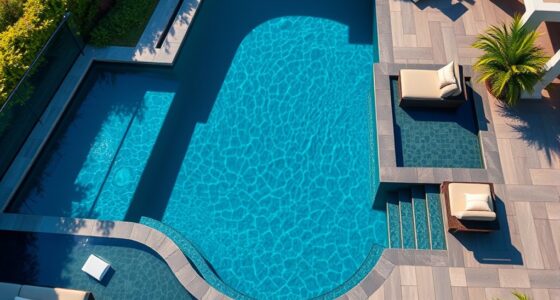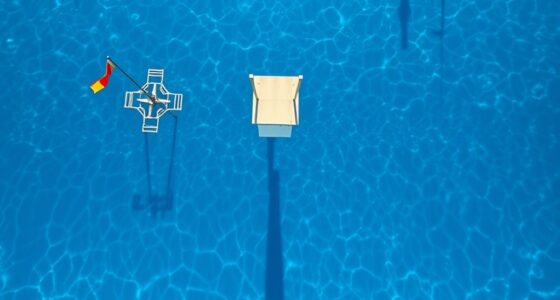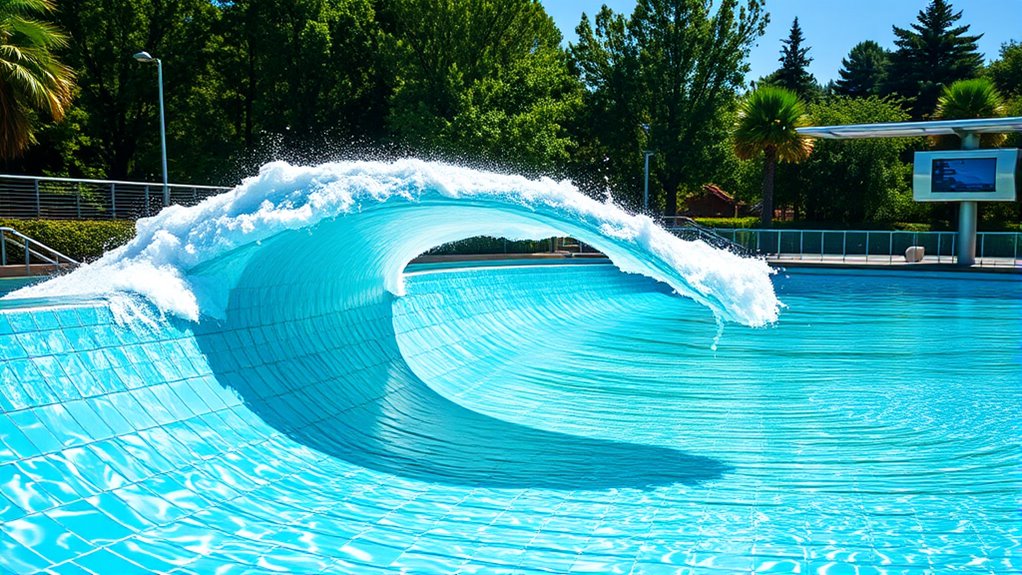

Wave pools create artificial surf using advanced mechanical systems like hydraulic pumps, pistons, and wave-shaping devices to produce realistic, controllable waves. These systems manipulate water flow and energy to generate different wave types, from gentle beginners’ waves to powerful breaks for advanced surfers. Modern technology allows precise control over wave height, shape, and timing, mimicking natural conditions. To discover how these innovations work together for safe and sustainable waves, keep exploring the details behind this fascinating process.

Get pool and patio gear delivered free — and shop member deals
- Fast, free delivery on millions of items
- Access to Prime Big Deal Days deals on October 6–7
- Prime Video, Amazon Music and more included
Key Takeaways
- Wave pools generate artificial surf using mechanical systems like pneumatic chambers or hydraulic pumps to create controlled water movements.
- Specialized wave-shaping devices and algorithms regulate wave size, shape, and timing for realistic ocean-like waves.
- Pool design features, including depth and bottom contour, influence wave formation and consistency.
- Automation and sensors help synchronize waves, ensuring safe, uniform surf experiences for all skill levels.
- Sustainable technologies, such as energy-efficient pumps and water recycling, are increasingly used to reduce environmental impact.
As an affiliate, we earn on qualifying purchases.
The Basics of Wave Pool Design

Wave pool design begins with understanding how to generate realistic and safe waves. You need to take into account the size, shape, and power of the waves to ensure they mimic natural surf while keeping swimmers safe. The core of the design involves creating a system that can produce consistent, controllable waves, often through specialized equipment like pneumatic or hydraulic wave generators. You’ll also need to think about the pool’s dimensions and bottom contour, which influence wave formation and rideability. Properly managing water flow and energy distribution helps prevent dangerous turbulence or sudden changes in wave size. Safety features, such as shallow zones and clear sightlines, are essential. Additionally, understanding electric heating options can help maintain optimal water temperatures for comfort and energy efficiency. Ultimately, your goal is to craft a system that delivers exciting, reliable waves while prioritizing user safety.
As an affiliate, we earn on qualifying purchases.
Types of Waves Created in Artificial Surf Parks
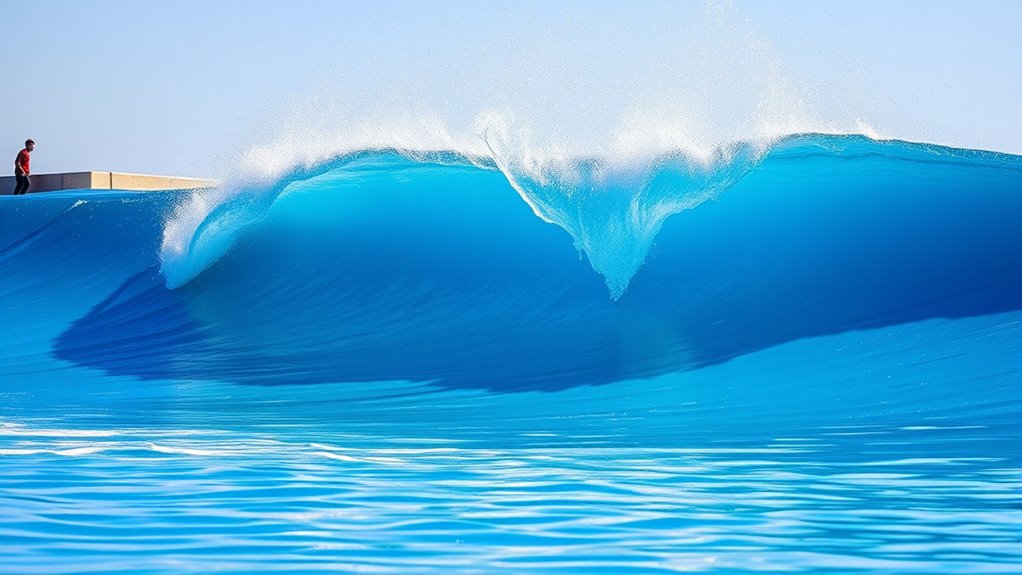
Artificial surf parks generate a variety of wave types to suit different skill levels and riding styles. You’ll find options ranging from gentle beginner waves to powerful, advanced breaks. These waves include point breaks, which mimic ocean-like waves that break consistently along a specific point, and reef breaks that produce hollow, barreling waves. Additionally, there are wave types designed for tricks and aerial maneuvers, such as rolling waves with a smooth face. To highlight their differences:
| Wave Type | Skill Level | Typical Break Pattern |
|---|---|---|
| Beginner Wave | Novice | Slow, gentle, easy to ride |
| Intermediate | Average | More shape, moderate size |
| Advanced | Expert | Fast, hollow, suitable for tricks |
| Specialty | All Levels | Designed for specific styles |
These options ensure everyone can find the perfect wave for their experience. Furthermore, wave simulation technology allows parks to create highly customizable and realistic waves that cater to all surfers’ needs.
As an affiliate, we earn on qualifying purchases.
The Role of Mechanical Systems in Wave Generation
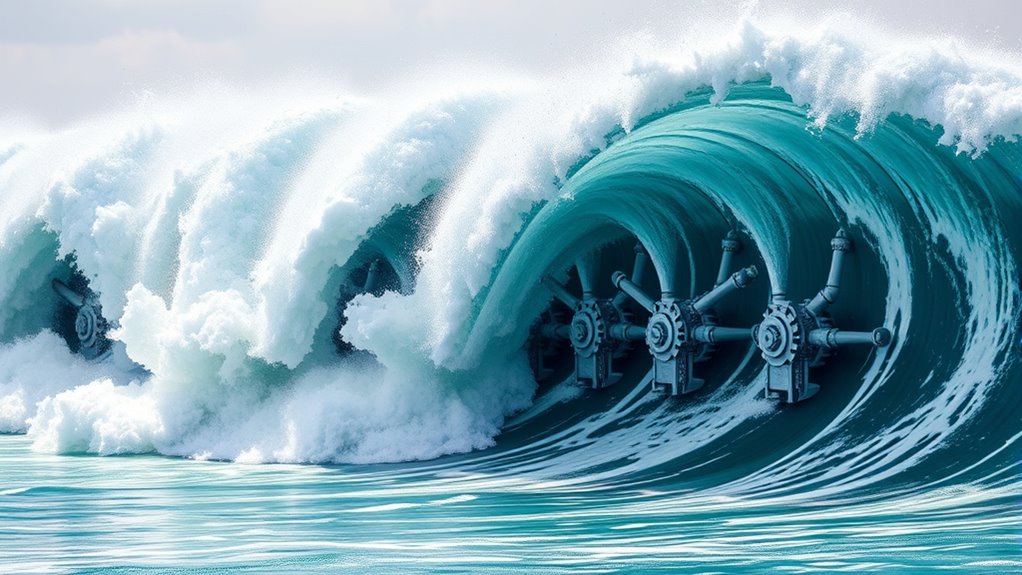
Mechanical systems are essential for creating consistent, customizable waves in surf parks. They enable precise control over wave size, shape, and timing, ensuring a reliable experience for surfers. These systems use powerful pumps, pistons, or vertical lifts to move water rapidly or generate pressure changes that produce waves. For example, wave pools often employ large plungers or pneumatic systems that push water forward to form a wave. The automation allows operators to adjust parameters quickly, tailoring waves to different skill levels or styles. Mechanical systems also support rapid wave resets, minimizing downtime between rides. Without these advanced mechanisms, producing predictable, high-quality waves in a controlled environment would be impossible, making the technology the backbone of modern artificial surf parks.
As an affiliate, we earn on qualifying purchases.
How Wave Pools Mimic Natural Ocean Conditions
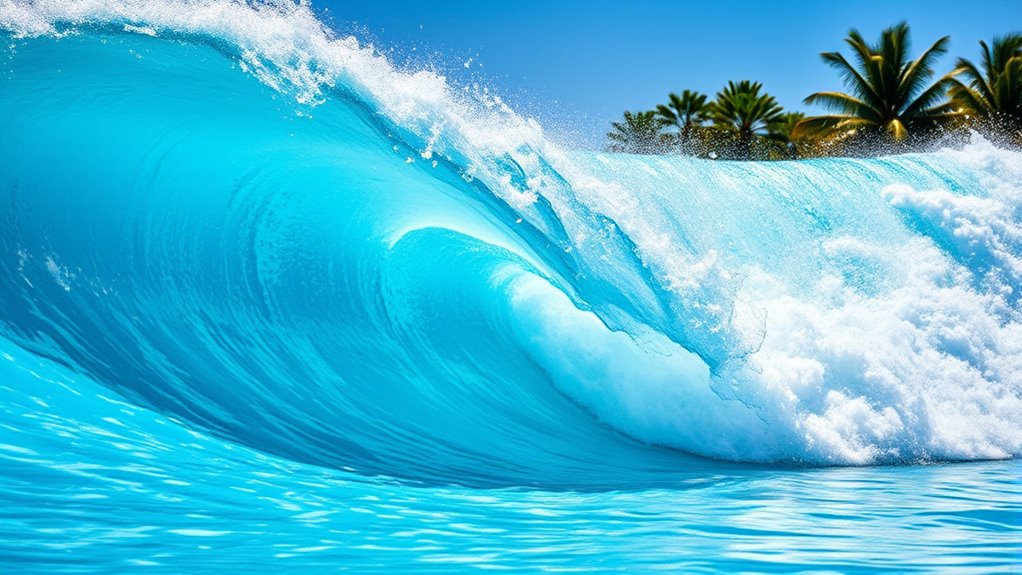
Wave pools replicate natural ocean conditions by carefully controlling wave size and timing to mimic real surf. You’ll notice features like adjustable wave patterns and varying heights that create a more authentic experience. These controlled environment elements make the waves feel more like those found in the open sea. Additionally, some wave pools incorporate pressure relief systems to ensure safety and comfort for all users.
Replicating Wave Dynamics
Have you ever wondered how wave pools create realistic ocean-like waves? It all comes down to carefully controlling the wave’s size, shape, and timing. Engineers use powerful mechanical systems, like plungers or pneumatic chambers, to generate consistent, surfable waves. These systems mimic the natural motion by rapidly pushing water forward and then pulling it back, creating a rolling wave that feels authentic. Sensors and computer algorithms help synchronize wave creation, ensuring each wave has uniform height and speed. This precise control allows for a variety of wave types, from gentle rollers to powerful breaks, matching real ocean conditions. Additionally, the wave generation technology often involves advanced mechanical and electronic systems to simulate the complex dynamics of natural waves. By replicating the dynamics of natural waves, wave pools deliver a surfing experience that’s both exciting and realistic, all without leaving the land.
Controlled Environment Features
To truly mimic the natural ocean environment, wave pools incorporate a variety of features that replicate the conditions surfers experience offshore. These elements create a realistic surfing experience and guarantee safety. First, the pool’s depth is carefully controlled to produce waves that break at just the right height. Second, the wave generation system uses advanced technology to produce consistent, surfable waves with realistic shape and size. Third, the pool’s walls are angled and curved to guide the wave’s flow, mimicking how waves break on a natural shoreline. Ultimately, water temperature and clarity are managed to match ocean conditions, making the experience more authentic. Additionally, headphone compatibility with sound systems can enhance the experience by providing immersive audio cues for surfers. These features work together to create a controlled environment that feels like surfing in the open sea.
Technologies Behind Consistent Wave Production
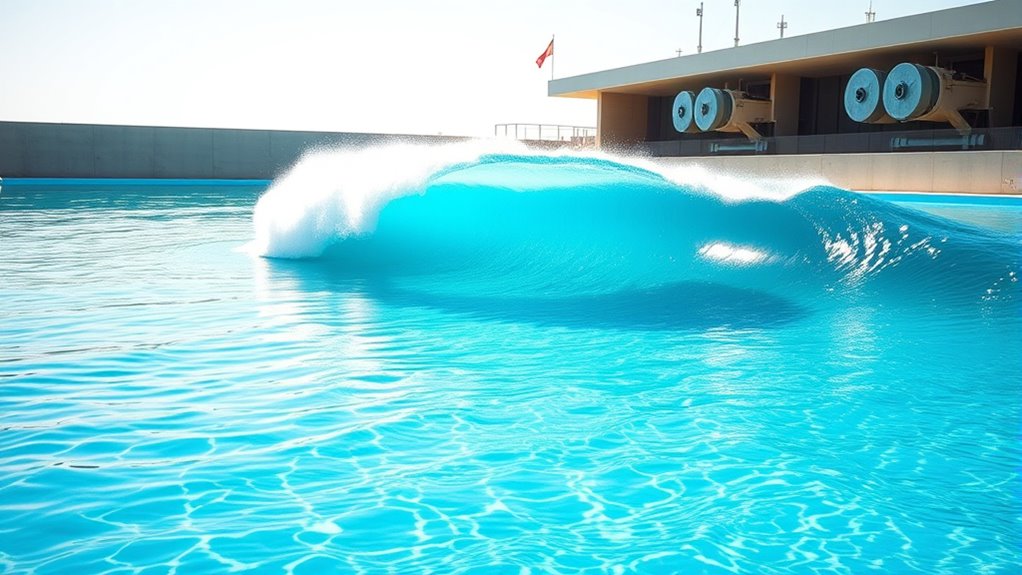
Advances in technology have revolutionized the way consistent waves are generated in wave pools, guaranteeing reliable and high-quality surf experiences. Modern wave pool systems use powerful pumps, precise wave-shaping devices, and computer-controlled algorithms to create uniform waves tailored to different skill levels. These systems can produce waves of varying sizes and shapes, mimicking ocean surf with remarkable consistency. Here’s a quick look at some key technologies:
| Technology | Function | Benefit |
|---|---|---|
| Hydraulic Pumps | Generate water movement | Consistent, large waves |
| Wave-Shaping Plates | Mold wave shape and size | Customizable surf styles |
| Computer Control | Automate wave timing and parameters | Precise, repeatable wave production |
Additionally, wave dynamics are carefully analyzed to optimize wave quality and sustainability, ensuring a realistic surfing experience while minimizing environmental impact. These innovations ensure surfers experience reliable, high-quality waves every session.
Innovations and Future Developments in Artificial Surfing
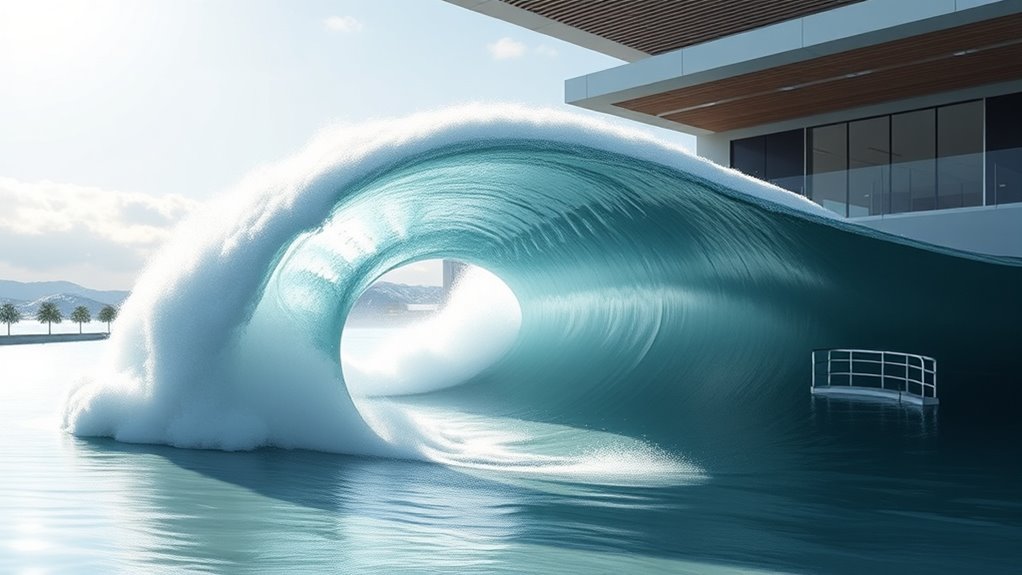
As technology continues to evolve, innovations in artificial surfing are pushing the boundaries of what’s possible in wave pool design and performance. You can expect smarter, more dynamic systems that generate waves tailored to your skill level. Future developments include:
- Adaptive wave shaping, which adjusts size and shape in real-time based on rider input.
- Robotic surf instructors that teach and refine your technique with precision.
- Virtual reality integration, offering immersive training environments.
- Eco-friendly technologies that produce powerful waves with less energy consumption.
- Increased focus on wave consistency, ensuring reliable performance for surfers of all skill levels.
These advancements will make artificial surfing more accessible, customizable, and realistic, opening new possibilities for surfers of all levels. The future promises a more personalized, engaging experience—without the need for ocean access.
Environmental Considerations and Sustainability of Wave Pools

As you consider wave pools, it’s important to think about their energy use and how it affects the environment. You can explore eco-friendly design strategies that reduce power consumption and minimize ecological impact. Implementing sustainable solutions helps guarantee wave pools remain enjoyable without harming the planet. Incorporating renewable energy sources such as solar or wind power can further decrease the environmental footprint of these facilities.
Energy Consumption Impact
The energy consumption of wave pools considerably impacts their environmental sustainability, as maintaining consistent, large-scale wave generation requires substantial power. This high energy demand can strain local grids and increase carbon footprints. Imagine the following:
- Massive pumps tirelessly churning water to produce perfect waves.
- Lights illuminating the pool area late into the night.
- Heating systems keeping the water at ideal surfing temperatures.
- Automated controls continuously adjusting wave intensity.
All these systems consume significant electricity, often sourced from fossil fuels, which releases greenhouse gases. While advancements make wave pools more efficient, their energy needs still raise concerns about environmental impact. Reducing this footprint involves exploring renewable energy options and smarter energy management but remains a vital consideration for sustainable operation. Proper water treatment is also essential to maintain water quality and reduce environmental impact.
Eco-Friendly Design Strategies
Implementing eco-friendly design strategies is essential to making wave pools more sustainable. You can reduce environmental impact by choosing energy-efficient pumps and generators that lower power usage. Incorporating renewable energy sources like solar panels helps minimize reliance on fossil fuels. Water conservation is also crucial; using advanced filtration systems allows for recycling and reusing water, cutting down on fresh water consumption. Additionally, selecting eco-conscious materials for construction reduces pollution and waste. Designing natural landscaping around the pool minimizes chemical runoff and supports local ecosystems. Smart technology can optimize wave generation, ensuring energy is used only when needed. Employing wall organization systems can help manage equipment and materials neatly, reducing clutter and waste. By prioritizing these strategies, you not only make wave pools more environmentally friendly but also contribute to long-term sustainability.
Frequently Asked Questions
How Energy-Efficient Are Modern Wave Pool Systems?
Modern wave pool systems are quite energy-efficient, especially with advancements in technology. You’ll notice that many use innovative pumps and wave-generating equipment designed to minimize power consumption. While they do require a significant energy input to create consistent surf, improvements in engineering and renewable energy sources have helped reduce overall energy use. So, if you’re concerned about sustainability, many wave pools now operate with a focus on reducing their environmental impact.
Can Wave Pools Simulate Different Oceanic Weather Conditions?
You can absolutely simulate different oceanic weather conditions in wave pools, and some systems do it better than the weather forecast! Advanced technology allows you to adjust wave height, frequency, and even simulate stormy or calm seas. While not quite as dynamic as real weather, these pools can create a diverse range of conditions, giving surfers a variety of experiences without leaving the comfort of the facility.
What Safety Measures Are in Place for Wave Pool Users?
You should always follow the safety rules when using a wave pool. Lifeguards are on duty to monitor your safety, and you must heed their instructions. Wear appropriate safety gear like life jackets if needed, and stay within designated areas. Avoid rough or reckless behavior, and be aware of your skill level before trying advanced waves. These measures help make sure you have a fun and safe experience.
How Long Does It Take to Build a New Wave Pool?
Building a new wave pool typically takes between one to two years, depending on size and complexity. You’ll start with site preparation, then move to designing the pool and installing the necessary equipment. Construction and testing follow, ensuring safety and functionality. Factors like permits, weather, and supply chain issues can influence the timeline. So, expect a substantial investment of time and effort before you can enjoy your new artificial surf zone.
Are Wave Pools Accessible for Disabled Surfers?
Yes, wave pools are increasingly accessible for disabled surfers. Many facilities design ramps, wider pathways, and adaptive equipment that act like bridges over turbulent waters, welcoming everyone to ride the waves. You’ll find features like adjustable surf stations and trained staff ready to assist. These efforts turn the pool into a playground where every surfer, regardless of ability, can catch the wave and feel the thrill of riding a perfect crest.
Conclusion
You might think wave pools are just fun tricks, but they actually rely on sophisticated technology to mimic the ocean. Some believe that artificial waves can never fully replicate the natural experience, but advancements suggest otherwise. As technology improves, wave pools could become more sustainable and realistic, proving that with innovation, artificial surf can match—or even surpass—the real ocean’s power and consistency. So, don’t underestimate the future of surfing without leaving the land.
Fall Picks
fall essentials
As an affiliate, we earn on qualifying purchases.