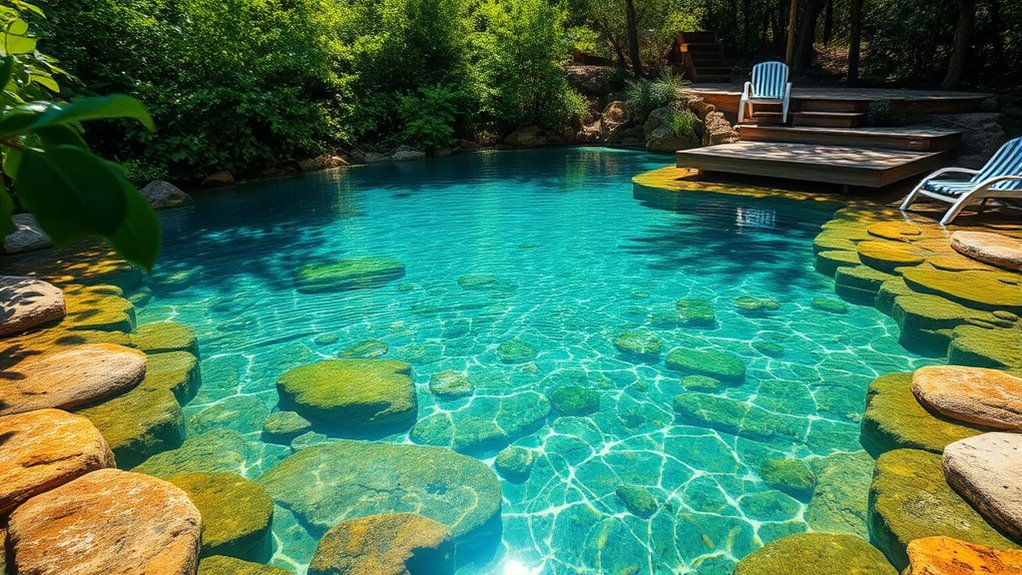

Natural swimming pools offer an eco-friendly, chemical-free way to enjoy outdoor swimming. You’ll benefit from a sustainable design that blends seamlessly into your landscape, supporting local wildlife and creating a peaceful, Zen-like atmosphere. Water is kept clean through natural processes, using aquatic plants as filters instead of harsh chemicals. With proper maintenance, these pools become self-sustaining ecosystems that promote both relaxation and environmental health—keep exploring to discover how to create your own natural oasis.

Get pool and patio gear delivered free — and shop member deals
- Fast, free delivery on millions of items
- Access to Prime Big Deal Days deals on October 6–7
- Prime Video, Amazon Music and more included
Key Takeaways
- Natural swimming pools offer a chemical-free, eco-friendly alternative that uses biological filtration through aquatic plants.
- The regeneration zone with plants like reeds and water lilies naturally cleans and maintains water clarity.
- These pools support local wildlife and biodiversity, creating a sustainable ecosystem.
- They require less maintenance and no harsh chemicals, reducing environmental impact.
- Their design integrates seamlessly into outdoor landscapes, enhancing aesthetics and promoting a peaceful environment.

Natural swimming pools offer a sustainable and chemical-free alternative to traditional pools, blending seamlessly into outdoor landscapes. Instead of relying on chlorine or other chemicals, these pools harness natural processes to keep the water clean and healthy. Central to this approach is effective water filtration, which is often achieved through the strategic use of aquatic plants. These plants act as natural filters, absorbing nutrients and pollutants that could otherwise cloud the water or promote algae growth.
When you design a natural swimming pool, you’ll want to create a dedicated regeneration zone filled with aquatic plants. This zone serves as a biological filter where plants like water lilies, reeds, and submerged vegetation thrive. As water from the swimming area flows into this zone, the plants absorb nutrients and trap debris, helping to purify the water naturally. The roots of these plants form a dense network that traps particles, while the plants themselves consume organic matter, reducing algae and bacteria levels.
Incorporating aquatic plants into your pool’s filtration system has several benefits. Not only do they eliminate the need for harsh chemicals, but they also create a vibrant, lush environment that enhances the overall aesthetic. You’ll notice how the plants introduce a peaceful, almost zen-like atmosphere, blending the pool seamlessly into your garden or outdoor setting. Additionally, because aquatic plants are a natural part of the ecosystem, they support local biodiversity by providing habitat for insects, birds, and other wildlife.
Maintaining a natural swimming pool requires a balance between the swimming area and the regeneration zone. Regularly monitoring water quality helps guarantee that the filtration process remains effective. You’ll want to keep an eye on the health of your aquatic plants, trimming and managing them as needed to prevent overgrowth. Proper circulation is also crucial; a gentle pump circulates water between zones, allowing filtration to occur continuously. This setup mimics nature’s ecosystems, creating a self-sustaining cycle that reduces maintenance and environmental impact.
As an affiliate, we earn on qualifying purchases.
Frequently Asked Questions
How Do Natural Pools Compare in Cost to Traditional Pools?
Natural pools generally have a higher installation expense upfront compared to traditional pools, mainly due to the need for specialized ecosystems and plant zones. However, over time, you’ll save on ongoing chemicals and maintenance costs, making the overall cost comparison more favorable. While the initial investment might seem steep, natural pools often become more economical long-term, offering eco-friendly benefits and lower operating expenses that traditional pools can’t match.
What Maintenance Is Required for Eco-Friendly Swimming Pools?
You need to regularly check and maintain biological filtration systems to keep your eco-friendly pool clean and balanced. Algae control is essential, so you’ll often need to remove algae manually or use natural methods to prevent growth. Skimming debris, monitoring water quality, and ensuring healthy plant life are also key. Unlike traditional pools, eco-friendly pools require less chemical use but demand consistent upkeep to stay eco-friendly and crystal clear.
Are Natural Pools Suitable for All Climates?
Natural pools can be suitable for various climates, but their climate adaptability depends on regional installation. For instance, a homeowner in a temperate zone successfully maintained a natural pool year-round by incorporating a heated cover, demonstrating adaptability. In colder regions, you might need to adjust design features, such as insulation or choosing appropriate plants. Consider your regional climate and installation options to guarantee the pool functions well throughout the year.
Can Natural Pools Be Used Year-Round?
Yes, you can use natural pools year-round if you maintain proper natural filtration and guarantee the water stays warm enough. In colder climates, you might need a cover or heater to extend usability. These pools provide a wildlife habitat, supporting local biodiversity. Regular upkeep keeps the water clean and safe for swimming, so with some effort, you can enjoy your natural pool throughout all seasons.
What Safety Features Are Recommended for Natural Swimming Pools?
You should install safety fencing around your natural swimming pool to prevent accidents, especially if kids or pets are nearby. Additionally, opt for chemical-free filtration systems to keep the water clean without harmful chemicals, ensuring a safe swimming environment. Regularly inspect fencing for durability and maintain your filtration system for ideal water quality. These features help create a secure, eco-friendly swimming space you can enjoy with peace of mind.
biological water filtration system for pools
As an affiliate, we earn on qualifying purchases.
As an affiliate, we earn on qualifying purchases.
Conclusion
Imagine stepping into a natural swimming pool like plunging into a pristine, clear lake. These eco-friendly pools blend beauty and sustainability, offering you a guilt-free way to enjoy swimming. With minimal chemicals and a self-cleaning ecosystem, you become part of a greener world. Embrace the future of swimming, where nature and relaxation meet seamlessly. Immerse yourself and experience the pure joy of eco-friendly swimming—it’s as invigorating as a splash in a mountain stream.
aquatic plants for pond filtration
As an affiliate, we earn on qualifying purchases.
As an affiliate, we earn on qualifying purchases.
eco-friendly pool maintenance tools
As an affiliate, we earn on qualifying purchases.
As an affiliate, we earn on qualifying purchases.
Fall Picks
fall essentials
As an affiliate, we earn on qualifying purchases.