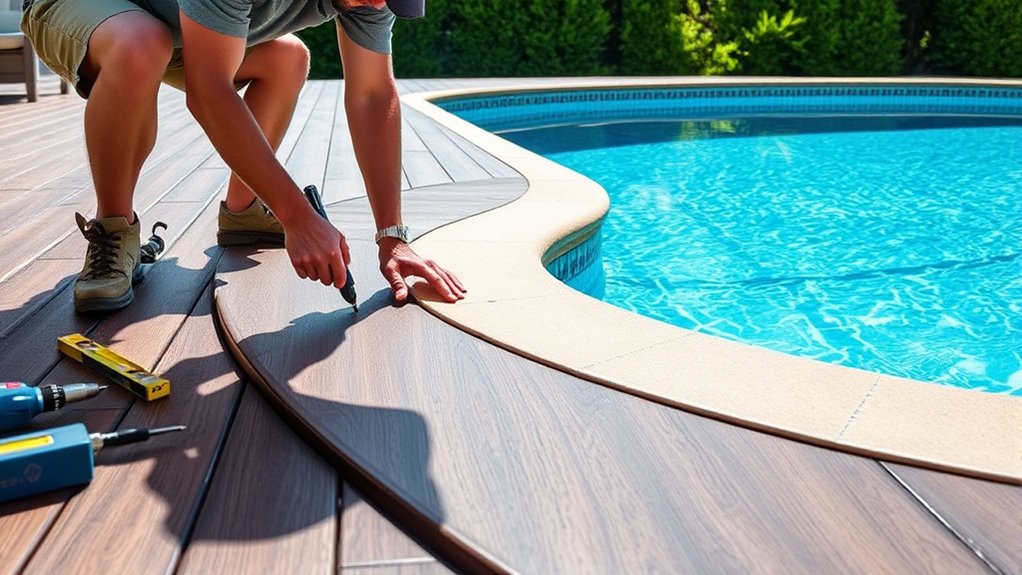
When installing pool decking, choose materials like natural stone, textured concrete, or composite decking that blend with your landscape while offering durability and slip resistance. Use techniques such as proper leveling, incorporating drainage slopes, and textured finishes to enhance safety. Carefully select materials that require minimal maintenance and resist weather and pool chemicals. To create a seamless, attractive, and safe environment that complements your landscape, explore the options and techniques ahead for expert guidance.

Get pool and patio gear delivered free with Prime
- Fast, free delivery on millions of items
- Prime Video, Amazon Music and more included
- Member-only deals all year
Key Takeaways
- Select durable, weather-resistant materials like natural stone, textured concrete, or composite decking that blend seamlessly with the landscape.
- Prioritize slip-resistant surfaces such as stamped concrete or textured porcelain tiles for safety in wet conditions.
- Ensure proper leveling, drainage, and material installation techniques to prevent water pooling and tripping hazards.
- Incorporate safety features like non-slip coatings and smooth finishes to accommodate all users, including children and elderly.
- Integrate landscaping elements, built-in seating, and lighting to enhance aesthetics and functionality of the pool deck.
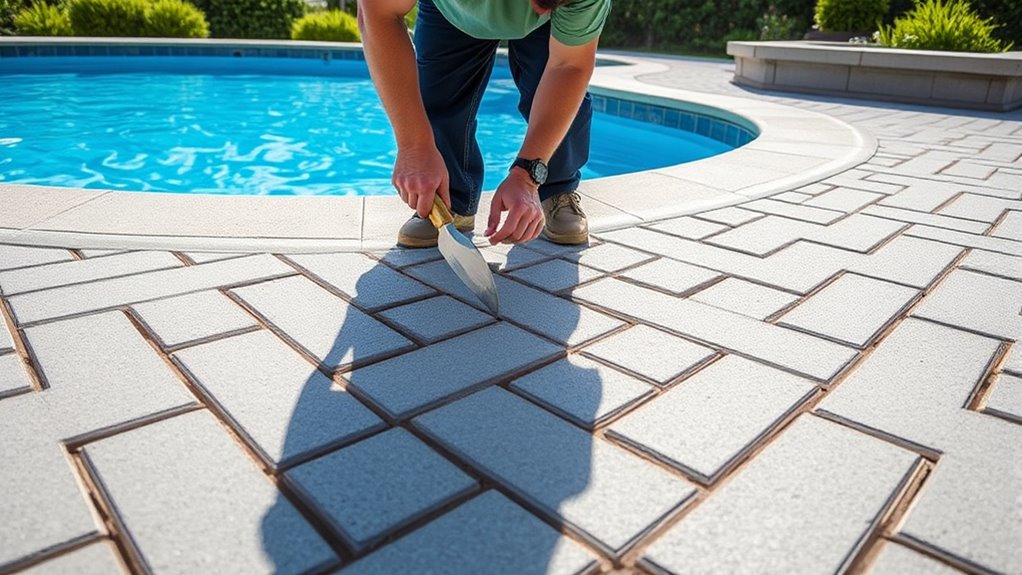
Creating a safe and attractive pool area starts with choosing the right decking material and technique. Your goal is to create a space that looks seamless, complements your landscape, and guarantees safety for everyone using the pool. When selecting materials, consider how well they integrate with your existing landscaping. For example, natural stone or textured concrete can blend beautifully with garden beds, trees, or other outdoor features, creating a cohesive and inviting environment. Landscaping integration isn’t just about aesthetics; it also influences the durability and maintenance of your deck. A well-chosen material will complement your landscape’s colors and textures while standing up to weather conditions, pool chemicals, and daily wear.
Choose decking materials that blend seamlessly with your landscape for durability and visual harmony.
Safety considerations should be at the top of your list during the planning process. Your deck will likely get wet often, so slip resistance is vital to prevent accidents. Many materials come with textured or non-slip surfaces to improve traction when wet. For example, stamped concrete or textured porcelain tiles provide excellent slip resistance, while smooth surfaces like certain woods or polished stones may require additional treatments or mats. Also, ensure your deck is level and flush with the pool edge to avoid tripping hazards. Proper drainage is another key safety feature; your decking should slope slightly away from the pool to prevent water pooling, which can create slippery spots and damage the material over time. Additionally, choosing appropriate materials that resist mold and fading can reduce maintenance needs and enhance safety over the long term.
Beyond safety, think about how the decking material impacts accessibility. If you have children, elderly family members, or guests with mobility issues, choosing a smooth, even surface is essential. You might also want to incorporate a non-slip coating or textured finish to enhance safety further. The choice of material should also align with your maintenance preferences. Some options, like composite decking, resist mold and fading better than traditional wood, reducing upkeep and guaranteeing your safety features stay effective longer.
Finally, consider how your decking integrates with the overall landscape design. Incorporating built-in seating, planters, or lighting can elevate the look and functionality of your pool area. When your decking complements the landscape, it creates a harmonious space that feels natural and welcoming. It doesn’t just serve as a functional surface but also enhances the visual appeal and safety of your pool environment. By carefully selecting your decking material and paying attention to landscaping integration and safety considerations, you’ll craft a pool area that’s both stunning and secure for years to come.
As an affiliate, we earn on qualifying purchases.
Frequently Asked Questions
What Is the Average Lifespan of Different Pool Decking Materials?
Your pool decking’s average lifespan varies by material durability. Concrete lasts 25-30 years, while pavers can go up to 40 years with proper maintenance. Wood decks typically last 10-15 years, and composite options often exceed 25 years. Doing a lifespan comparison helps you choose durable materials that fit your needs, ensuring your investment stays beautiful and functional for years to come. Regular upkeep also extends your deck’s longevity.
How Do I Maintain and Clean Various Pool Decking Surfaces?
To maintain and clean your pool decking surfaces, follow proper cleaning techniques and maintenance tips. Regularly sweep away debris and wash surfaces with gentle soap and water or a specialized cleaner suitable for your material. Avoid harsh chemicals that could damage the surface. For concrete, power washing works well, while for wood or composite, use soft brushes. Consistent upkeep keeps your decking looking great and extends its lifespan.
Are There Eco-Friendly Options for Pool Decking Materials?
Yes, you can choose eco-friendly pool decking materials like recycled composite and bamboo decking. Recycled composite uses reclaimed wood and plastic, reducing waste and environmental impact. Bamboo decking is a renewable resource that grows quickly and requires less energy to produce. Both options are sustainable, durable, and stylish, making them excellent choices if you want to minimize your ecological footprint while creating a beautiful pool area.
How Does Climate Affect the Choice of Pool Decking Material?
If you live in a hot, sunny climate, choosing a durable, heat-resistant material like concrete helps prevent cracking and warping. Climate impact heavily influences your decking choice, as materials like wood may deteriorate faster in humid or rainy areas. Consider your local weather patterns to select a deck that withstands temperature fluctuations and moisture, ensuring longevity and safety for your pool area.
Can I Install Pool Decking Over Existing Surfaces?
Yes, you can install pool decking over existing surfaces if you prepare the area properly. Start with thorough surface prep by cleaning and repairing any damage, and make certain the existing surface provides adequate structural support. Check for stability and levelness, as uneven or weak surfaces can cause problems later. Proper surface prep guarantees your new decking stays secure and looks great, saving you time and money in the long run.
As an affiliate, we earn on qualifying purchases.
Conclusion
Choosing the right pool decking material can transform your backyard into a stunning oasis. Whether you prefer natural stone, concrete, or pavers, each option offers unique benefits and style. Did you know that up to 70% of homeowners report increased property value after upgrading their pool area? With the right techniques and materials, you’ll create a durable, beautiful space perfect for relaxing and entertaining for years to come. Jump in and make your backyard dreams a reality!
As an affiliate, we earn on qualifying purchases.
As an affiliate, we earn on qualifying purchases.
Columbus Day / Indigenous Peoples' Day Picks
long weekend sales
As an affiliate, we earn on qualifying purchases.