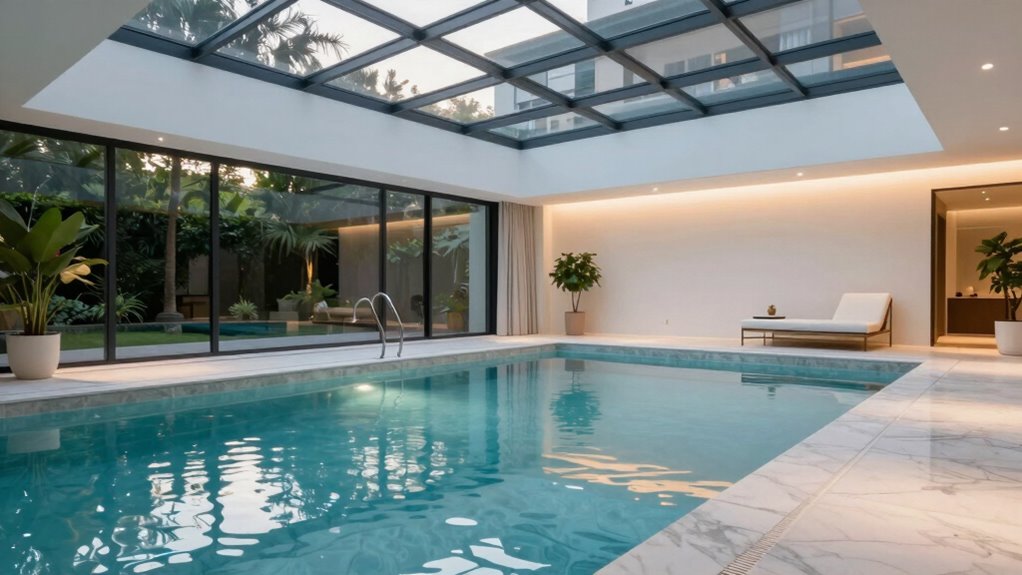
Before building an indoor pool, consider how it blends with your home’s architecture and outdoor space, ensuring a seamless connection and privacy. Be aware of safety regulations, installing barriers, alarms, and non-slip flooring to protect everyone. Focus on materials that resist moisture, and plan for proper ventilation and insulation to manage humidity and energy costs. By addressing these key points, you’ll create a safe, stylish, and efficient space—keep exploring to discover how to optimize every aspect of your indoor pool project.

Get pool and patio gear delivered free — and shop member deals
- Fast, free delivery on millions of items
- Access to Prime Big Deal Days deals on October 6–7
- Prime Video, Amazon Music and more included
Key Takeaways
- Ensure indoor pool design complies with regional safety codes, including fencing, alarms, and non-slip flooring.
- Plan for proper ventilation, humidity control, and insulation to prevent mold and maintain comfort.
- Integrate seamless indoor-outdoor transitions with landscaping for privacy and aesthetic appeal.
- Use moisture-resistant materials and energy-efficient systems to minimize operational costs and maintenance.
- Consult professionals early for safety compliance, structural considerations, and efficient construction practices.
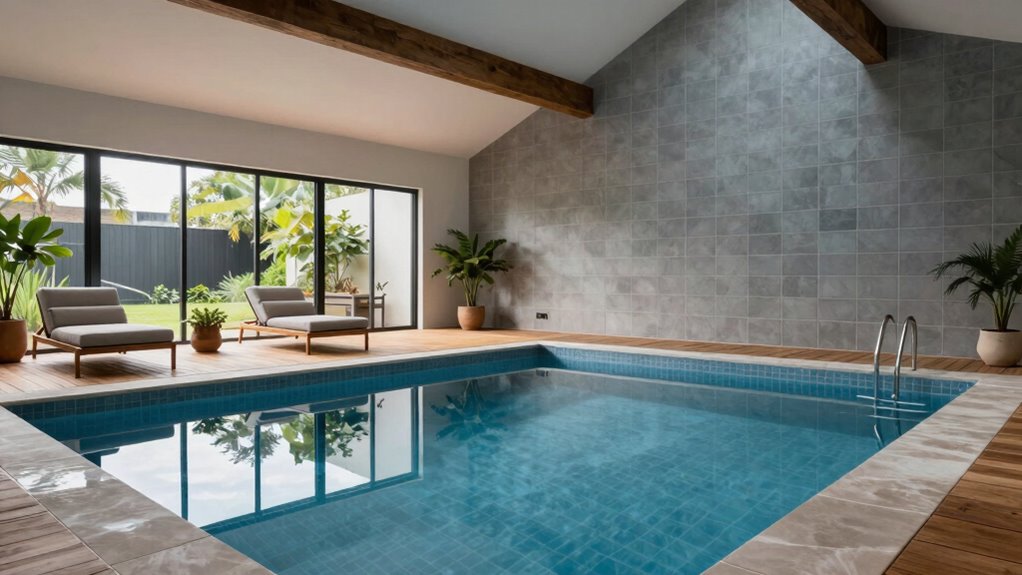
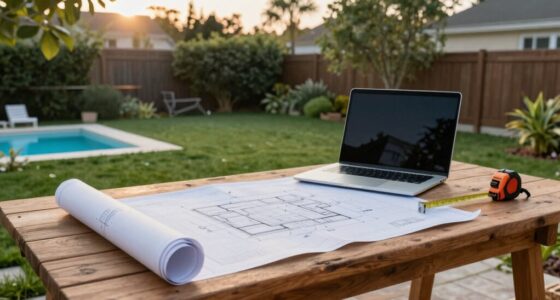
Building an indoor pool can transform your home into a private retreat, offering year-round access to swimming regardless of the weather. However, before diving into this project, it’s essential to understand the key considerations involved. One of the first things to think about is how the pool will fit into your existing home structure and outdoor space. While an indoor pool keeps the elements out, you still need to plan your exterior landscaping carefully. Proper landscaping around the exterior of your home can enhance privacy, manage noise, and improve the overall aesthetic. It’s also important to consider how your indoor pool will blend with your outdoor environment, creating a seamless shift between the two spaces.
Consider how your indoor pool integrates with your home’s structure and outdoor landscape for a seamless, private retreat.
Another pivotal aspect is adhering to pool safety regulations. Every region has specific codes and standards designed to prevent accidents and ensure safe usage. You must familiarize yourself with these rules, which often include requirements for fencing, covers, alarms, and proper drainage systems. Installing safety features is not just about compliance but also about protecting your family and guests. You’ll want to plan for non-slip flooring, adequate lighting, and secure barriers to prevent unauthorized access, especially if children or pets are around. Neglecting safety regulations can lead to fines or, worse, accidents, so make sure to consult local authorities or a professional contractor with experience in pool safety. Additionally, understanding the importance of regulatory compliance can help you avoid legal issues and ensure your pool meets all safety standards. Incorporating energy-efficient lighting options can also reduce operational costs and environmental impact over time. Employing a systematic testing process during construction can help identify and resolve issues early, ensuring your pool remains safe and functional over the years.
Designing the indoor environment itself also demands attention. You’ll need to choose suitable materials that resist moisture and humidity, preventing mold and structural damage. Ventilation and climate control become imperative to maintaining comfort and protecting your home’s interior. Proper insulation helps regulate temperature and reduces energy costs, while an effective dehumidification system keeps the air fresh and dry. Additionally, considering the contrast ratio in your indoor lighting design can improve visibility and ambiance around the pool area, making your space both functional and inviting. Incorporating energy-efficient lighting systems can further help keep operational costs manageable. Planning for electric power in your home may also be advantageous if you plan to incorporate advanced lighting, heating, or automation systems around your pool area.
As an affiliate, we earn on qualifying purchases.
Frequently Asked Questions
How Long Does an Indoor Pool Installation Typically Take?
Indoor pool installation usually takes about 8 to 12 weeks, depending on your project’s complexity. During this time, your contractor will focus on electrical work for pool lighting, installing water heating systems, and ensuring proper ventilation. You should expect some delays if unforeseen issues arise. Planning ahead and choosing experienced professionals can keep your project on schedule, helping you enjoy your new indoor pool sooner.
What Is the Environmental Impact of Building an Indoor Pool?
Building an indoor pool might seem eco-friendly, but it’s often quite the opposite. You’ll likely increase energy consumption considerably, especially for heating and maintaining water temperature. To minimize your environmental impact, opt for eco-friendly materials and energy-efficient systems. While indoor pools offer comfort, they can also lead to higher carbon footprints. So, think twice about the environmental costs before diving into your indoor oasis dream.
Can Indoor Pools Be Built in All Climates?
Indoor pools can be built in most climates, but outdoor access and energy consumption are key considerations. In colder or variable climates, you’ll need robust insulation and climate control to keep the pool comfortable year-round. Keep in mind, heating the space increases energy use, so plan for efficient systems. If outdoor access is limited, an indoor pool offers year-round enjoyment, but be prepared for higher energy costs and the environmental impact.
How Do I Maintain Indoor Air Quality With a Pool?
To maintain indoor air quality with a pool, you should focus on air filtration and humidity control. Use a high-quality air filtration system to remove chloramines and airborne contaminants, ensuring fresh, clean air. Additionally, control humidity levels with dehumidifiers to prevent mold growth and reduce moisture-related issues. Regularly inspect and maintain these systems to keep the air safe and comfortable, creating a healthier environment for you and your family.
Are There Specific Insurance Considerations for Indoor Pools?
Think of your indoor pool as a guarded fortress; you need proper insurance policies to protect it. You should review liability coverage to shield against accidents, and consider adding specific coverage for pool-related damages. Some policies may require safety features or regular inspections. Talk to your insurer about these considerations to guarantee you’re fully protected, turning your indoor oasis into a safe retreat with the right insurance safeguards.
moisture-resistant pool materials
As an affiliate, we earn on qualifying purchases.
As an affiliate, we earn on qualifying purchases.
Conclusion
So, after all that planning and prep, you might find building an indoor pool isn’t quite the endless luxury you imagined — it’s more like a full-time hobby with a splash of surprise maintenance. Ironically, your dream of year-round swimming could turn into a year-round to-do list. But hey, at least you’ll have a stylish, private oasis to keep you busy—and maybe even a story to tell about the unexpected adventures of indoor pool ownership!
As an affiliate, we earn on qualifying purchases.
As an affiliate, we earn on qualifying purchases.
Fall Picks
fall essentials
As an affiliate, we earn on qualifying purchases.