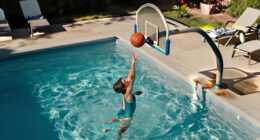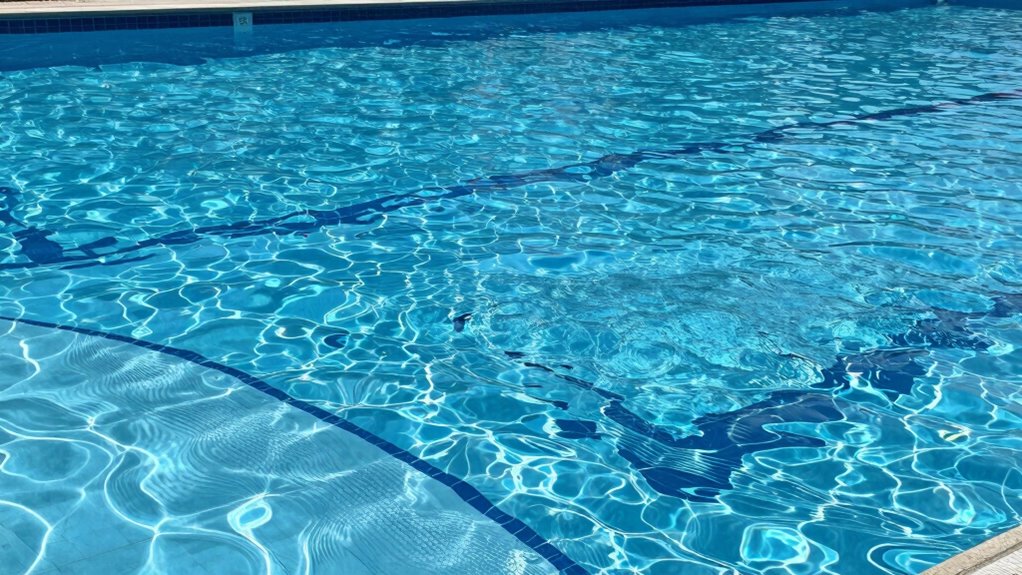

When considering pool depth for games and recreation, you need to think about safety and activity types. Shallow areas (3-4 ft) are great for lounging, children’s play, and wading, while deeper zones (6-9 ft) suit diving and competitive swimming. Avoid abrupt changes in depth to prevent accidents. Properly measuring and designing gradual slopes help guarantee safety, allowing everyone to enjoy different activities comfortably. Keep exploring to learn more about creating the perfect recreational pool.

Get pool and patio gear delivered free with Prime
- Fast, free delivery on millions of items
- Prime Video, Amazon Music and more included
- Member-only deals all year
Key Takeaways
- Choose shallow areas (3-4 ft) for lounging, kids’ play, and wading activities.
- Use deeper zones (6-9 ft) for diving, competitive swimming, and water sports.
- Incorporate gradual slopes for safe transitions between different depths.
- Ensure proper signage indicating depth zones for user safety and awareness.
- Adhere to local safety regulations to optimize safety and recreational functionality.
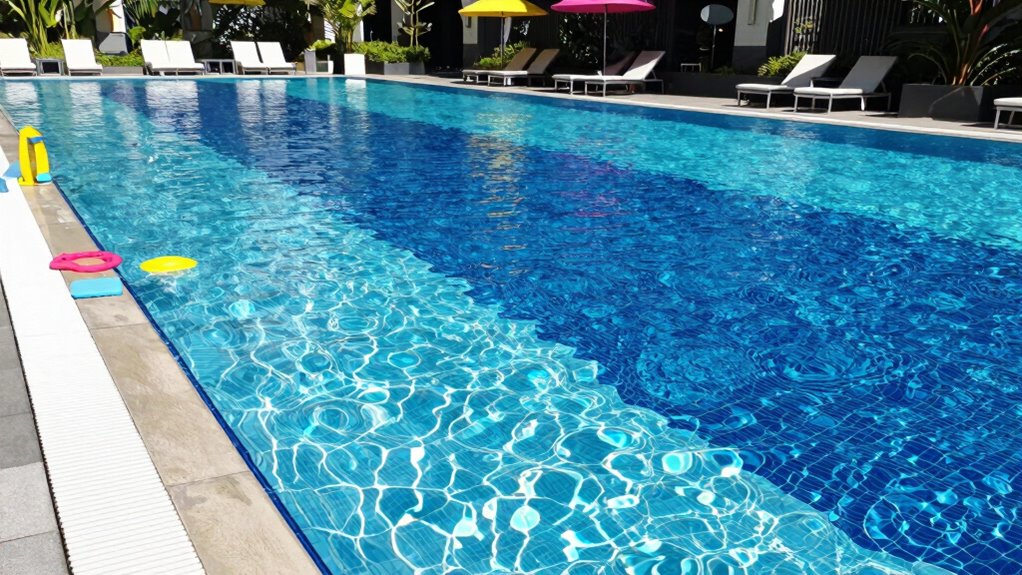
Choosing the right pool depth is essential for ensuring safe and enjoyable games and recreational activities. When planning your pool setup, you need to consider how different depths affect safety and the types of activities you want to enjoy. If the depth is too shallow, you risk injuries during jumping or diving; if it’s too deep, it might become unsafe for less experienced swimmers or children. Understanding safety considerations is paramount, especially if your pool will host a variety of users, from kids to adults. You want to create a space where everyone feels comfortable and secure, which means selecting a depth that accommodates your intended activities and swimmer skill levels.
To make informed decisions about your pool’s depth, you should familiarize yourself with depth measurement techniques. These methods help you determine the exact depth at different points in your pool, ensuring it aligns with safety standards and your recreational goals. Typically, a measuring tape or a specialized depth gauge is used to assess the pool’s floor from the waterline down to the bottom. Marking these measurements clearly on your pool’s plans or physically on the pool walls can help you visualize the varying depths and plan activities accordingly. For example, a shallow end of about 3-4 feet is perfect for lounging, wading, or children’s play areas, while a deeper section of 6-9 feet suits diving boards or competitive swimming.
Once you understand how to measure your pool’s depth accurately, you’ll be better equipped to design zones within the pool that cater to different activities. Incorporating a gradual slope rather than abrupt changes in depth makes the shift safer and more comfortable for swimmers of all ages and skill levels. This design feature is especially important to prevent accidents and create a more natural transition between zones. Incorporating safety considerations into your planning also involves installing appropriate signage indicating the depth at various points and ensuring that the pool’s design minimizes hazards, such as sharp edges or uneven surfaces. Remember that local safety regulations may specify minimum and maximum depths for different zones, so check those guidelines to stay compliant. Additionally, understanding depth measurement techniques helps ensure your pool design adheres to safety standards and maximizes enjoyment. Proper planning can also improve the efficiency of your pool’s use, making sure you get the most out of your recreational space.
As an affiliate, we earn on qualifying purchases.
Frequently Asked Questions
How Does Pool Depth Affect Safety Guidelines?
Pool depth directly impacts safety guidelines because greater depth increases drowning risk, especially for inexperienced swimmers. Depth safety measures recommend keeping shallow areas for children and beginners, while deeper zones are suitable for experienced swimmers. You should always supervise closely and use barriers or safety equipment in areas with significant depth. Knowing the pool’s depth helps you follow proper safety practices, reducing the drowning risk and ensuring everyone enjoys the water safely.
Are There Legal Requirements for Pool Depth in Residential Areas?
Yes, there are pool depth regulations and residential pool codes that you must follow. These rules vary by location but generally specify minimum and maximum depths for safety and recreational purposes. You’re legally required to guarantee your pool complies with local regulations to prevent accidents and meet safety standards. Check with your local authorities or building department to understand specific pool depth requirements for your residential area.
Can Pool Depth Influence Water Temperature and Circulation?
Think of your pool as a living, breathing entity—its depth can shape water circulation and temperature regulation. A deeper end encourages better water movement, preventing stagnation, while shallower areas heat up faster, making the water feel warmer. Proper depth controls how easily water circulates, influencing temperature consistency across the pool. So, your pool’s depth directly impacts comfort, ensuring smooth water flow and balanced temperature for endless enjoyment.
How Do Different Pool Depths Impact Swimming Training?
You’ll find that different pool depths considerably impact your swimming training. Shallow areas improve training efficiency by allowing you to practice drills without worry, while deeper zones are essential for safe diving. Always prioritize diving safety by sticking to designated depths and skills appropriate for each section. Varying depths challenge your skills, increase training effectiveness, and guarantee a safer environment for all swimmers.
What Are the Maintenance Considerations for Varying Pool Depths?
Did you know that maintaining a pool’s chemical balance can prevent up to 50% of repairs? For varying depths, you need to regularly check chemical levels and guarantee your filtration system is working efficiently. Deeper areas may require more filtration, while shallow zones need frequent cleaning. Proper maintenance keeps the water clear and safe, regardless of pool depth, reducing long-term repair costs and enhancing your swimming experience.
As an affiliate, we earn on qualifying purchases.
Conclusion
Knowing the right pool depth for your games and recreation can truly transform your aquatic adventures. Get it wrong, and you might be risking more than just a splash—like a belly flop from the depths or a game-changing mishap! So, measure carefully, plan wisely, and keep safety in mind. With the perfect depth, you’ll be swimming in fun, making waves, and creating memories so epic, they’ll outlast even the biggest splash you make!
As an affiliate, we earn on qualifying purchases.
As an affiliate, we earn on qualifying purchases.
Halloween Picks
halloween
As an affiliate, we earn on qualifying purchases.