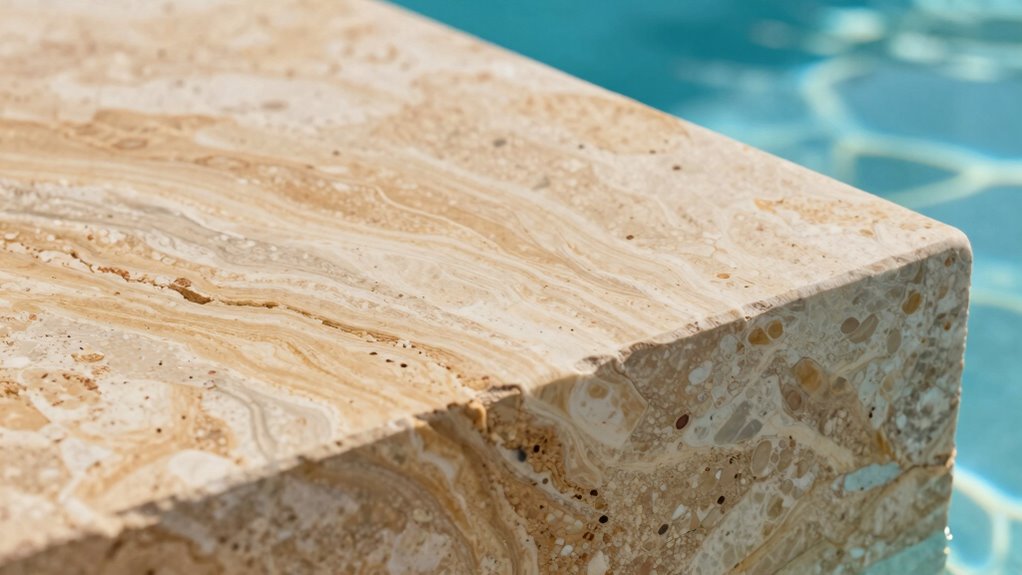

Travertine pool coping looks luxurious and natural, but keep in mind it requires regular sealing to prevent stains and water absorption. It’s more expensive upfront and needs professional installation to avoid cracks or damage. Its porous surface can be tricky to maintain, especially in harsh climates, but with proper care, it can last for years. To get the most out of it, understanding these tradeoffs is essential—there’s much more to evaluate before making your decision.

Get pool and patio gear delivered free — and shop member deals
- Fast, free delivery on millions of items
- Access to Prime Big Deal Days deals on October 6–7
- Prime Video, Amazon Music and more included
Key Takeaways
- Travertine offers a natural, sophisticated aesthetic that enhances poolside appeal.
- It requires regular sealing and maintenance to prevent staining and water absorption.
- Higher upfront cost reflects its premium look and durability, but long-term savings are possible.
- Proper professional installation is crucial to avoid cracking, chipping, or uneven surfaces.
- Climate compatibility and routine upkeep are essential to maximize longevity and maintain its appearance.
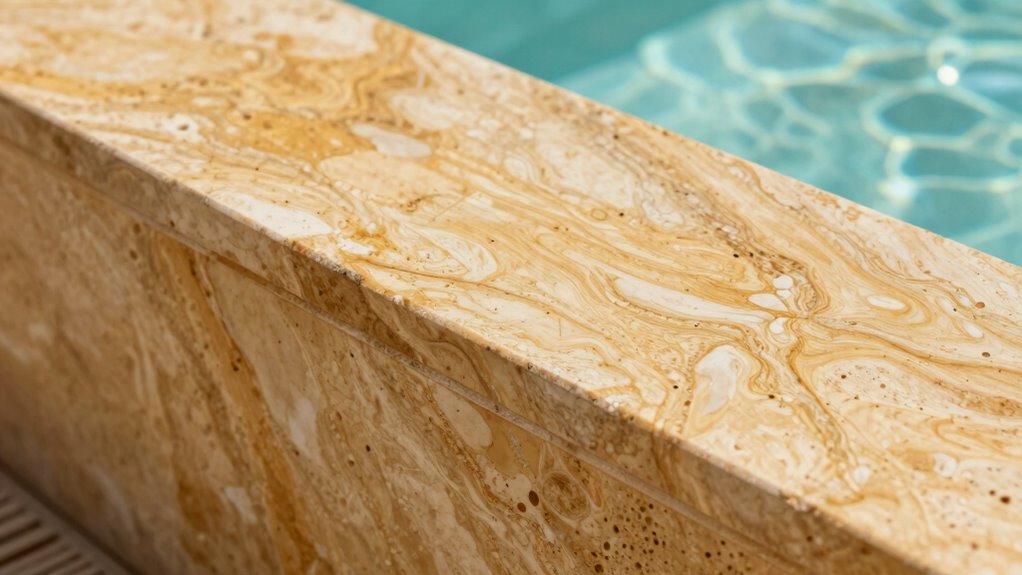
However, it’s important to understand that while travertine looks premium, it does come with some tradeoffs. Its natural durability is impressive, but it’s not entirely maintenance-free. Because travertine is a porous stone, it can absorb water, which may lead to staining or etching if not properly sealed. You’ll need to commit to regular sealing to protect its surface and maintain its visual appeal over time. Otherwise, dirt, algae, and other contaminants can settle into the pores, making cleaning more challenging and potentially diminishing the stone’s aesthetic charm. Recognizing the porous nature of travertine is crucial for proper care and longevity. Additionally, understanding the material composition can help you better anticipate how it will perform in different climate conditions and how to care for it properly. Properly researching climate suitability can also influence your overall satisfaction with the material. You should also consider the cost. Travertine tends to be more expensive upfront compared to other coping materials like concrete or brick. While its premium appearance is undeniable, the initial investment might make you pause. Keep in mind, though, that its durability can offset costs in the long run, as you’ll likely spend less on repairs or replacements. Still, it’s worth weighing whether the benefits of natural durability and aesthetic appeal justify the higher price point. Another factor to keep in mind is the installation process. Travertine requires careful handling and professional installation to prevent cracking or uneven surfaces. If installed incorrectly, it can chip or become uneven, detracting from its sophisticated look. Maintenance is also key; you’ll want to clean it regularly with gentle products and reseal it periodically to keep it looking its best. Additionally, understanding the maintenance requirements of travertine can help you better care for it and prevent potential issues over time. Proper installation and routine upkeep are essential to maximize its lifespan and beauty.
As an affiliate, we earn on qualifying purchases.
Frequently Asked Questions
How Does Travertine Pool Coping Compare to Concrete in Durability?
Travertine pool coping is less durable than concrete, especially against harsh weather and heavy use, but it offers superior aesthetic versatility. You’ll find travertine more prone to chipping and staining, requiring more maintenance. While it looks premium, consider the cost considerations—travertine tends to be pricier upfront, and repairs can add up. Concrete, on the other hand, is more resilient and budget-friendly, making it a practical choice for durability-focused homeowners.
What Are the Environmental Impacts of Using Travertine for Pool Coping?
Using travertine for pool coping raises environmental concerns mainly due to its mining process, which can disturb ecosystems and waste resources. However, if you choose sustainably sourced travertine, you reduce negative impacts. Be sure to verify the supplier’s commitment to sustainable sourcing practices, as this helps minimize environmental damage. Overall, while travertine can be eco-friendly if responsibly harvested, it’s essential to evaluate the environmental footprint before installation.
Can Travertine Pool Coping Be Installed by DIY Homeowners?
Yes, you can attempt DIY installation of travertine pool coping, but it’s important to be well-prepared. As a homeowner, follow tips like measuring carefully, selecting the right tools, and understanding proper sealing techniques. Keep in mind that travertine is heavy and fragile, so patience and precision are key. If you’re unsure, consulting professional advice or hiring experts can help guarantee a durable, attractive result that lasts.
How Often Does Travertine Pool Coping Need Sealing?
Did you know that travertine requires sealing every 1 to 2 years? For pool maintenance and material longevity, regular sealing is essential to protect against stains and water damage. Without proper care, travertine can absorb pool chemicals and moisture, reducing its lifespan. So, if you want your pool coping to stay beautiful and durable, plan on resealing it regularly—usually every 12 to 24 months.
Are There Color Options Available for Travertine Pool Coping?
Yes, there are various color options available for travertine pool coping, giving you a wide range of aesthetic choices. You can find shades from warm beiges and creams to cooler grays and even hints of gold. This color variety allows you to match or complement your outdoor decor easily. These aesthetic options help create a natural, elegant look around your pool, enhancing your backyard’s overall appeal and style.
As an affiliate, we earn on qualifying purchases.
Conclusion
So, if you want your pool area to scream “luxury” louder than a rock concert, travertine coping is your go-to. Just remember, this fancy stone isn’t invincible—it’ll need love (and a little extra care) to stay stunning. Think of it like a high-maintenance pet: gorgeous, but demanding. If you’re ready for the glamorous, slightly high-maintenance life, travertine will make your backyard look like a million bucks—without actually costing a million!
professional travertine installation
As an affiliate, we earn on qualifying purchases.
As an affiliate, we earn on qualifying purchases.
As an affiliate, we earn on qualifying purchases.
Fall Picks
fall essentials
As an affiliate, we earn on qualifying purchases.