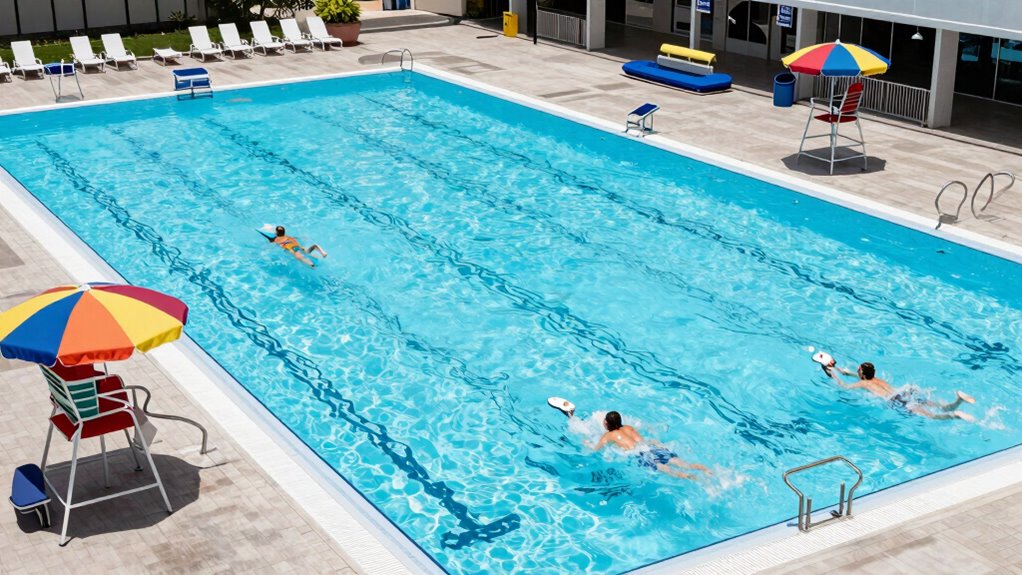

To improve supervision at a public pool, focus on strategic placement of lifeguard stations at vantage points free of obstructions, ensuring clear views of the entire area. Use prominent signage and visual cues to guide swimmers and reduce incidents. Design the pool with shapes that promote unobstructed sightlines, avoiding hidden corners. Thoughtful layout, lighting, and zone division can minimize blind spots. Keep these tips in mind to create a safer environment—there’s more to discover on how to optimize your pool’s layout.

Get pool and patio gear delivered free — and shop member deals
- Fast, free delivery on millions of items
- Access to Prime Big Deal Days deals on October 6–7
- Prime Video, Amazon Music and more included
Key Takeaways
- Position lifeguard stations at high, unobstructed vantage points for comprehensive pool coverage.
- Use clear, contrasting signage at key areas to guide swimmer behavior and reduce supervision workload.
- Ensure proper lighting for visibility during all hours, supporting quick incident response.
- Design pool shapes with symmetrical, open layouts to minimize blind spots and facilitate supervision.
- Strategically divide complex areas with visual markers to improve oversight and prevent hidden zones.
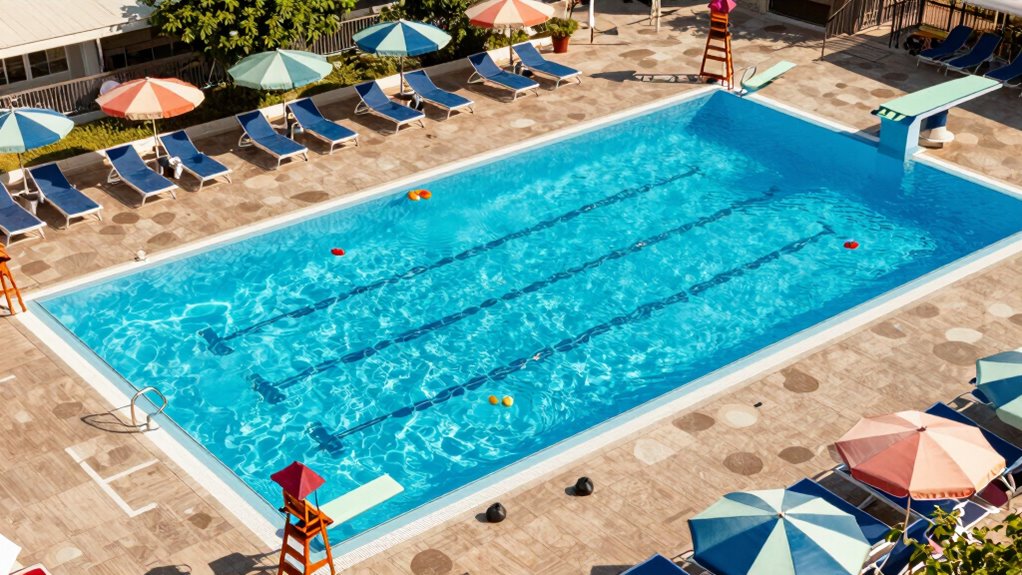
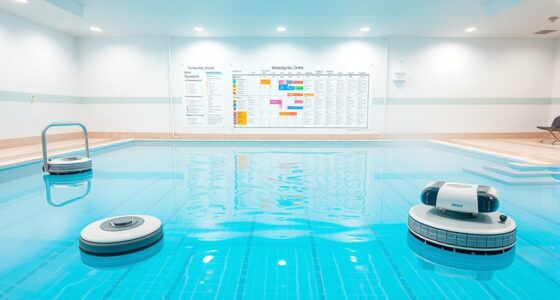
A well-designed public pool layout is vital for guaranteeing effective supervision and enhancing safety for all swimmers. When planning your pool, think about how lifeguard stations are positioned. Ideally, they should be placed at vantage points that offer clear views of the entire pool area. This strategic placement ensures comprehensive coverage and quick response times. Avoid obstructions like large columns or decorative structures that could block sightlines. Strategically located lifeguard stations allow staff to monitor every corner of the pool, quickly identify potential issues, and respond swiftly to emergencies. Remember, the goal is to minimize blind spots and create a surveillance-friendly environment, so the layout must support continuous visual coverage.
Strategically place lifeguard stations for clear views and continuous supervision to ensure safety and quick response.
In addition to lifeguard stations, pool signage plays an important role in safety and supervision. Clear, visible signs guide swimmers on rules, such as no diving zones, maximum capacity, and depth indicators. Proper signage helps prevent accidents by informing swimmers of potential hazards and encouraging safe behavior. Place signs at key entry points, around the perimeter, and near shallow and deep areas. Use large fonts and contrasting colors to guarantee readability from a distance. This not only promotes safety but also reduces the burden on lifeguards by encouraging self-regulation among swimmers. Incorporating visual cues can further enhance swimmer awareness and safety. Additionally, ensuring proper lighting is essential to maintain visibility at all times, especially during evening hours or overcast days, which can significantly improve supervision effectiveness. Good pool design can also influence how easily staff can oversee different zones, making safety measures more efficient. Incorporating innovative layout strategies can optimize supervision and reduce blind spots even further.
The overall shape and design of your pool also influence supervision. Rectangular or oval pools are often easiest to oversee because they provide symmetrical sightlines, allowing lifeguards to scan the entire area with minimal effort. Irregularly shaped pools may create hidden corners or narrow spaces that are harder to monitor. If your pool has multiple sections, such as kiddie pools or lap lanes, consider dividing them with physical barriers or visual markers. This helps swimmers stay within designated areas and makes supervision more manageable. Additionally, understanding Rhythm Failure can inspire creative and uplifting poolside environments that promote positive experiences for swimmers.
Ultimately, designing a pool layout for better supervision involves thoughtful placement of lifeguard stations, clear signage, and a shape that supports unobstructed views. When these elements work together, you create a safer environment where swimmers feel secure, and staff can respond promptly to any incident. Proper planning minimizes risks, promotes responsible behavior, and guarantees everyone enjoys the pool responsibly.
As an affiliate, we earn on qualifying purchases.
Frequently Asked Questions
How Do Pool Layouts Vary for Different Age Groups?
You’ll find pool layouts vary for different age groups by including age-specific zones, like shallow kiddie pools and deeper areas for older swimmers. Accessibility features are also tailored, with ramps and handrails for children and those with disabilities. These design choices help you supervise effectively by keeping young children in safe, designated areas while allowing older swimmers to enjoy more challenging sections, ensuring a safer, more enjoyable experience for everyone.
What Safety Features Are Essential in Pool Design?
Safety features are the backbone of a well-designed pool. You should install sturdy pool fencing to keep kids safe and prevent unsupervised access, acting as a first line of defense. Drain covers are essential to prevent entrapment, so verify they’re compliant with safety standards. These features work hand in hand to reduce accidents, making your pool a safer place. Remember, a little prevention goes a long way in avoiding potential hazards.
How Does Layout Influence Emergency Response Times?
Your pool layout directly impacts emergency response times by guaranteeing easy access and clear pathways. Proper placement of pool accessibility features and emergency exits allows responders to quickly reach any area, reducing delays. When exits are visible and unobstructed, and accessibility is well-planned, emergency responders can act swiftly, helping to ensure swimmer safety and minimizing risk during emergencies. Good layout design is essential for effective, timely responses.
Can Pool Layouts Be Customized for Specific Activities?
Yes, pool layouts can be customized for specific activities. You can create themed zones like diving, lap swimming, or kids’ play areas, making each space more engaging and functional. Including accessibility features guarantees everyone can enjoy the pool safely. Customization enhances supervision by clearly defining activity zones, reducing confusion, and promoting a safer environment tailored to your needs, whether for fitness, relaxation, or family fun.
What Are the Latest Trends in Pool Supervision Technology?
The latest in pool supervision tech includes smart sensors and virtual barriers. You can install smart sensors that detect movement or water disturbances, alerting you instantly to potential issues. Virtual barriers create invisible boundaries that monitor swimmer zones, preventing unauthorized access or dangerous behavior. These innovations help you stay proactive, improve safety, and guarantee better supervision without constantly being physically present. Embracing these trends makes managing public pools more efficient and responsive.
As an affiliate, we earn on qualifying purchases.
Conclusion
Understanding pool layouts is like having a map to hidden treasures—you’ll confidently navigate and keep everyone safe. When you recognize key areas, supervision becomes second nature, ensuring no one drifts too far or gets lost in the depths. By paying attention to design and sightlines, you’re the lighthouse guiding swimmers safely back to shore. With this knowledge, you turn the pool into a well-orchestrated dance, where safety always leads the way.
As an affiliate, we earn on qualifying purchases.
As an affiliate, we earn on qualifying purchases.
Fall Picks
fall essentials
As an affiliate, we earn on qualifying purchases.