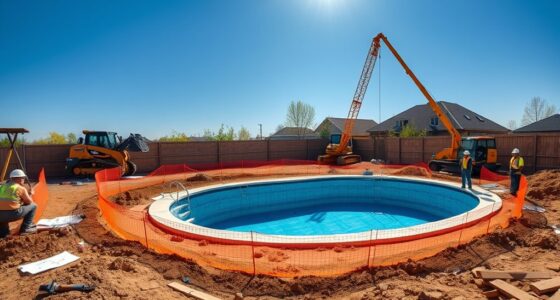

When dealing with rock and hard soil during excavation, start by stabilizing the ground with chemical binders or granular materials to support safe digging. For tough materials, controlled blasting with proper safety measures can break through resistant rock or packed earth efficiently. Planning and consulting geotechnical experts are vital for choosing the right approach and ensuring safety. If you keep exploring, you’ll discover more effective strategies to manage these challenging conditions.
Key Takeaways
- Conduct thorough geotechnical analysis to determine soil and rock properties before excavation.
- Use soil stabilization techniques like chemical injection or granular addition to support excavation.
- Employ controlled explosives for removing resistant rock and compacted soil efficiently and safely.
- Follow strict safety protocols, secure permits, and plan blasting to minimize vibrations and debris.
- Clear debris post-blasting and assess ground stability to ensure a safe foundation for subsequent construction.
Excavating through rock and hard soil can be one of the most challenging aspects of any construction project. When you face stubborn, dense ground, your goal is to find efficient ways to break through without wasting time or risking safety. Soil stabilization becomes a critical step before you even start breaking ground; it involves preparing the soil so it can support excavation activities safely and effectively. By stabilizing the soil, you reduce the risk of collapses and ensure a more controlled environment for your work. Techniques like injecting chemical binders or adding granular material can improve soil stability, making it easier to proceed with excavation and reducing the amount of force needed to penetrate tough layers.
Once the soil is stabilized, you may need to tackle particularly resistant rock formations or compacted earth. Here, explosive techniques often come into play. Using explosives isn’t about reckless blasting but rather a calculated, controlled process to fragment hard materials efficiently. When you employ these techniques properly, you can substantially reduce the physical effort required and speed up the excavation process. Proper planning is essential: you need to assess the type and stability of the rock or soil, determine the right amount and type of explosive, and ensure safety measures are in place to protect workers and equipment. These methods are especially useful when traditional mechanical tools like jackhammers or excavators aren’t sufficient, or when dealing with large-scale projects requiring rapid progress.
Before you decide to use explosive techniques, it’s crucial to consult geotechnical experts to understand the specific characteristics of the ground you’re working on. You’ll also need to secure the necessary permits and follow strict safety protocols to prevent accidents. Controlled blasting can be precisely timed and targeted to minimize vibrations and debris, making it a safer option for nearby structures and the environment. Post-blast, you’ll typically need to clear debris and assess the stability of the newly fractured ground, ensuring it’s suitable for subsequent construction activities. Additionally, understanding the environmental impacts of your excavation methods can help in choosing sustainable approaches that minimize ecological disruption.
Frequently Asked Questions
What Are the Environmental Impacts of Excavation Through Hard Soil?
When you excavate through hard soil, it can cause soil erosion and disturb local ecosystems. To minimize this, you should implement soil stabilization techniques and environmental mitigation measures like controlling runoff and preserving native vegetation. These actions help reduce soil disturbance, prevent sediment runoff, and protect nearby water sources, ensuring your excavation process remains environmentally responsible while maintaining project stability and reducing negative impacts on the surrounding environment.
How Does Weather Affect Excavation in Rocky Terrains?
Weather challenges profoundly impact your excavation in rocky terrains. Rain can turn hard soil into muddy, slippery conditions, slowing progress and causing safety hazards. Freezing temperatures make rocks and soil more brittle, increasing equipment wear and breakage risks. Hot, dry weather can lead to dust storms, reducing visibility and airflow. Terrain variability combined with weather conditions demands adaptable strategies, ensuring your excavation stays safe, efficient, and on schedule despite nature’s unpredictable influence.
What Safety Precautions Are Essential When Working With Hard Soil?
When working with hard soil, you need to prioritize safety by wearing proper personal protective equipment like helmets, gloves, and steel-toed boots. Always follow site safety protocols, including inspecting tools regularly and maintaining clear communication with your team. Be aware of potential hazards like falling debris or equipment malfunctions. Staying vigilant and adhering to safety guidelines helps prevent injuries and keeps everyone safe during excavation.
Can Existing Structures Influence Excavation Strategies?
Existing structures markedly influence your excavation strategies. You need to assess foundation stability carefully to prevent any damage or collapse. Structural reinforcement may be necessary to support nearby buildings during excavation, ensuring safety and stability. By analyzing how the existing structures interact with your work zone, you can plan appropriate shoring and support systems, minimizing risks and maintaining the integrity of both the excavation site and the surrounding infrastructure.
How Do Different Soil Types Impact Equipment Selection?
Different soil types markedly impact your equipment selection because soil stability varies. For softer soils, you’ll want lighter equipment and gentle excavation techniques to prevent collapse. In contrast, hard soils and rocky terrain require heavy-duty machinery like hydraulic breakers or excavators with rock jaws. Understanding soil stability helps you choose the right equipment, ensuring safe and efficient excavation while minimizing risks of equipment damage or project delays.
Conclusion
When you face rock and hard soil during excavation, remember you’re tackling some of the toughest challenges out there. With the right tools and techniques, you can turn what seems like an insurmountable mountain into just a bump in the road. Stay patient, stay prepared, and don’t let stubborn soil or rock slow you down—you’re capable of handling it all like a true excavation hero. After all, no obstacle is too big for your determination!