
Owning a pool can cost you hundreds to thousands of dollars annually when you include energy, chemicals, and time. Monthly energy bills spike with running pumps, heaters, and lighting, while chemical supplies add up for maintaining water quality. Plus, you spend time weekly testing, cleaning, and balancing chemicals. Being aware of these hidden expenses helps you manage costs better. Keep going to discover how to make your pool ownership more affordable and efficient.

Get pool and patio gear delivered free — and shop member deals
- Fast, free delivery on millions of items
- Access to Prime Big Deal Days deals on October 6–7
- Prime Video, Amazon Music and more included
Key Takeaways
- Energy costs include pumps, filters, heaters, and lighting, often totaling hundreds of dollars annually depending on usage and efficiency.
- Chemical expenses for water balancing and sanitation typically range from $300 to $600 per year.
- Routine maintenance tasks such as cleaning, skimming, and filter servicing can add up to $150–$300 annually.
- Time investment varies; weekly tasks can take several hours, with seasonal opening and closing requiring additional preparation.
- Proper management and equipment upgrades can significantly reduce overall yearly expenses and extend the lifespan of pool components.
The Hidden Energy Expenses of Pool Ownership
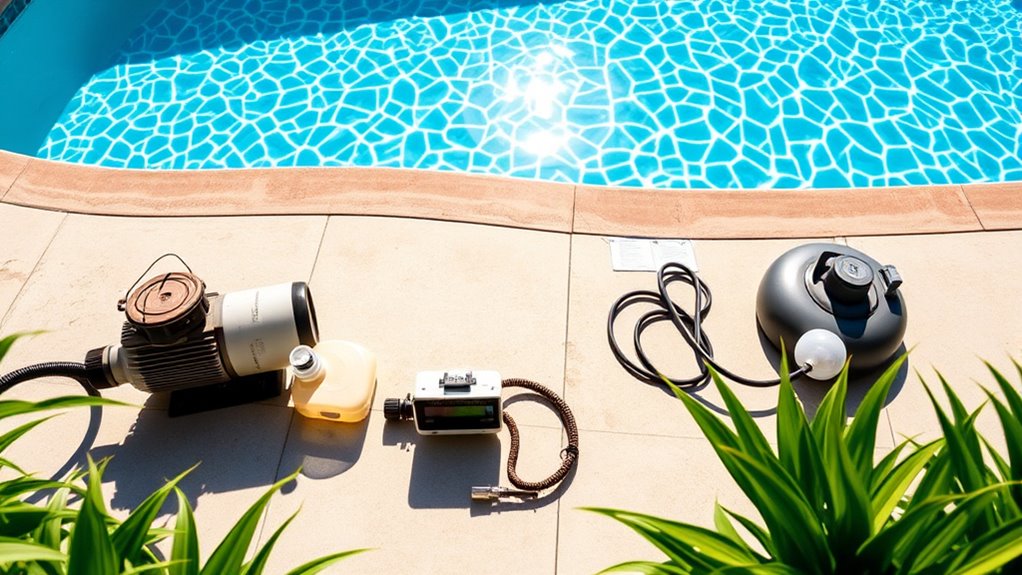
Have you ever considered how much energy your pool consumes beyond just the water? Pool equipment like pumps, filters, and heaters use significant power daily. Running the pump is often the biggest energy drain, especially if it operates for many hours each day. Even in colder months, maintaining water circulation prevents issues like algae growth and freezing, which keeps energy bills high. Heating your pool adds another layer of expenses, especially if you opt for electric or gas heaters. Lighting for nighttime swims and added features like waterfalls or jets also contribute to your energy costs. These hidden expenses can add hundreds of dollars annually without you realizing it. Being aware of these factors helps you manage and potentially reduce your overall pool-related energy consumption. Additionally, understanding pool equipment efficiency can help you select more energy-conscious upgrades.
Ongoing Chemical and Maintenance Costs
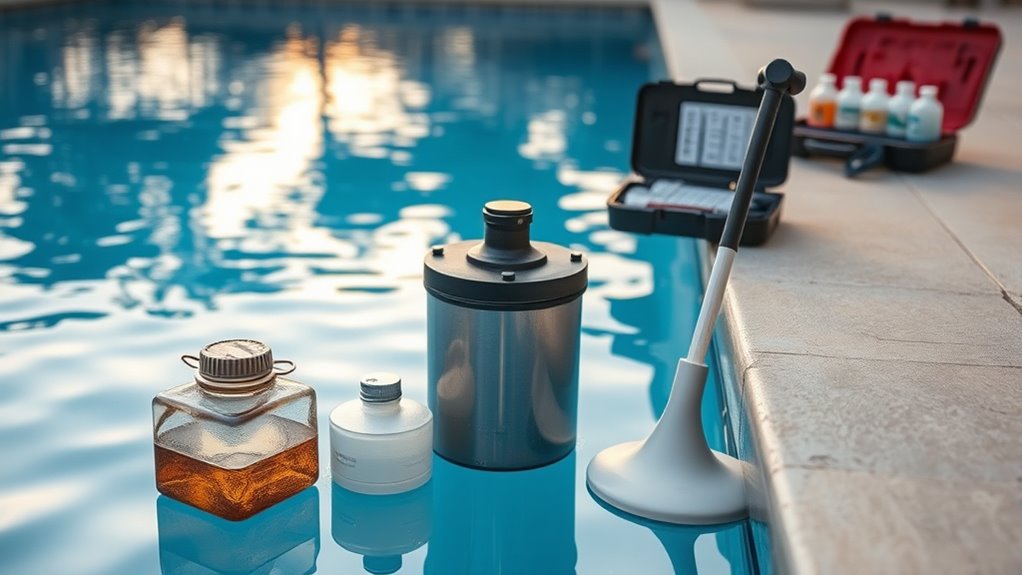
Beyond the energy expenses, maintaining a pool also involves ongoing chemical treatments and regular upkeep. You need to consistently test and balance pH levels, chlorine, and alkalinity to keep the water safe and clear. These chemicals can add up over time, especially during peak swimming season. Additionally, routine maintenance tasks like skimming debris, cleaning filters, and inspecting equipment require regular effort and costs. Proper pool tuning can extend the life of your equipment and improve water quality. Here’s a quick look at typical ongoing expenses:
| Item | Estimated Annual Cost |
|---|---|
| Pool Chemicals | $300 – $600 |
| Equipment Maintenance | $150 – $300 |
| Skimming & Cleaning | $100 – $200 |
| Filter & Pump Repairs | $100 – $250 |
Staying on top of these costs guarantees your pool remains inviting and functional year-round.
The Time Investment Behind Pool Care
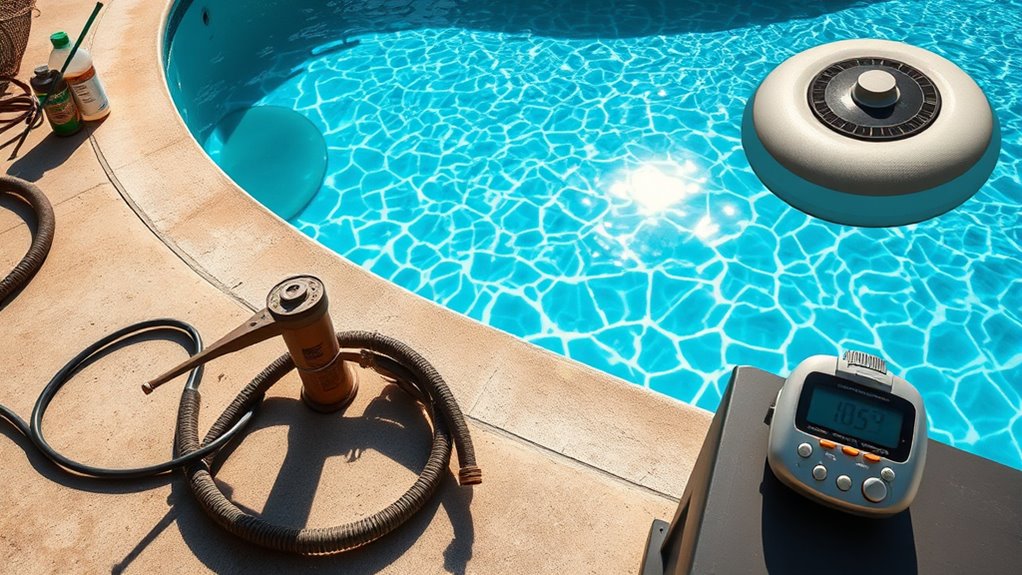
Maintaining a pool requires a significant time commitment, especially during peak swimming months. You’ll need to regularly skim debris, clean filters, and vacuum the pool to keep it inviting. Monitoring water levels, testing water chemistry, and adjusting chemicals also take time but are essential for safety and clarity. Weekly tasks can add up to several hours, and during heavy use, you may find yourself dedicating even more. Opening and closing the pool season involves detailed preparations and shutdown procedures, requiring additional hours. If you hire a professional, you’ll pay for their time, but if you do it yourself, expect to allocate consistent blocks of your free time. Proper pool care demands a steady investment of your time, especially if you want a clean, safe swimming environment. Additionally, implementing seasonal checklists can streamline your maintenance routine and ensure nothing is overlooked.
Frequently Asked Questions
How Does Pool Size Affect Annual Operating Costs?
A larger pool increases your annual operating costs because it requires more energy to heat, pump, and filter. Chemical expenses also rise as bigger volumes need more treatments to stay balanced and clean. Plus, maintenance time and effort grow with size, potentially raising labor costs. So, the bigger your pool, the more you’ll spend each year on energy, chemicals, and upkeep, making size a key factor in overall costs.
Are There Cost-Effective Ways to Reduce Chemical Usage?
You can save money on chemicals by investing in a good pool cover and installing a sand or cartridge filter system. These methods reduce chemical evaporation and improve filtration efficiency, meaning you use fewer chemicals overall. Regularly testing your water helps you adjust chemical levels precisely, preventing waste. Consider using mineral or oxygen-based algaecides as eco-friendly, cost-effective alternatives. These approaches prove that small adjustments can considerably cut your chemical costs over time.
What Unexpected Expenses Can Arise During Pool Maintenance?
You might face unexpected expenses like equipment repairs or replacements, especially if you neglect routine maintenance. Sudden leaks or pump failures can also catch you off guard, leading to costly fixes. Additionally, algae outbreaks or water imbalances may require extra chemicals or professional help. To avoid surprises, regularly inspect your pool equipment, monitor water quality, and address minor issues promptly before they escalate into expensive repairs.
How Does Weather Impact the Overall Cost of Pool Ownership?
Weather considerably impacts your pool’s costs. Hot, sunny weather increases evaporation, so you’ll spend more on water and chemicals to maintain proper pH levels. Storms can introduce debris, leading to extra filtration and cleaning. Cold weather might reduce chemical use but can cause freezing issues if not properly winterized. Overall, unpredictable weather patterns can lead to higher energy bills and maintenance expenses, making it essential to plan for these fluctuations.
Can Automation Tools Save Time and Money on Pool Care?
Yes, automation tools can save you both time and money on pool care. You might think they’re complicated or expensive, but many devices are user-friendly and cost-effective. They handle tasks like balancing chemicals, filtering, and cleaning automatically, so you don’t have to. This reduces your manual effort, minimizes chemical waste, and keeps your pool in top shape, ultimately lowering your ongoing expenses and giving you more leisure time.
Conclusion
Now that you see the secret sums behind pool ownership—energy, chemicals, and countless hours—you realize it’s more than just a splash of fun. Every dollar and day spent adds up, demanding dedication and dollars alike. By understanding these unseen costs, you can make smarter, more sustainable choices. So, take control, cut costs, and create a carefree, cost-conscious oasis. Because a well-maintained pool is worth more than just the money—it’s your mindful mastery of pool maintenance.
Fall Picks
fall essentials
As an affiliate, we earn on qualifying purchases.