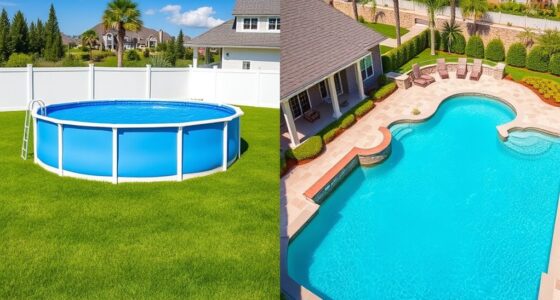

Start by evaluating your pool’s structure and safety features. If you notice cracks, loose tiles, or weak fencing, prioritize a remodel to address safety hazards first. If the structure is sound but your equipment is outdated or inefficient, upgrading the equipment can improve performance and save costs. For long-term safety, efficiency, and durability, combining both approaches is often best. To make a well-informed choice, consider key factors discussed here to see what suits your situation best.

Get pool and patio gear delivered free with Prime
- Fast, free delivery on millions of items
- Prime Video, Amazon Music and more included
- Member-only deals all year
Key Takeaways
- Assess the pool’s structural integrity and safety hazards before deciding on upgrades or remodels.
- Prioritize safety issues like cracks or loose tiles to ensure a secure swimming environment.
- If the structure is sound, consider upgrading equipment to improve efficiency and reduce costs.
- Address safety and structural concerns through remodeling first, then upgrade equipment afterwards.
- Evaluate the overall condition and long-term benefits to determine the most cost-effective sequence.
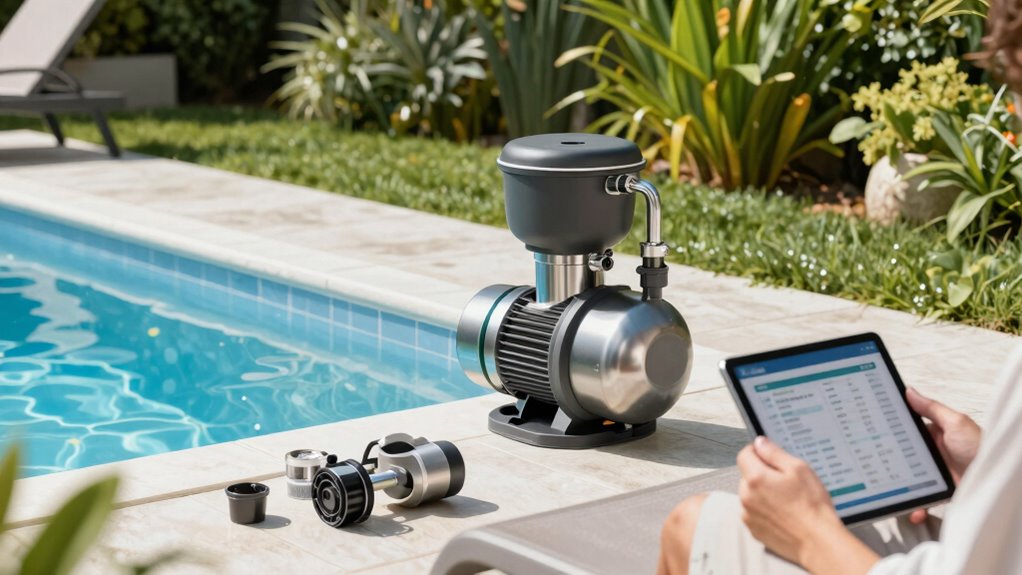
Deciding whether to remodel your pool or upgrade its equipment first can seem overwhelming, but understanding your priorities and the current condition of your pool system makes the process straightforward. The key is to assess what matters most to you—whether it’s safety, energy savings, or both—and to evaluate the existing state of your pool and its equipment. If your pool has outdated or malfunctioning equipment, upgrading can immediately improve efficiency and reduce costs. On the other hand, if your pool’s structure shows signs of wear or doesn’t meet current safety standards, a remodel might be the better initial step.
Pool safety should be at the top of your list. Cracks, loose tiles, or weak fencing can pose hazards, and addressing these issues during a remodel ensures your pool is safe for everyone. Upgrading equipment alone won’t fix structural problems or improve safety barriers, so if safety is a concern, remodeling should come first. Conversely, if your safety features are solid but your equipment is old, inefficient, or prone to breakdowns, upgrading the system can enhance your pool experience without the need for a full remodel.
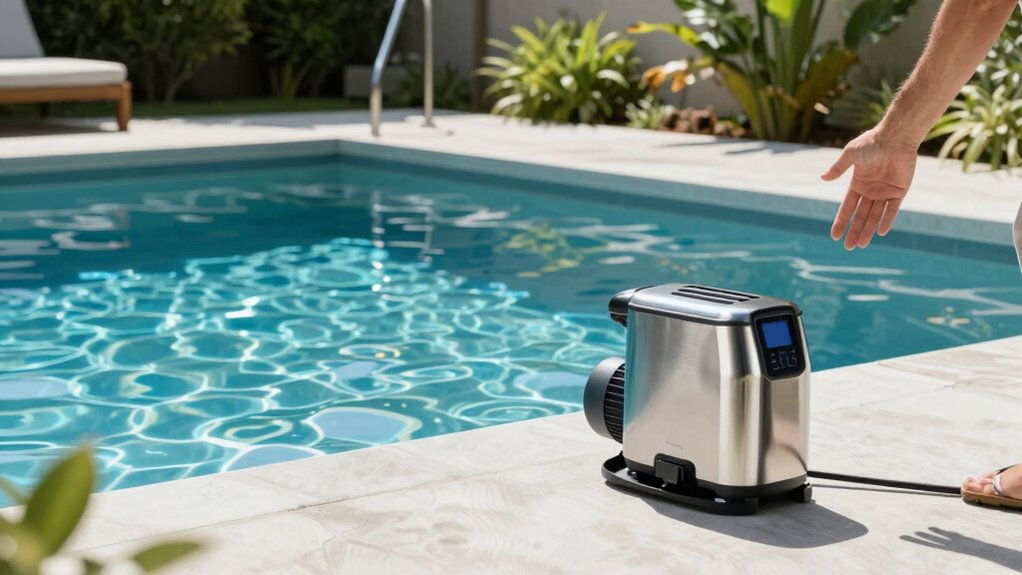
Energy efficiency is another crucial factor. Modern pool equipment, such as variable-speed pumps, energy-efficient heaters, and automated controls, can markedly cut your energy bills. If your current setup is outdated, upgrading can be a smart move to lower operating costs and reduce your environmental footprint. These upgrades also tend to be less invasive and less costly than a full remodel, making them an attractive first step if your main goal is saving money over time. Additionally, incorporating energy-efficient technology can further optimize your pool’s performance.
However, consider that upgrading equipment on an aging or damaged pool might not be as effective. If your pool’s structure is compromised or outdated, installing new equipment won’t address underlying issues, and you might find yourself replacing equipment again soon. In this case, a remodel that includes structural repairs and safety enhancements makes more sense before upgrading the system. Recognizing the importance of pool system evaluations can help ensure your investments are well-placed. A thorough assessment of your pool’s overall condition, including structural integrity, can guide your decision more effectively and prevent costly mistakes.
Furthermore, understanding the long-term costs associated with each option can help you make a more informed decision aligned with your budget and goals. Ultimately, your decision hinges on your specific situation. If safety hazards or structural issues exist, prioritize remodeling. If the pool’s structure is sound but the equipment is inefficient or outdated, start with upgrades to save energy and improve performance. Sometimes, combining both approaches—remodeling to address safety and structural concerns first, then upgrading equipment—provides the best long-term results. By carefully evaluating your pool’s condition and your priorities, you can make a clear, confident choice that ensures safety, efficiency, and enjoyment for years to come.
As an affiliate, we earn on qualifying purchases.
Frequently Asked Questions
How Much Does Pool Remodeling Typically Cost?
Pool remodeling costs vary based on size, design, and materials, typically ranging from $10,000 to $50,000 or more. If you’re considering pool design updates or landscaping ideas, budget accordingly. Upgrading equipment might be a smaller expense, while a full remodel can include new tile, decking, and features. You should assess your priorities and budget to determine whether to start with remodeling or equipment upgrades first.
What Are the Signs My Current Equipment Needs Replacing?
Your pool equipment is like an aging car—signs of trouble are hard to ignore. If you notice frequent breakdowns, rising energy bills, or inconsistent water quality, it’s time to contemplate replacement. Poor pool maintenance results from equipment nearing the end of its lifespan. Typically, pumps and filters last 8-12 years. When repairs become costly or ineffective, upgrading guarantees your pool stays efficient, clean, and enjoyable.
How Long Does Pool Equipment Upgrade Usually Take?
Upgrading your pool equipment typically takes a few hours to a full day, depending on the complexity. During this time, you can guarantee pool safety by properly installing new systems and make aesthetic improvements that enhance your backyard’s look. Planning ahead helps minimize downtime, so you can quickly enjoy a safer, more attractive pool. Always work with professionals to ensure the upgrade is done efficiently and correctly.
Can I Upgrade Equipment Without Remodeling the Pool?
You can definitely upgrade your equipment without remodeling your pool. Think of it as giving your pool a tune-up rather than a full makeover. Upgrading improves water chemistry and efficiency, which can enhance pool aesthetics. As long as your current structure is sound, new equipment like filters or pumps can be installed independently. This way, you maintain a beautiful, well-functioning pool without the hassle of a complete remodel.
Are There Energy-Efficient Options for Pool Equipment Upgrades?
Yes, there are energy-efficient options for pool equipment upgrades. You can choose eco-friendly pumps, variable-speed motors, and energy-saving filters that substantially reduce energy consumption. These upgrades offer excellent energy savings and help lower your utility bills. By selecting eco-friendly options, you not only improve your pool’s efficiency but also contribute to environmental conservation, making your pool operation more sustainable and cost-effective in the long run.
As an affiliate, we earn on qualifying purchases.
Conclusion
Ultimately, the choice between remodeling and upgrading your pool equipment is like choosing between a fresh coat of paint and a sturdy foundation—each serves a purpose. Sometimes, you need to strengthen what’s beneath before adding new layers. By carefully evaluating your pool’s current state and future needs, you’ll make a decision that ensures your backyard oasis remains both beautiful and functional. Remember, wisdom lies in knowing when to build up and when to refresh.
As an affiliate, we earn on qualifying purchases.
As an affiliate, we earn on qualifying purchases.
Halloween Picks
halloween
As an affiliate, we earn on qualifying purchases.