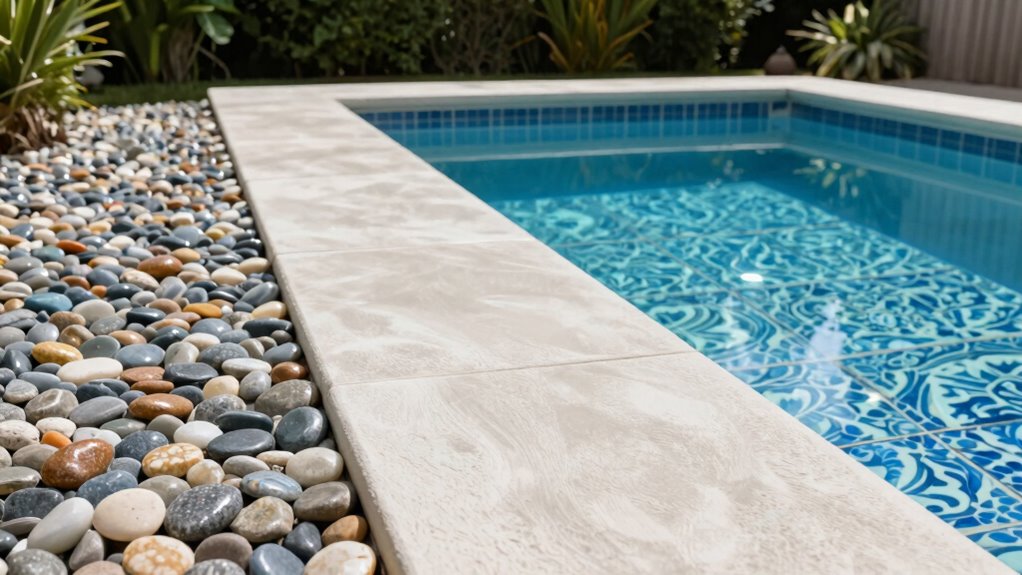

To compare pool finishes without feeling overwhelmed, focus on key factors like durability, appearance, budget, and maintenance. Think about how long each finish lasts and how it suits your style, whether sleek or natural. Consider upfront costs versus long-term expenses, and how much upkeep is involved. Visiting local pools or samples can help you visualize the look. Keep these priorities in mind to simplify your decision—there’s more to discover if you keep exploring your options.

Get pool and patio gear delivered free — and shop member deals
- Fast, free delivery on millions of items
- Access to Prime Big Deal Days deals on October 6–7
- Prime Video, Amazon Music and more included
Key Takeaways
- Prioritize finishes based on your budget, durability needs, and maintenance willingness.
- Collect samples or visit pools with different finishes to compare their appearance in various lighting.
- Consult with professionals to understand technical differences and get personalized recommendations.
- Focus on one or two key factors, like longevity or aesthetics, to narrow your options.
- Use visual tools or mood boards to see how each finish complements your landscape and style.
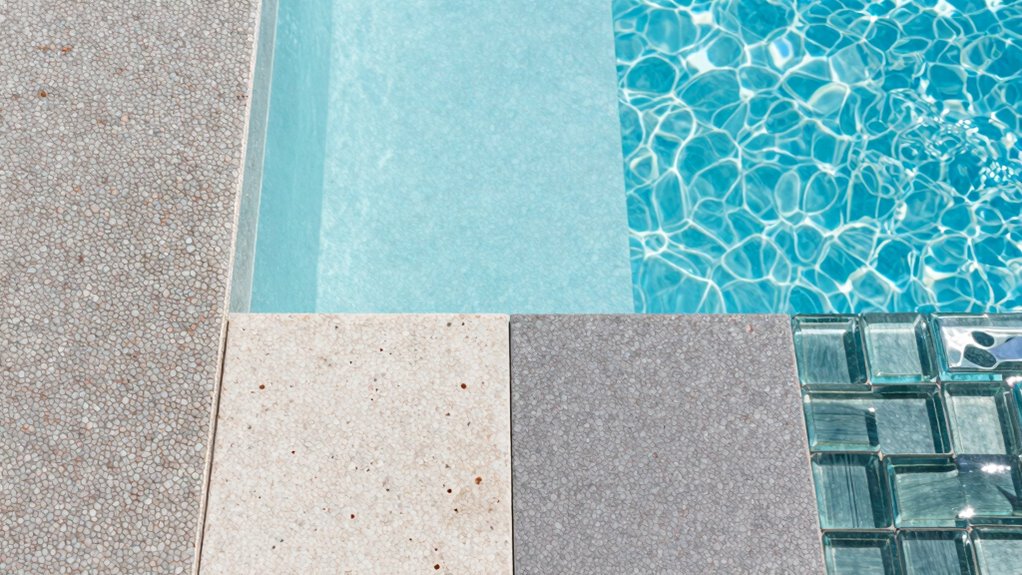
Are you overwhelmed by the variety of pool finishes available? With so many options on the market, it’s easy to feel lost when trying to pick the right one for your backyard oasis. The key is to focus on what matters most to you—whether it’s longevity, looks, or a balance of both. When comparing pool finishes, start by considering pool finish durability. Some finishes, like plaster, tend to wear down faster and may require more frequent repairs or resurfacing. Others, such as pebble or aggregate finishes, boast longer-lasting durability and can withstand harsh weather conditions and constant exposure to water chemicals. Knowing how often you’re willing to perform maintenance or repairs can help narrow down your choices.
Choosing durable pool finishes like pebble or aggregate ensures longevity and reduces maintenance needs over time.
Next, think about aesthetic appeal options. The beauty of your pool isn’t just about the shape or size but also the finish that covers its surface. If you want a sleek, modern look, you might lean toward finishes that offer a smooth, shiny surface, like polished plaster or quartz. For a more natural, textured appearance, pebble or aggregate finishes can give your pool a rustic or stone-like vibe that blends seamlessly with outdoor landscapes. Remember, the right aesthetic can elevate your entire backyard experience, so choose a finish that aligns with your personal style and the overall design of your outdoor space.
While comparing finishes, it’s also wise to evaluate how each option fits into your budget. Some finishes, like basic plaster, are more affordable upfront but might require more frequent repairs, increasing costs over time. Premium finishes, such as glass or certain aggregate options, tend to be more expensive initially but can save you money in the long run because of their durability. Additionally, assess the maintenance requirements for each finish. Some surfaces might need special cleaning or specific chemicals to keep their appearance, which could influence your decision depending on how much time and effort you want to dedicate to upkeep. Understanding the long-term durability of each finish can help you make a more informed choice that aligns with your priorities. Keep in mind that understanding pool terminology can also assist you in communicating effectively with professionals about your options.
Lastly, don’t forget to consult with professionals or visit pools with different finishes to see them in action. Sometimes, seeing the actual surface under different lighting conditions helps you visualize how it will look in your backyard. By balancing your priorities—whether durability, aesthetics, budget, or maintenance—you can confidently compare pool finishes without feeling overwhelmed, ensuring you pick the perfect finish that combines style and longevity for your pool.
As an affiliate, we earn on qualifying purchases.
Frequently Asked Questions
How Long Do Different Pool Finishes Typically Last?
Different pool finishes last varying lengths of time. Plaster typically lasts 7-10 years, while pebble finishes can go 15-25 years, and quartz finishes usually last 10-15 years. Your choice of pool surface textures and color options influences durability—rougher textures might wear faster. Bright colors may fade sooner, especially in harsh sunlight. Consider these factors to match your desired longevity with your aesthetic preferences and maintenance plans.
Are Certain Finishes More Prone to Algae Growth?
Certain pool finishes are more prone to algae growth, especially those with rougher surface textures, which trap debris and promote algae buildup. Finishes with high algae resistance, like plaster or quartz, tend to resist algae better. You should consider smooth, non-porous finishes for easier maintenance. Regular cleaning and proper chemical balance also help prevent algae regardless of the finish, keeping your pool clearer and healthier.
What Maintenance Is Required for Various Pool Finishes?
You need to regularly clean and balance your pool water, regardless of the finish. For plaster finishes, expect more frequent brushing and chemical checks to prevent staining. Pebble finishes are durable but may require occasional acid washing. Vinyl liners need inspections for tears and proper chemical levels. Consider color options and texture variations; darker finishes might absorb more heat, requiring less maintenance, while textured surfaces could trap debris, needing more cleaning.
How Do Finishes Affect Pool Heating Efficiency?
Your pool’s finish impacts heating efficiency through its color and surface texture. Lighter-colored finishes reflect more heat, helping your pool stay warmer, while darker shades absorb sunlight, increasing temperature. Smooth surfaces like plaster or pebble tend to retain heat better than rough textures, which can cause heat loss. So, choosing a finish with a favorable pool color and surface texture can make your pool more energy-efficient and cozy, especially in cooler months.
Can I Change My Pool Finish Later Easily?
You can change your pool finish later, but it’s not always simple. About 80% of pool owners opt for a different finish within five years. Your pool color and finish texture influence the process—some finishes, like plaster, are easier to update than pebble or tile. Keep in mind, changing the finish involves draining the pool and professional work, so plan accordingly for a smooth progression later on.
As an affiliate, we earn on qualifying purchases.
Conclusion
So, next time you stand bewildered in front of a sea of shimmering pool finishes, remember: choosing one is like picking a star in the sky—overwhelming yet dazzling. Don’t drown in the dazzling options; instead, imagine your pool as a giant chocolate cake, and pick the finish that makes you crave a dip. After all, your backyard oasis should be a place where you can relax, not a maze of glossy confusion.
As an affiliate, we earn on qualifying purchases.
As an affiliate, we earn on qualifying purchases.
Fall Picks
fall essentials
As an affiliate, we earn on qualifying purchases.