
TL;DR

Get pool and patio gear delivered free with Prime
- Fast, free delivery on millions of items
- Prime Video, Amazon Music and more included
- Member-only deals all year
A Gardener’s Path gardening report describes three ways to protect banana plants from winter cold: overwinter container plants indoors, heavily mulch plants in the ground, or dig up and store the rhizomes. The right method depends on the plant, available storage and local temperatures; most bananas are cold-sensitive, while some varieties, including Musa basjoo, tolerate colder conditions.
Gardener’s Path has outlined three ways gardeners can protect banana plants through winter: move container-grown plants indoors, insulate in-ground plants with mulch, or dig up and store their roots in a cool space. The advice matters because most banana plants are sensitive to cold, and a plant’s survival depends on protecting its underground rhizome as well as its above-ground growth.
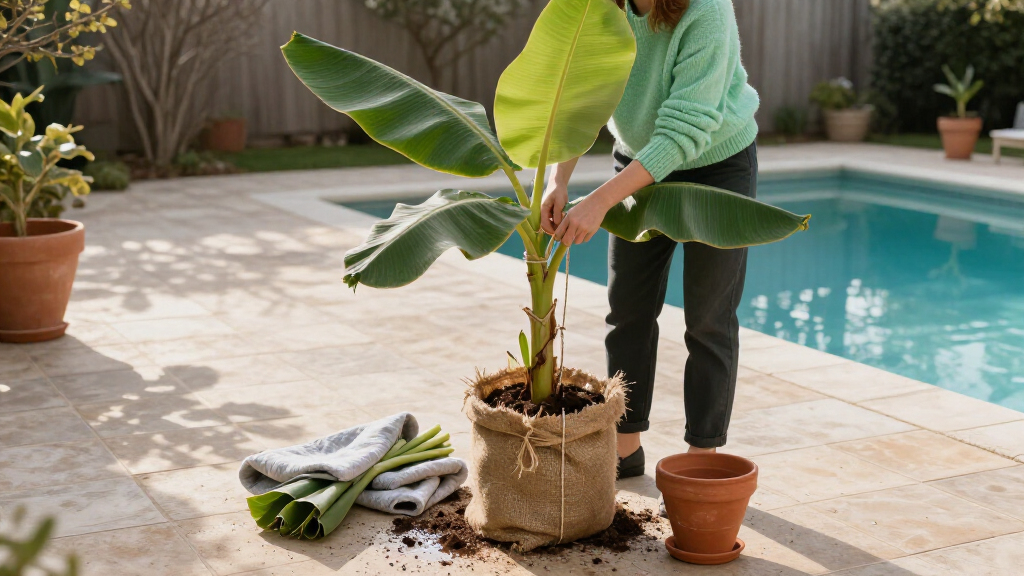
The report says gardeners can keep a potted banana in a sunny indoor spot, watering enough to keep the soil moist but not waterlogged. For storage in a cool, dark place such as a garage or crawl space, it advises gradually reducing watering as temperatures fall, cutting the stem to about six inches, and keeping the plant at roughly 40 to 50°F. Water only enough to stop the soil pulling away from the container; resume regular watering outdoors after frost danger has passed.
For an in-ground plant, the report recommends cutting it back to about four to six inches above the ground and covering it with at least a foot of leaves, straw or other mulch, as part of preparing tender plants for winter. Plastic sheeting, row cover or a cloche can help protect and hold the covering in place. Alternatively, a wire cage around the stem can be packed with leaves or straw. The report advises removing the protective materials when warmer weather returns and the plant shows regrowth.
A third option is to lift the plant before the first frost and store its rhizome and roots. The report suggests digging at least six to eight inches out from the stem, placing the root ball in a container of slightly moist sand, and keeping it in a space that stays around 45 to 50°F. Stored plants do not need light or watering during dormancy, according to the guidance. Replant once frost danger has passed.
Protecting the Rhizome From Frost
Winter protection can determine whether a banana plant returns the following growing season. The report says leaves can suffer damage at 32°F, while sustained temperatures of 22°F or lower can kill underground rhizomes. These figures are presented as general guidance, not a guarantee for every cultivar or growing condition.
The three approaches give gardeners different ways to manage that risk: keep a container plant portable, insulate an established plant where it grows, or move its root system into protected storage. In each case, the key is to plan around local cold and frost rather than wait until damaging temperatures arrive.
As an affiliate, we earn on qualifying purchases.
Cold Limits Vary by Variety
Banana plants are members of the genus Musa. Their apparent trunks are pseudostems, formed from tightly layered leaves, while the plant’s rhizome grows underground and can produce new shoots. The report says leaf growth stops at about 55°F, a sign of why many varieties struggle in cold climates.
Not all bananas have the same hardiness. Gardener’s Path identifies Musa basjoo, the Japanese fiber banana, as a cold-tolerant variety that can survive sub-zero temperatures and is suited to USDA Zones 5 or 6 with protection. The report says most banana plants are better suited to USDA Zone 9 or warmer. Gardeners should check the hardiness information for their specific variety rather than assume the guidance for one type applies to all.
garden mulch for winter protection
As an affiliate, we earn on qualifying purchases.
As an affiliate, we earn on qualifying purchases.
Local Conditions Shape Outcomes
The guidance does not establish a single method that will work for every plant or climate. Cold tolerance varies by cultivar, and the report’s temperature ranges do not specify how long a plant can withstand all intermediate temperatures or how factors such as wind, soil moisture and the duration of a freeze affect survival. It also does not provide location-specific frost dates.
Gardeners should check local forecasts and identify their variety before choosing a method. The report’s instructions are general horticultural guidance; survival is not guaranteed, particularly after severe or prolonged cold.
As an affiliate, we earn on qualifying purchases.
Prepare Before Frost Arrives
Gardeners planning to overwinter a banana plant should choose a storage or protection method before the first frost, then follow local temperatures as the season changes. Container plants intended for indoor storage can be brought in as outdoor temperatures drop. In-ground plants need mulch or another protective setup in place before damaging cold reaches the plant.
When warmer weather returns and frost danger has passed, the report advises uncovering protected plants, trimming dead material where needed, and restarting regular watering. Stored rhizomes can be replanted at that point. The plant’s response as growth resumes will show how it has fared through winter.
plant protective cover for banana plants
As an affiliate, we earn on qualifying purchases.
As an affiliate, we earn on qualifying purchases.
Key Questions
When should I prepare a banana plant for winter?
Prepare before the first frost or before outdoor temperatures reach levels that could damage the plant. The exact timing depends on local weather and the variety being grown.
Can I keep a banana plant in a pot indoors?
Yes. Gardener’s Path recommends bringing container-grown plants indoors as temperatures fall. A sunny location suits a plant kept growing, while a cool, dark space at about 40 to 50°F can be used for dormant storage with reduced watering.
How much mulch does an in-ground banana plant need?
The report recommends cutting the plant back to about four to six inches above ground and piling on at least one foot of leaves, straw or similar mulch. A cover or packed wire cage can add protection, but results depend on conditions and variety.
Can banana rhizomes be stored without water or light?
For a dug-up plant stored dormant at about 45 to 50°F, the report says to place the root ball in slightly moist sand and provide no light or watering during storage. Replant after the danger of frost has passed.
Are any banana plants cold-hardy?
Gardener’s Path identifies Musa basjoo as a cold-tolerant type and says it can be grown in USDA Zones 5 or 6 with winter protection. Check the hardiness of the specific cultivar before relying on that example.
Source: rss
Fall Picks
fall essentials
As an affiliate, we earn on qualifying purchases.