
TL;DR

Get pool and patio gear delivered free with Prime
- Fast, free delivery on millions of items
- Prime Video, Amazon Music and more included
- Member-only deals all year
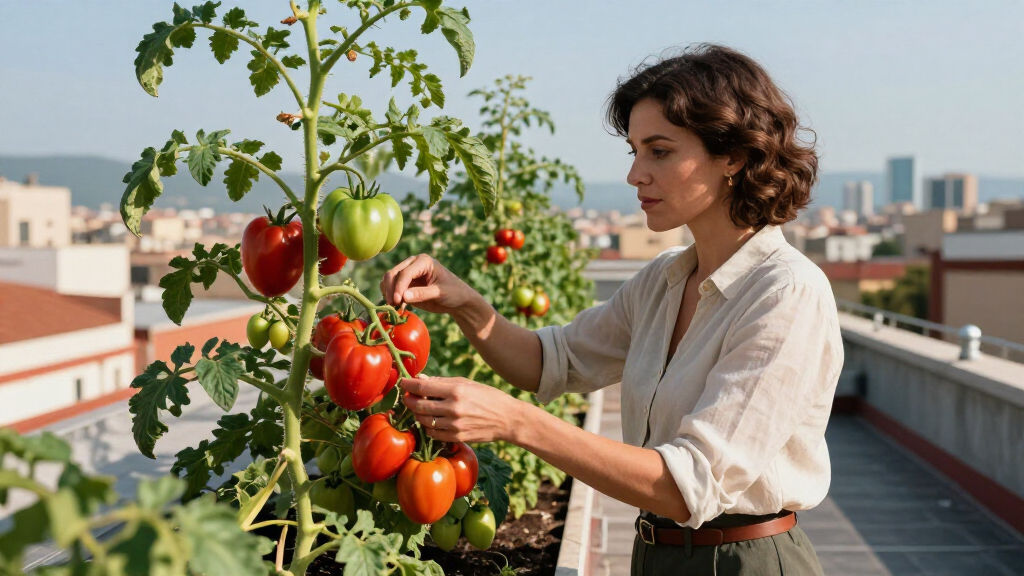
A study by the Autonomous University of Barcelona indicates that rooftop gardens on municipal buildings could supply up to 31% of the tomatoes consumed in the city. This highlights significant urban agriculture potential but remains in early research stages.
A new study by the Autonomous University of Barcelona estimates that up to 31% of the tomatoes consumed in Barcelona could be produced on municipal rooftops. This finding highlights the potential for urban agriculture to reduce food imports and improve local sustainability, though the concept remains in early stages of assessment.
The study, conducted by researchers at the Autonomous University of Barcelona, analyzed the available rooftop space on municipal buildings across the city. They found that, if utilized for tomato cultivation, these rooftops could produce a significant share of the city’s demand, which is roughly estimated at several thousand tons annually.
The researchers emphasized that this potential depends on multiple factors, including the technical feasibility of rooftop farming, the types of tomatoes suitable for urban cultivation, and the investment needed for infrastructure upgrades. While the study is preliminary, it underscores the growing interest in urban food self-sufficiency and sustainable city planning.
City officials have not yet formally adopted policies based on these findings, but the concept has gained attention among urban planners and environmental advocates seeking innovative ways to address food security and reduce the city’s carbon footprint.
Implications for Urban Sustainability and Food Security
This research demonstrates the untapped potential of urban rooftops to contribute significantly to local food production. If implemented, such initiatives could reduce the city’s reliance on food imports, lower transportation emissions, and promote sustainable urban living. It also offers a model for other cities exploring urban agriculture as a means to enhance resilience against supply chain disruptions.
However, the practical challenges—such as structural assessments, soil and water management, and policy support—must be addressed before large-scale implementation can occur. The findings could influence future city planning and sustainability policies, especially as climate change pressures intensify.
As an affiliate, we earn on qualifying purchases.
Growing Interest in Urban Agriculture in Barcelona
Barcelona has seen a rising interest in urban agriculture over the past decade, driven by concerns over climate change, food security, and local sustainability. Several community-led rooftop gardens and urban farms already exist, but large-scale municipal initiatives remain limited.
The concept of using city rooftops for food production is not new globally, but Barcelona’s dense urban fabric presents unique opportunities and challenges. The recent research by the Autonomous University of Barcelona aligns with broader trends toward more self-sufficient cities and innovative land use strategies.
While the idea of rooftop tomato farms is still in the early stages of exploration, it reflects the growing recognition of urban spaces as valuable resources for food production, especially as cities seek to reduce their environmental impact.
tomato growing containers for rooftops
As an affiliate, we earn on qualifying purchases.
As an affiliate, we earn on qualifying purchases.
Uncertainties About Practical Implementation and Scale
It is not yet clear how feasible large-scale rooftop tomato farming would be in terms of structural safety, water management, and economic viability. The study is preliminary, and detailed assessments are still needed to determine the actual potential and obstacles.
Additionally, the exact amount of rooftop space suitable for cultivation and the types of tomatoes that could thrive in urban conditions remain to be confirmed. The impact of local regulations and necessary infrastructure investments also needs further clarification.
vertical garden systems for city rooftops
As an affiliate, we earn on qualifying purchases.
As an affiliate, we earn on qualifying purchases.
Next Steps for Research and Policy Development
Researchers plan to conduct detailed feasibility studies, including structural assessments and pilot projects on selected rooftops. City officials are expected to review the findings and consider policies to support urban agriculture initiatives. Public consultation and stakeholder engagement will likely follow to shape future implementation strategies.
Further research will also explore other crops suitable for rooftop cultivation, aiming to develop comprehensive urban farming models that can be scaled across the city.
solar-powered irrigation systems for urban gardens
As an affiliate, we earn on qualifying purchases.
As an affiliate, we earn on qualifying purchases.
Key Questions
Can rooftop gardens really produce a third of Barcelona’s tomatoes?
According to the recent study, rooftop gardens could potentially supply up to 31% of the city’s tomato consumption, but this is based on preliminary analysis and practical implementation challenges remain.
What are the main challenges to implementing rooftop tomato farms?
Key challenges include structural safety of buildings, water supply and management, soil quality, investment costs, and regulatory approvals. Further detailed assessments are needed to address these issues.
Would rooftop farming reduce Barcelona’s carbon footprint?
Potentially, yes. Local food production on rooftops could cut transportation emissions and promote sustainable urban living, aligning with broader environmental goals.
Are there any existing rooftop farms in Barcelona?
Yes, some community-led rooftop gardens exist, but large-scale municipal rooftop farming initiatives are still in the planning or conceptual stages.
When might rooftop tomato farms become a reality in Barcelona?
It remains uncertain. Further feasibility studies and pilot projects are needed, and policy development could take several years before large-scale implementation occurs.
Source: local
Fall Picks
fall essentials
As an affiliate, we earn on qualifying purchases.