Understanding evaporation basics helps you effectively manage your pool’s water levels, preventing equipment damage and unsafe conditions. When water evaporates, it alters chemical balance, leading to issues like algae growth or cloudy water. By knowing how evaporation works and using proper tools like covers, you can conserve water, save on chemicals, and keep your pool safe and clean. Keep exploring to discover practical strategies that make maintenance easier and more efficient.

Get pool and patio gear delivered free with Prime
- Fast, free delivery on millions of items
- Prime Video, Amazon Music and more included
- Member-only deals all year
Key Takeaways
- Understanding evaporation helps maintain proper water levels, ensuring efficient filtration and safe swimming conditions.
- Knowledge of evaporation effects allows for better chemical balance, preventing algae growth and equipment damage.
- Recognizing evaporation factors enables effective water conservation and reduces unnecessary replenishment costs.
- Monitoring evaporation helps detect issues early, promoting safety and avoiding equipment malfunctions.
- Awareness of evaporation’s impact supports tailored maintenance routines for cleaner, healthier pool water.
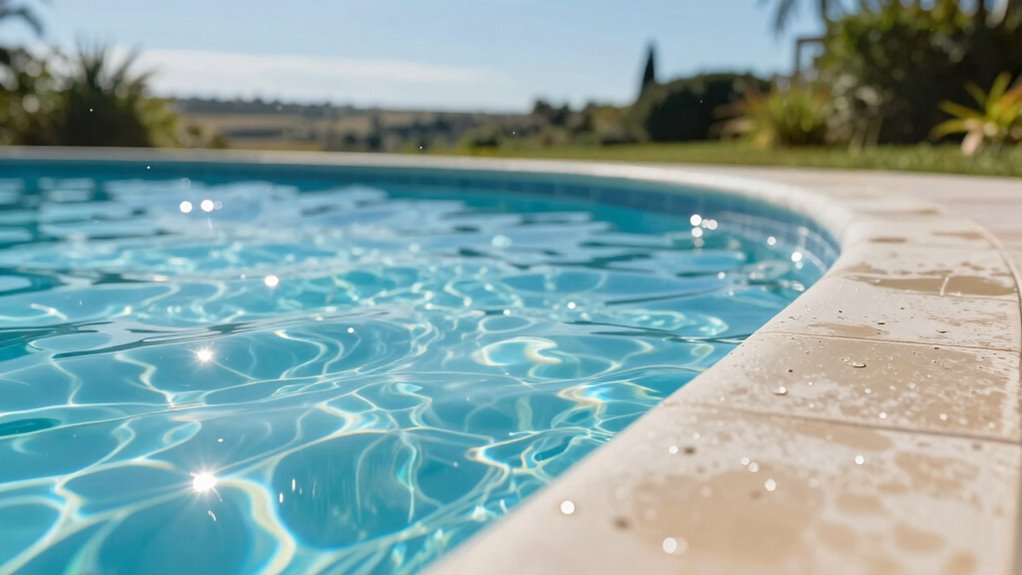
Have you ever wondered why your pool seems to lose water even when you’re not swimming? It’s a common question among pool owners, and the answer often comes down to evaporation. Understanding the basics of evaporation helps you better manage your pool’s water levels and maintain a safe, inviting environment. When water evaporates, it’s not just about losing volume; it can also affect your pool’s chemical balance. As water disappears, the concentration of chemicals like chlorine and pH can shift, leading to an imbalance that may cause algae growth, cloudy water, or corrosion. Keeping an eye on evaporation helps you anticipate these changes and make adjustments before problems escalate.
Pool water loss from evaporation impacts chemical balance and pool health. Keep an eye on levels to prevent issues.
Knowing why your pool loses water is only part of the picture. You should also be aware of safety precautions associated with evaporation and water level management. For example, if the water level drops too low, your pool’s skimmer and filtration system won’t work properly, which can lead to equipment damage or unsafe swimming conditions. Regularly checking and maintaining the proper water level ensures your pool operates efficiently and safely. Additionally, evaporation can cause the pool’s surface temperature to fluctuate, which might lead to condensation or even slippery surfaces around the pool area. To minimize these risks, consider installing safety barriers or warning signs, especially if children or pets are around. Using pool covers can also significantly reduce water evaporation and improve safety.
Understanding evaporation also empowers you to implement practical steps to reduce unnecessary water loss. Covering your pool with a solar or safety cover when it’s not in use can substantially cut down on water loss from evaporation. This doesn’t just save water— it also helps maintain the chemical balance by reducing the rate at which chemicals evaporate or become concentrated. Furthermore, adjusting your pool’s water chemistry regularly is essential to counteract the effects of evaporation, keeping the water safe and comfortable for swimmers. Recognizing evaporation’s role in water chemistry allows for more precise control over chemical levels and prevents issues like corrosion or algae. Moreover, understanding the factors influencing evaporation such as temperature, humidity, and wind can help you better tailor your water conservation efforts. Incorporating climate considerations into your maintenance routine can further optimize your efforts to control water loss.
Recognizing evaporation’s role in your pool’s health encourages you to develop a routine for water level checks and chemical testing. By doing so, you prevent problems like algae blooms or equipment wear, and you promote a safer swimming environment. Additionally, understanding the factors influencing evaporation, such as temperature, humidity, and wind, can help you better tailor your water conservation efforts. Understanding these basics allows you to manage your pool more effectively, saving water, reducing chemical waste, and ensuring safety. In the end, a well-informed approach makes maintaining your pool easier and more enjoyable, giving you peace of mind every time you take a dip.
pool cover for evaporation reduction
As an affiliate, we earn on qualifying purchases.
As an affiliate, we earn on qualifying purchases.
Frequently Asked Questions
How Does Humidity Affect Pool Evaporation Rates?
Humidity influence profoundly impacts your pool’s evaporation rates. When humidity levels are high, evaporation slows because the air already contains much moisture, reducing the water loss from your pool. Conversely, low humidity accelerates evaporation, causing more water to vaporize. By understanding this, you can better implement evaporation control measures, such as covering your pool or adjusting filtration, to maintain water levels and reduce unnecessary water loss.
What Are the Signs of Excessive Evaporation?
You’ll notice your pool level drops faster than usual, even with no heavy use, indicating excessive evaporation. Signs include a consistently low water level, increased chemical usage, and faster-than-normal water loss after storms or windy days. To combat this, use a pool cover to reduce water loss, especially during high wind days. Monitoring wind speed helps you anticipate evaporation spikes and take proactive steps to preserve your pool’s water.
Can Evaporation Impact Pool Chemical Balance?
Think of your pool’s chemical balance as a delicate dance. Evaporation is like a sneaky thief stealing water, which disrupts this harmony. When water loss occurs, it concentrates chemicals, risking imbalances that can cause cloudy water or algae growth. Understanding evaporation helps you maintain chemical stability, ensuring your pool stays safe and inviting. You can adjust chemicals accordingly, preventing issues and keeping your pool perfect.
How Often Should I Check My Pool’s Water Level?
You should check your pool’s water level at least once a week, especially during hot or windy weather. If the water drops below the skimmer, it’s time for water replenishment. Using a pool cover helps reduce evaporation, saving you water and chemicals. Regular checks guarantee the water stays balanced and clean, preventing damage to your pump and filter. Keep an eye on the level for a well-maintained, enjoyable pool experience.
Are There Ways to Reduce Evaporation Efficiently?
Yes, you can reduce evaporation efficiently by using a pool cover whenever you’re not swimming. A good cover minimizes water loss and keeps debris out. Additionally, it reduces the need for frequent water replenishment, saving you money and effort. Consider installing a solar cover for added energy efficiency. These simple steps help maintain your pool’s water level, making upkeep easier while conserving water.
solar pool cover for water conservation
As an affiliate, we earn on qualifying purchases.
As an affiliate, we earn on qualifying purchases.
Conclusion
Understanding evaporation basics is like having a secret key to better pool maintenance. When you grasp how and why water escapes, you can take smarter steps to minimize loss, save money, and keep your pool inviting. Think of evaporation as a gentle breeze that’s always there—sometimes unnoticed, but always affecting your pool’s water level. By staying informed, you’re better equipped to manage your pool’s health, ensuring it remains a invigorating oasis, just like a well-tended garden blooms under the right care.
automatic pool water level controller
As an affiliate, we earn on qualifying purchases.
As an affiliate, we earn on qualifying purchases.
As an affiliate, we earn on qualifying purchases.
Columbus Day / Indigenous Peoples' Day Picks
long weekend sales
As an affiliate, we earn on qualifying purchases.