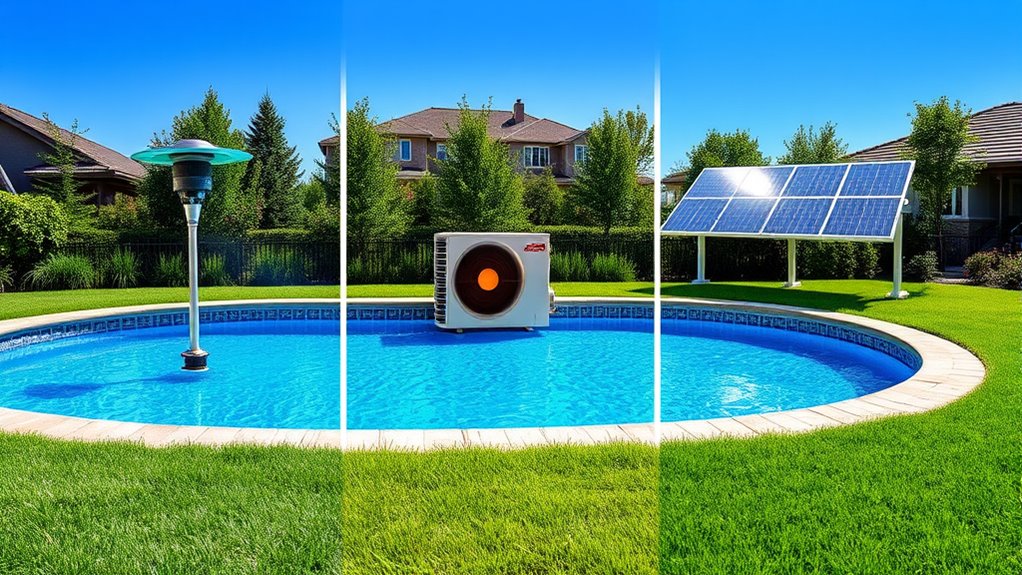

When comparing pool heating options, gas heaters heat water quickly and work well in any climate, but they have fuel costs and are less energy-efficient. Electric heat pumps are more efficient and eco-friendly, ideal for moderate climates, but may struggle in colder weather. Solar heating is the most energy-efficient and cost-effective long-term, yet depends on sunlight and needs a backup. Stay with us to discover which option suits your needs best.

Get pool and patio gear delivered free with Prime
- Fast, free delivery on millions of items
- Prime Video, Amazon Music and more included
- Member-only deals all year
Key Takeaways
- Gas heaters provide quick, reliable heating but have higher ongoing fuel costs and require outdoor installation and ventilation.
- Electric heat pumps are energy-efficient and environmentally friendly, suitable for moderate climates with lower operational expenses.
- Solar pool heating offers the most energy-efficient, low-maintenance option but depends heavily on sunlight and involves higher upfront costs.
- Gas systems work well in all climates and for occasional use, while solar and electric options perform better in moderate conditions.
- Long-term costs favor solar and electric systems due to lower operational expenses, despite higher initial investments.
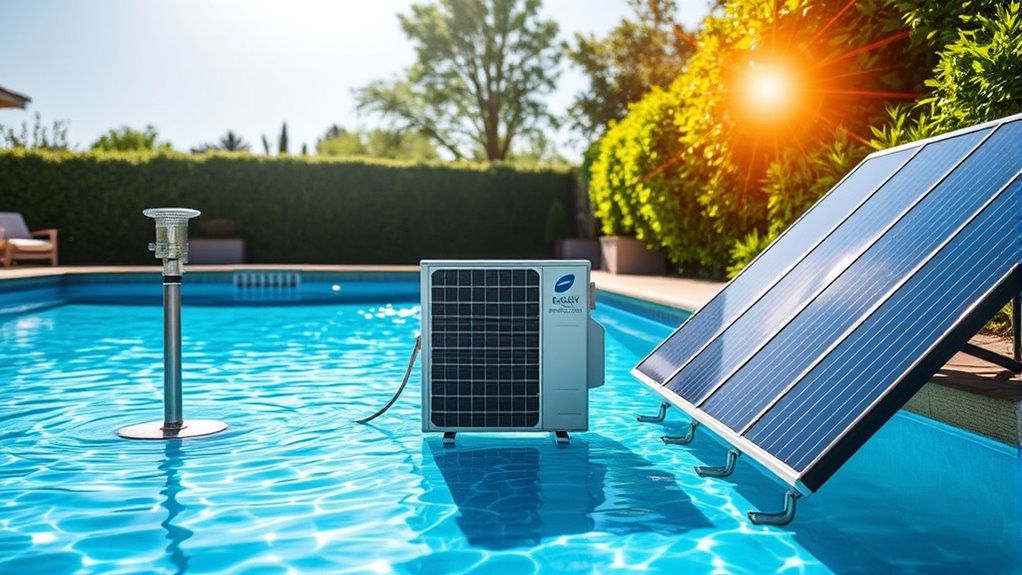
Heating your pool extends your swimming season and guarantees comfort, but choosing the right option depends on your budget, climate, and efficiency goals. When considering pool heating methods, energy efficiency and installation costs are vital factors. Gas heaters are a popular choice because they heat water quickly and can be turned on when needed, making them ideal for occasional use. However, they tend to have higher ongoing fuel costs and lower energy efficiency compared to other options. The installation costs for gas heaters are typically moderate, but keep in mind that fuel expenses can add up over time, especially if you swim frequently or have a larger pool. Gas systems also require proper ventilation and outdoor placement, which might increase upfront costs if space or local regulations are constraints.
Electric heat pumps are another option, especially for those prioritizing energy efficiency. They use electricity to extract heat from the air, making them more economical in the long run. While the initial installation costs can be higher than gas heaters, their lower operational costs often offset that expense over time. Electric heat pumps work well in moderate climates but may struggle to maintain temperature in colder weather, which could lead you to run them longer or consider supplementary heating. Their installation is generally straightforward, requiring minimal space and less complex venting, which can help reduce upfront costs. If you’re aiming for an energy-efficient system that reduces your carbon footprint and ongoing expenses, electric heat pumps are a compelling choice.
Solar pool heating offers the highest energy efficiency, especially if you live in sunny regions. It harnesses the sun’s power to warm your pool with minimal operational costs once installed. The primary consideration is the installation costs, which tend to be higher upfront because you need solar collectors, pumps, and sometimes additional equipment like controllers. However, solar systems are low-maintenance and have virtually no ongoing fuel costs, making them the most economical over the long term. They’re also environmentally friendly, aligning well with sustainability goals. The main limitation is that solar heating depends heavily on sunlight, so it’s less effective during cloudy days or at night. To maximize efficiency, you might need to invest in a backup heating system, which could increase initial costs but ensures consistent swimming comfort. Additionally, modern heating technologies can improve overall efficiency and performance, further enhancing the value of solar options.
Frequently Asked Questions
How Long Does It Take to Heat a Pool With Each Option?
It takes about 8-12 hours to heat a pool with gas, offering the fastest heating speed, so you can enjoy your pool sooner. Electric heaters take longer, typically 12-24 hours, but are easier to install. Solar heaters are the slowest, often requiring 24-72 hours, but they’re eco-friendly and cost-effective in the long run. Installation complexity varies: gas is more involved, electric is moderate, and solar is simpler.
What Are the Long-Term Maintenance Costs for Gas, Electric, and Solar Heaters?
While the allure of long-term costs varies, gas heaters often involve higher ongoing expenses due to fuel consumption, whereas electric and solar systems tend to be more economical over time. Considering reliability factors, solar heaters generally require minimal maintenance, making them a cost-effective choice. Electric models may need occasional repairs, but gas units could incur frequent service costs. Your selection hinges on balancing initial investment with anticipated longevity and maintenance ease.
Can These Heating Systems Be Used Simultaneously?
Yes, you can use multiple pool heating systems simultaneously through multi-system integration. This setup allows you to combine gas, electric, and solar heaters for maximum efficiency and flexibility, especially during different weather conditions or heating needs. However, you should consult a professional to verify the simultaneous heating feasibility and proper system integration, preventing potential conflicts or overloading your pool’s plumbing and electrical infrastructure.
Are There Any Environmental Regulations Affecting Pool Heating Choices?
Think of environmental regulations like guardrails guiding your pool heating choices. You’ll find that laws often aim to reduce environmental impact by setting standards for emissions and efficiency. Depending on your location, regulations may favor solar for its eco-friendly nature or restrict gas and electric systems that produce higher emissions. Staying compliant guarantees you enjoy your pool responsibly, blending comfort with environmental stewardship while avoiding legal pitfalls.
How Do Weather Conditions Impact Solar Pool Heater Efficiency?
Weather conditions have a big impact on solar pool heater efficiency. Sunny, warm days maximize solar panel durability and heat absorption, making your system work best. Overcast skies or cold weather reduce energy collection, so your heater may struggle to maintain desired temperatures. You should monitor weather impact regularly and consider backup options. Proper installation and maintenance help optimize performance, ensuring your solar system stays durable and effective throughout changing weather conditions.
Conclusion
When choosing your pool heater, think of it as picking the right tool for your backyard oasis. Gas heats quickly like a racecar, electric offers steady warmth, and solar is the gentle giant, harnessing the sun’s power. Consider your budget, climate, and how often you swim. With the right option, you’ll keep your pool inviting all season long—turning your backyard into a haven that’s as warm as a hug on a chilly day.
Fall Picks
fall essentials
As an affiliate, we earn on qualifying purchases.