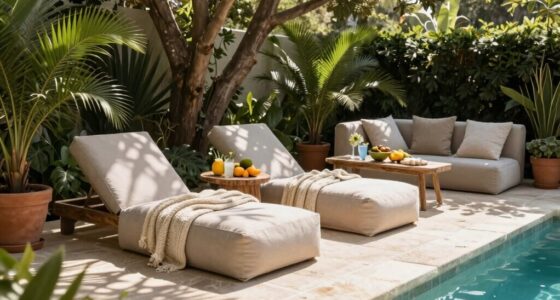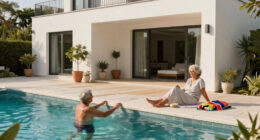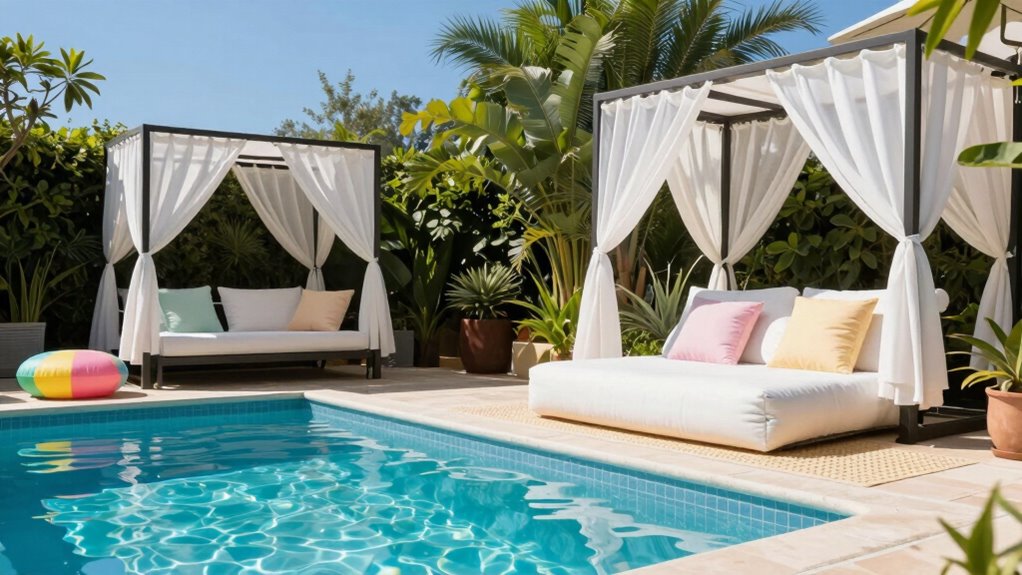
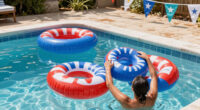
To make your pool more comfortable for non-swimmers, clearly designate shallow areas and keep safety equipment accessible. Create a relaxing atmosphere with shaded lounge spots, landscaping, and calm activities like listening to music or reading. Use comfortable seating, offer refreshments, and avoid pressuring guests to swim. Focus on safety and relaxation, so everyone feels at ease. If you want to discover additional ways to enhance comfort and safety, keep exploring these ideas.

Get pool and patio gear delivered free with Prime
- Fast, free delivery on millions of items
- Prime Video, Amazon Music and more included
- Member-only deals all year
Key Takeaways
- Clearly designate shallow and comfortable areas for standing and relaxation.
- Provide ample shaded seating options away from the water to promote relaxation.
- Ensure safety equipment is accessible and non-swimmers understand how to use it properly.
- Maintain a warm, consistent water temperature to reduce water anxiety and encourage comfort.
- Foster a casual, social environment that emphasizes relaxation and enjoyment without pressure to swim.
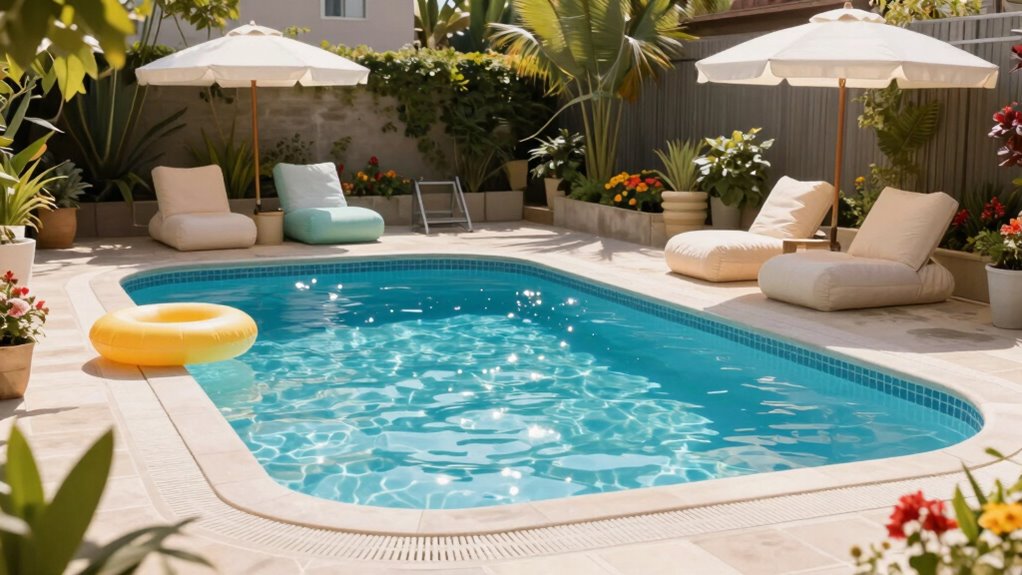
If you’re hosting a pool gathering with non-swimmers, making the environment comfortable for everyone is key. Non-swimmers might feel anxious or hesitant around water, so your goal should be to create a space that promotes relaxation and safety. Start by paying close attention to pool safety. Clearly designate shallow areas where non-swimmers can stand comfortably and feel secure. Having floatation devices like life jackets, arm floats, or pool noodles readily available can boost confidence and encourage participation without risking safety. Make sure these devices are in good condition and appropriate for the user’s size and skill level. Additionally, consider setting rules that emphasize safety, like no running around the pool, and ensure that everyone knows how to use safety equipment properly. Incorporating landscaping elements around the pool can also create a more inviting and calming atmosphere for all guests. Water temperature plays a crucial role in making the pool more inviting for non-swimmers. A pool that’s too cold can discourage people from staying in for long, especially those who aren’t comfortable in the water. Aim to keep the water at a comfortable temperature, usually between 78°F and 82°F (25.5°C to 28°C). If you have a pool heater, use it to maintain a consistent, inviting temperature. If not, consider using solar covers or insulating blankets when the pool isn’t in use to retain heat. Remember, a warm pool feels more welcoming and encourages non-swimmers to dip their toes in without feeling overwhelmed by the cold. Beyond temperature and safety, create a relaxed environment with plenty of shaded areas and seating options away from the water. This can help reduce water anxiety and make guests feel more comfortable observing or socializing without feeling pressured to get into the water. Offering relaxing activities like listening to music or reading by the poolside can also help non-swimmers feel more at ease. Offer refreshments and encourage a casual atmosphere so guests feel at ease. Be attentive to non-swimmers’ comfort levels and avoid pressuring anyone to swim if they’re not ready. Instead, focus on providing activities like lounging, playing poolside games, or simply chatting, so everyone can enjoy the gathering in their own way.
Products Worth Considering

eufy Security 5-Piece Home Alarm Kit

Ring Alarm 8-Piece Kit (2nd Gen) Home Security System

Philips Hue White and Color Ambiance A19 Smart Bulb Starter Kit, 2-Pack
As an affiliate, we earn on qualifying purchases.
Frequently Asked Questions
Can Non-Swimmers Wear Flotation Devices Safely?
Yes, non-swimmers can wear flotation devices safely if you choose the right device. Focus on flotation safety by selecting devices designed for non-swimmers, like Coast Guard-approved life jackets or floatation belts. Always make certain the device fits properly and is in good condition. Supervise non-swimmers closely when they wear these devices, and never rely solely on them for safety. Proper device selection and supervision are key to keeping non-swimmers safe in the pool.
What Are the Best Pool Accessories for Non-Swimmers?
You should consider adding pool accessories like comfortable pool lounges and sunshade options to make the area inviting for non-swimmers. Pool lounges provide a relaxing spot to unwind without entering the water, while sunshades protect you from harsh sun rays. These accessories create a comfortable, enjoyable environment, allowing non-swimmers to relax and socialize nearby, making your pool experience more pleasant and inclusive for everyone.
How Can I Prevent Non-Swimmers From Feeling Isolated?
To prevent non-swimmers from feeling isolated, organize inclusive group activities like water games or floating races that everyone can join. Adjust seating arrangements to keep non-swimmers close to the action, ensuring they feel part of the group. Encourage conversations and interactions around the pool area, and provide accessible shallow zones so they can relax comfortably while staying engaged with the group’s fun.
Are There Specific Pool Temperatures Comfortable for Non-Swimmers?
Keeping the pool temperature around 85°F guarantees water comfort for non-swimmers. Imagine Lisa, who avoids cold water but loves relaxing in the pool—she finds this temperature perfect. Maintaining this warmth helps non-swimmers stay comfortable and encourages them to enjoy the water without feeling chilled or overwhelmed. Adjusting the pool temperature to this range creates an inviting environment, making water comfort accessible for everyone, especially non-swimmers.
How Do I Teach Non-Swimmers Basic Water Safety Skills?
You teach non-swimmers basic water safety skills by starting with water entry, helping them feel comfortable entering the pool safely. Practice breath control exercises to build confidence in breathing underwater, gradually increasing difficulty. Encourage them to float, kick, and glide to establish comfort and control. Always supervise closely, and use teaching aids like floatation devices to guarantee safety as they learn essential skills for staying safe in the water.
Conclusion
Creating a welcoming environment for non-swimmers turns your pool into a safe oasis, like a warm hug on a chilly day. By adding gentle steps, clear signage, and comfortable loungers, you guarantee everyone feels included and relaxed. Remember, a little thought goes a long way—making your pool an inviting escape where everyone can enjoy the water without worry. With these touches, your pool becomes a haven where memories are made, not fears.