
TL;DR
An Ideal Home report highlights Richard E. Grant’s use of repeated topiary hedges to define areas of his garden, including a seating space. Garden experts say hedging can add year-round structure and shelter for wildlife, though it takes time to establish and needs regular trimming.
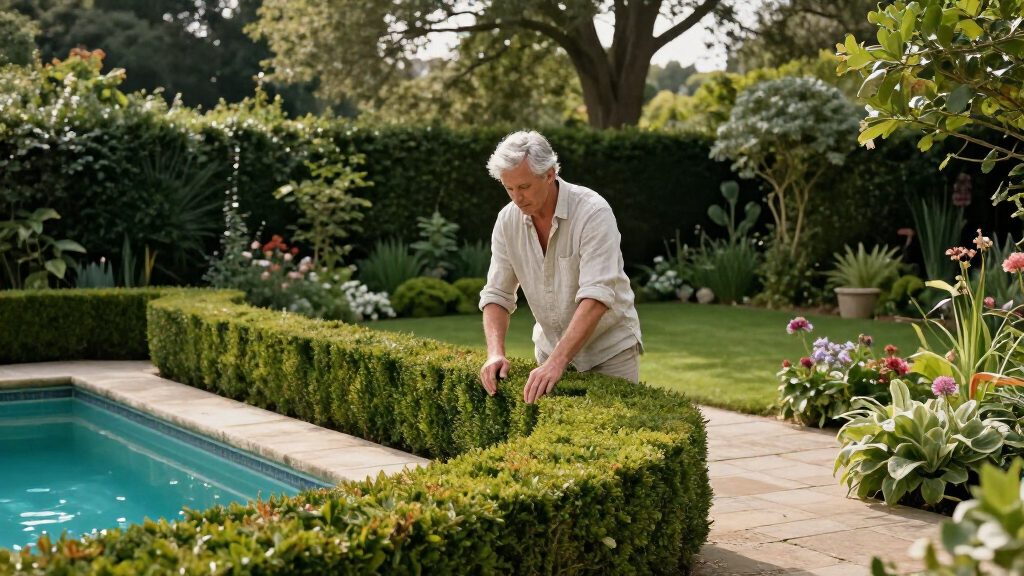
Richard E. Grant’s garden uses repeated topiary hedges to mark out distinct outdoor areas, including a seating space, according to an Ideal Home report. The article presents the hedges as a way to add structure while keeping the garden visually connected, and cites designers who say the approach can work in smaller plots as well as larger ones.

Get pool and patio gear delivered free with Prime
- Fast, free delivery on millions of items
- Prime Video, Amazon Music and more included
- Member-only deals all year
The report describes a garden filled with individual decorative features, including wisteria and baubles hanging from trees. It says the repeated hedging gives the space definition and helps it avoid feeling crowded. Garden designer Michael Wheat, founder of Ponds by Michael Wheat, said using the same material for boundaries helps the garden feel like one place with separate rooms.
Hedges can be kept low for subtle divisions or allowed to grow taller for more privacy between areas. The article says evergreen plants in Grant’s garden help maintain green colour through the year. Hedges may also provide shelter for birds and insects and can reduce noise and wind, according to horticultural expert Richard Barker, commercial director of LBS Horticulture.
The report also sets out drawbacks. Topiary needs regular care to retain its shape, and hedges can take years to reach their intended height. Wheat says yew is a traditional choice that generally needs cutting once or twice a year. Box can establish more quickly, but he warns that blight and box moths have made it a risk. He suggests hornbeam as a faster-growing option that can retain brown leaves in winter.
How Hedges Shape Garden Rooms
Garden zoning gives separate purposes to areas for sitting, dining, growing or supporting wildlife. Wheat told Ideal Home that dividing a garden can make it feel larger by encouraging people to move through it rather than take in one open space at a glance. He also said zoning can help place activities where they best fit, such as locating a dining area in evening sun.
The hedging approach offers a living boundary that can blend with planting. Its practical value depends on the garden and the owner’s willingness to maintain it: denser or taller hedges can give more screening, while low ones make lighter divisions. Growth time and trimming are part of the decision, alongside the desired look.
Products Worth Considering

TCL 55-Inch F7D Series QLED 4K UHD Smart Fire TV (2026)

Sonos Era 100 Wireless Smart Speaker with Alexa, Black

Philips Hue Smart Light Starter Kit with Bridge and 4 White and Color A19 Bulbs
As an affiliate, we earn on qualifying purchases.
The Design Behind Grant’s Garden
Ideal Home frames Grant’s garden as a highly personalised space, with eclectic decorations alongside evergreen planting. The article says the topiary works as a recurring design element that connects the different areas. Wheat’s assessment is that repeating one material creates a coherent layout, rather than treating every section as unrelated.
The report also describes garden zoning as useful across different plot sizes. Its suggestions include defining a seating area, a growing section or a wildlife area. For people who do not want to grow hedges, the article mentions trellises with climbing plants and freestanding privacy screens as alternatives, though these provide a different kind of boundary.
““The garden reads as one place with rooms in it, not as a set of unrelated patches.””
— Michael Wheat, garden designer and founder of Ponds by Michael Wheat
What the Report Leaves Open
The report does not give measurements for Grant’s garden, identify every plant used in the hedging, or state when the garden features were installed. It also does not provide a maintenance schedule specific to Grant’s planting. Its broader advice comes from the experts quoted by Ideal Home and should not be read as a detailed planting plan for every climate or garden condition.
The report provides no comparative figures for how much hedges reduce noise or improve wildlife habitat relative to other boundaries. Those effects will depend on plant choice, hedge size, location and local conditions.
Choosing a Hedge for Your Plot
For readers considering a similar layout, the report’s advice points to deciding first which activities need separate areas and how much privacy each boundary should provide. Plant choice then involves weighing growth time, winter appearance and upkeep. Yew, box and hornbeam are discussed as options with different growth and maintenance characteristics.
There is no announced next development involving Grant’s garden in the source report. Its focus is practical inspiration: use repeated hedging to create clear garden areas, while accounting for the time and care living boundaries require.
Key Questions
How does Richard E. Grant use hedges in his garden?
Ideal Home says Grant uses repeated topiary hedges to separate parts of the garden, including a seating area, while keeping the overall design connected.
Can garden zoning work in a small plot?
Yes. Garden designer Michael Wheat told Ideal Home that dividing a garden into areas can encourage people to move through it and make a small plot feel larger.
What are the drawbacks of topiary hedging?
Hedges can take years to reach their intended height, may be hard to move later and need regular trimming to keep a neat shape. The report also notes concerns about box blight and box moths.
What alternatives can define garden areas?
The report suggests trellises with climbing plants or freestanding privacy screens for people who do not want to maintain hedges.
Source: rss