Training for triathlons in your home pool offers a focused space to improve your endurance, technique, and pacing. You can easily incorporate interval workouts, monitor progress, and tailor sessions to your pool size and schedule. Proper nutrition and mental endurance play essential roles in your success, while consistent practice helps build discipline. With a dedicated home setup, you’re set for effective training—keep going to discover more tips and strategies to boost your performance.
Key Takeaways
- Use your home pool for consistent swim workouts focusing on endurance, technique, and interval training tailored to your race goals.
- Develop a nutrition plan with proper fueling and hydration before and after swims to optimize performance and recovery.
- Incorporate mental endurance strategies like goal setting and visualization to stay motivated and focused during training sessions.
- Structure workouts to simulate race conditions by alternating paces, practicing pacing, and tracking progress within your pool’s dimensions.
- Maintain discipline and consistency through scheduled training routines, maximizing your home pool’s potential for long-term triathlon success.

Training for triathlons at home is entirely possible, even if you don’t have access to a dedicated training facility. Your home pool becomes your personal training ground, allowing you to focus on key swim workouts that build endurance and improve technique. To get the most out of these sessions, you should pay close attention to your nutrition planning. Proper fueling before and after your swims helps sustain energy levels and accelerates recovery, which is essential when training independently. Incorporate carbohydrate-rich snacks, hydration strategies, and protein intake into your routine to support your evolving needs. Being mindful of your nutrition ensures you stay energized and avoid burnout, especially when training without the structure of a formal program.
Training at home is possible with focused swim workouts and mindful nutrition.
In addition to physical preparation, mental endurance plays an indispensable role in triathlon training. Swimming laps in your pool can sometimes feel monotonous, but it’s crucial to develop mental toughness to push through fatigue and maintain focus during your workouts. Set clear goals for each session—whether it’s completing a certain number of laps or maintaining a specific pace—to give your mind a target to work towards. Using visualization techniques, such as imagining yourself crossing the finish line, can boost your motivation and help you stay committed during challenging sets. Remember, mental endurance isn’t just about pushing through physical fatigue; it’s about cultivating resilience and confidence in your ability to handle the demands of race day.
When training at home, you should also structure your workouts to mimic race conditions. Incorporate interval training, where you alternate between fast and recovery paces, to boost your speed and stamina. Practice pacing yourself consistently, and keep track of your times to monitor your progress. This not only improves your physical fitness but also enhances your mental focus, as you learn to manage effort and stay disciplined. Use your pool space efficiently—if the pool isn’t very long, adapt your workout to maximize the distance covered or time spent swimming. Additionally, incorporating eye patch benefits into your routine can help reduce eye fatigue if you spend long hours on screen-based training or planning, supporting overall focus and well-being. Consistency is key, so establish a regular schedule that fits into your daily routine and stick to it.
Ultimately, training for triathlons at home requires discipline, strategic planning, and mental resilience. By paying attention to your nutrition planning and developing mental endurance, you’ll build a strong foundation that prepares you for race day. Your home pool may not be a traditional training facility, but with dedication and smart planning, it can be your most valuable asset in achieving your triathlon goals.
Frequently Asked Questions
How Can I Simulate Open Water Conditions in My Pool?
You can simulate open water conditions by setting up open water markers in your pool to create a sense of navigation and direction. Wear a wetsuit or simulate one to get used to the feel and buoyancy. Incorporate sighting drills, practice swimming in a straight line, and vary your strokes to mimic open water challenges. These steps help you adapt to real race conditions without leaving your home pool.
What Are the Best Drills to Improve Sighting?
To improve your sighting, practice sighting drills regularly. Focus on sighting techniques like lifting your head slightly to spot landmarks or buoys, then returning to your streamline. Incorporate drills such as swimming a set distance, then sighting every few strokes, or swimming in a straight line while periodically lifting your head. These drills help you stay confident and efficient during open water swims, ensuring you can spot your course markers quickly and accurately.
How Do I Manage Transitions Between Swimming and Other Disciplines?
As you prepare for shifts, plan your shift routine to keep momentum flowing. You’ll want to practice equipment swaps smoothly, like quickly changing from swim gear to running shoes. Focus on transition planning, so you know where to set your gear and how to move efficiently. Coincidences happen when you rehearse these steps regularly, making each transition feel natural and swift. This preparation helps you conserve energy and stay confident during race day.
What Equipment Is Essential for Pool-Based Triathlon Training?
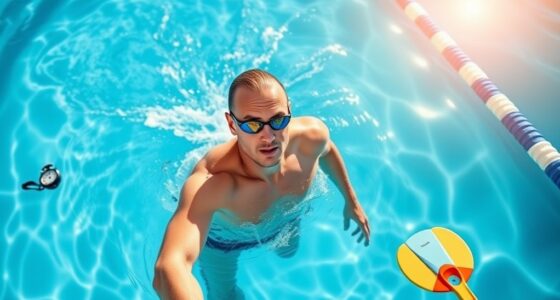
You need essential equipment like a quality swim cap, goggles, and a pool buoyancy aid to improve your swim pace and maintain proper technique. Using a pool buoy helps focus on your upper body and boosts buoyancy, making training more effective. A stopwatch or waterproof watch is also useful to monitor your pace. These tools help you build endurance and refine your swim skills right in your home pool.
How Can I Prevent Boredom During Long Pool Workouts?
To prevent boredom during long pool workouts, try mixing things up with music playlists that motivate you. Use interval timers to structure your swim sessions, alternating between fast and slow laps. This keeps your workout engaging and helps you stay focused. Additionally, vary your strokes or add in different drills to challenge your muscles and mind, making your training more enjoyable and less monotonous.
Conclusion
With your home pool as your secret weapon, you’ll become a triathlon legend—faster than a speeding bullet and stronger than a superhero! No need for fancy gyms or expensive coaches; your backyard oasis is all you need to crush those race goals. Keep pushing, stay consistent, and soon you’ll be swimming, biking, and running circles around everyone else. Your dream triathlon victory is just a splash away—get in that pool and conquer it!