
TL;DR

Get pool and patio gear delivered free with Prime
- Fast, free delivery on millions of items
- Prime Video, Amazon Music and more included
- Member-only deals all year
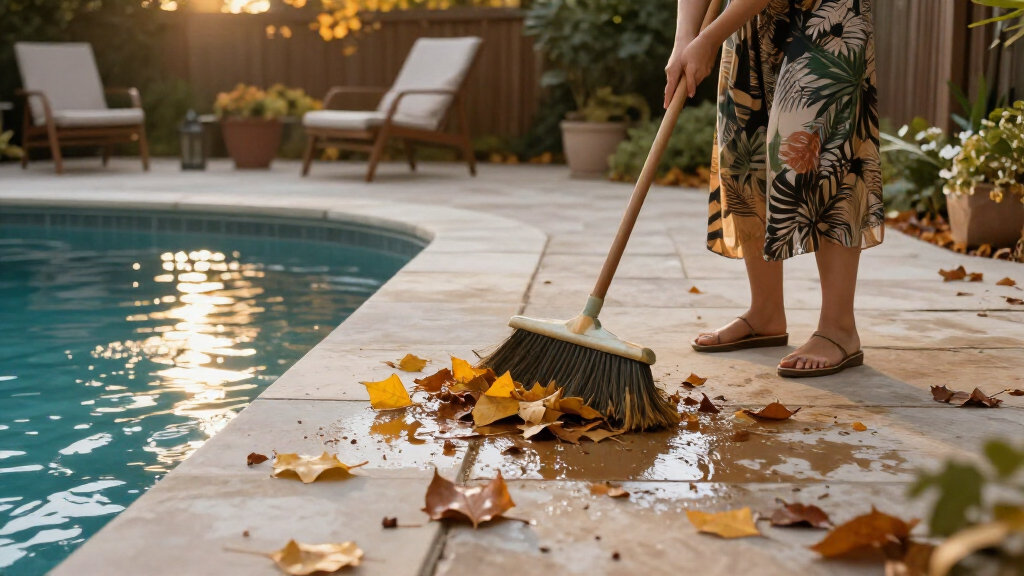
Garden experts say wet leaves left on patios can create slip hazards and may stain porous paving or encourage moss and algae. They recommend sweeping leaves up regularly, especially after heavy rain; collected leaves can be composted or used to make leaf mould.
Wet leaves left on patios can make paving slippery and may cause cosmetic damage, according to gardening experts cited by Ideal Home. Their advice is to clear leaves regularly, particularly after heavy rain, to reduce the risk of slipping and limit moisture-related staining or growth on paving.
Amber Tunney, plant buyer at Cherry Lane Garden Centres, said wet leaves can make patios slippery and recommended sweeping them up regularly, especially after heavy rain. The report identifies slippery paving as an immediate safety concern when leaves become wet and remain underfoot.
Andrew White, outdoor expert at Harbour Lifestyle, said decomposing wet leaves can stain porous paving and encourage moss and algae by trapping moisture. The report does not quantify how quickly damage occurs or how likely it is across different paving materials, so the extent of the risk may depend on the surface and conditions.
Once collected, leaves do not have to be discarded: Tunney said they can go into a compost heap or be gathered to make leaf mould for improving garden soil. The report also notes that wet leaves can be harder to remove with a blower or vacuum, while manual raking or leaf-collection tools are alternatives.
Patio Slips and Paving Damage
The advice matters because wet leaves can affect both how safely a patio can be used and its appearance. A layer of leaves may be easy to overlook after rain, but the expert warning is that it can make paving slippery while moisture and decomposing material may leave stains or support moss and algae.
Regular clearing is a practical maintenance step, rather than a guarantee against falls or paving damage. The source offers general expert guidance, not a measured assessment of injury rates or damage across patio types. Homeowners should consider their paving material and local weather when deciding how often to clear it.
Products Worth Considering

Philips Hue Festavia Globe Outdoor String Lights, 32 Bulbs, 91 ft

Philips Hue Festavia 130-Foot Indoor/Outdoor Smart String Lights, 500 LEDs

Levoit Core 400S-P Smart Air Purifier for Large Rooms
As an affiliate, we earn on qualifying purchases.
Why Autumn Leaves Collect on Patios
The Ideal Home report frames the issue around autumn weather, when fallen leaves combine with rain and wind. Leaves can accumulate on patios and paths during wet periods, and the report says gardeners may take a different approach to leaves elsewhere in the garden than to those on paved surfaces.
Its recommendations focus on removing leaves from patio areas, then reusing them in compost or leaf mould. It mentions sweeping and manual collection as options; it also says wet leaves can be more difficult to handle with a leaf blower or vacuum. No product is required by the advice.
“Wet leaves can make patios very slippery, so it’s best to sweep them up regularly, especially after heavy rain.”
— Amber Tunney, plant buyer at Cherry Lane Garden Centres, as quoted by Ideal Home
How Risk Varies by Patio Surface
The report gives expert guidance but does not provide testing, injury figures, or a timeline for staining and moss or algae growth. It also does not specify which paving materials are most vulnerable beyond White’s reference to porous paving, or compare sweeping with other cleaning methods for effectiveness.
It is therefore unclear how quickly a particular patio might be affected. The source does not claim that every patch of wet leaves will cause a fall or visible damage; the outcome can depend on the paving, weather, and how long leaves remain in place.
Clear Leaves After Rain
The immediate step recommended by the experts is to sweep leaves from patio paving regularly and check the surface after heavy rain. Gardeners who collect leaves can put them in a compost heap or set them aside to make leaf mould. The report gives no formal follow-up date or new policy; its guidance concerns routine seasonal maintenance.
Key Questions
Why should wet leaves be cleared from a patio?
Experts cited by Ideal Home say wet leaves can make patio paving slippery. They may also stain porous paving as they decompose and encourage moss and algae by trapping moisture.
When should patio leaves be swept up?
Amber Tunney recommends clearing them regularly, especially after heavy rain. The report does not set a specific schedule, so how often to check will depend on leaf fall and local weather.
Can collected leaves be reused?
Yes. Tunney says they can be added to a compost heap or collected to make leaf mould for garden soil.
Are all patio surfaces equally likely to stain?
The source does not compare different materials. Andrew White specifically warns that decomposing wet leaves can stain porous paving, but does not rank patio surfaces by risk.
Source: idealhome.co.uk