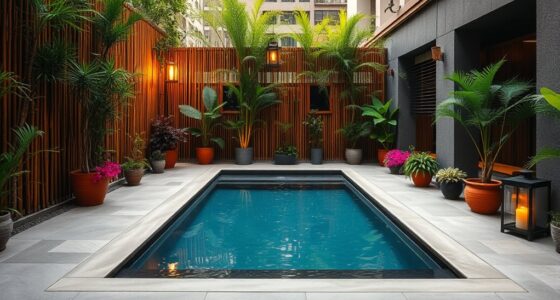
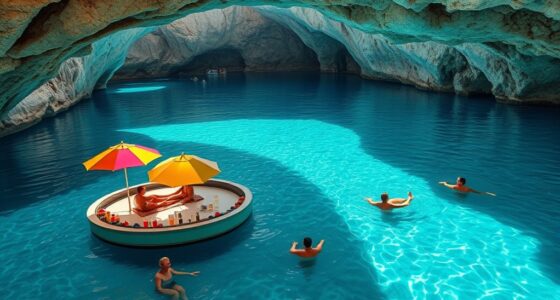
Zero-entry pools give you a beach-like feel without the sand, featuring a gentle slope that mimics a natural shoreline for easy access and a relaxed vibe. They blend seamless design with safety features like handrails and slip-resistant surfaces, making them perfect for families and mobility needs. To achieve that natural look, choose materials like textured stone and neutral hues, and incorporate surrounding landscaping. Continue exploring to discover essential tips for creating your ideal zero-entry pool environment.
Key Takeaways
- Incorporate a gradual slope with natural textures like pebble or stamped concrete to mimic sandy beach surfaces.
- Use light, neutral color palettes and weathered wood decking to create a relaxed, coastal ambiance.
- Ensure safety features such as non-slip surfaces, handrails, and shallow zones for family-friendly accessibility.
- Position the pool to maximize sunlight exposure and integrate landscaping for privacy and natural aesthetics.
- Plan for budget considerations, including durable materials, site prep, and ongoing maintenance to achieve a beach-like feel cost-effectively.

H20GO! TruPrint Stone Inflatable Family Swimming Pool, 7' x 6'9" x 21", with 2 Cup Holders and 2 Cushioned Seats for Kids 6 and Up, Gray
Backyard Kiddie Pool: Kiddie pool set with 2 cup holders and 2 cushioned seats offers a private oasis…
As an affiliate, we earn on qualifying purchases.
As an affiliate, we earn on qualifying purchases.
What Are Zero-Entry Pools and How Do They Differ From Traditional Designs
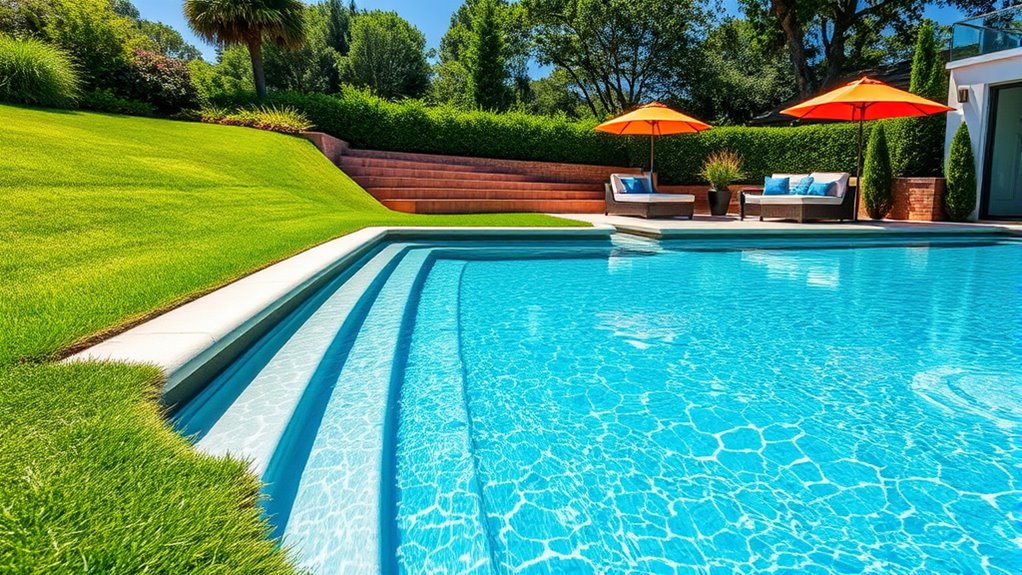
Have you ever wondered what makes zero-entry pools unique? These pools feature a gradual slope that mimics a natural beach entry, allowing you to walk straight into the water without steps or ladders. Unlike traditional pools with deep ends and fixed stairs, zero-entry designs provide easy access for everyone, especially kids and those with mobility issues. The gentle incline creates a seamless progression from deck to water, making it feel more like a natural body of water. You’ll notice that zero-entry pools often have a wider, more inviting appearance, encouraging a relaxed, beach-like vibe. This design not only enhances safety but also offers a more accessible and aesthetically pleasing way to enjoy your pool. It’s a smart choice for a versatile, user-friendly backyard oasis. Additionally, the use of safety precautions in design helps prevent accidents and injuries, making it a practical option for family-friendly environments.
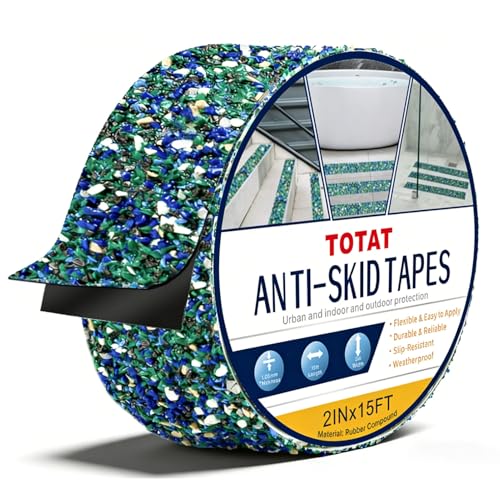
TOTAT Underwater Pool Adhesive, 2" x15FT Heavy Duty Waterproof, Slip-Resistant Rubber Grip Stair Treads and Shower Strips for Bathrooms and Outdoor Use
Premium Safety & High-Traction Design: TOTAT anti-slip tape features a rugged red grit rubber surface, delivering instant traction…
As an affiliate, we earn on qualifying purchases.
As an affiliate, we earn on qualifying purchases.
Key Factors to Consider When Planning Your Zero-Entry Pool
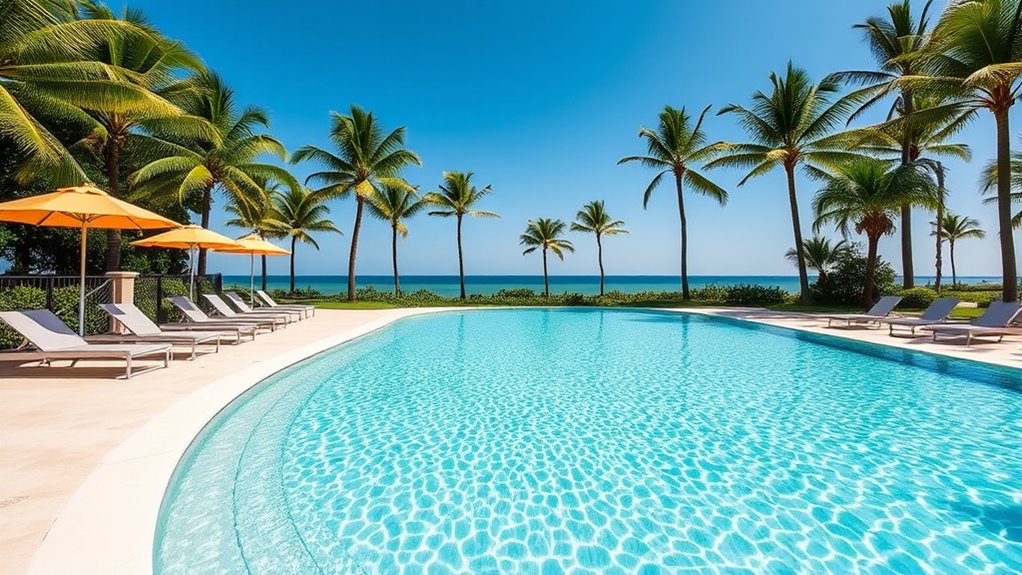
Planning a zero-entry pool requires careful consideration of several key factors to guarantee it meets your needs and complements your backyard. First, you need to determine the size and depth that suit your lifestyle, whether for relaxing, entertaining, or exercising. Think about the slope of the entry, aiming for a gentle, natural feel that’s accessible for all users. Material selection is vital—choose durable, slip-resistant surfaces that withstand weather and pool use. Budget also plays a significant role; zero-entry pools can vary in cost depending on size, features, and finishes. Additionally, consider maintenance requirements, ensuring your design allows easy cleaning and filtration access. Incorporating a cozy farmhouse style can add warmth and charm to your outdoor space. Ultimately, plan for safety features like handrails or shallow zones to make your pool enjoyable and secure for everyone.

GarveeLife Pool Handrail, 55"x32" Pool Railings for Inground Pools, Swimming Pool Safety Handrails 375lbs Load Capacity, 304 Stainless Steel Pool Stair Rail with Grip Cover, Quick Mount Base Plate
💧Pool Stair Handrail: Specifically designed for underground pool stairs, this safety handrail enhances security, allowing for effortless access…
As an affiliate, we earn on qualifying purchases.
As an affiliate, we earn on qualifying purchases.
Choosing the Right Location and Layout for Seamless Integration
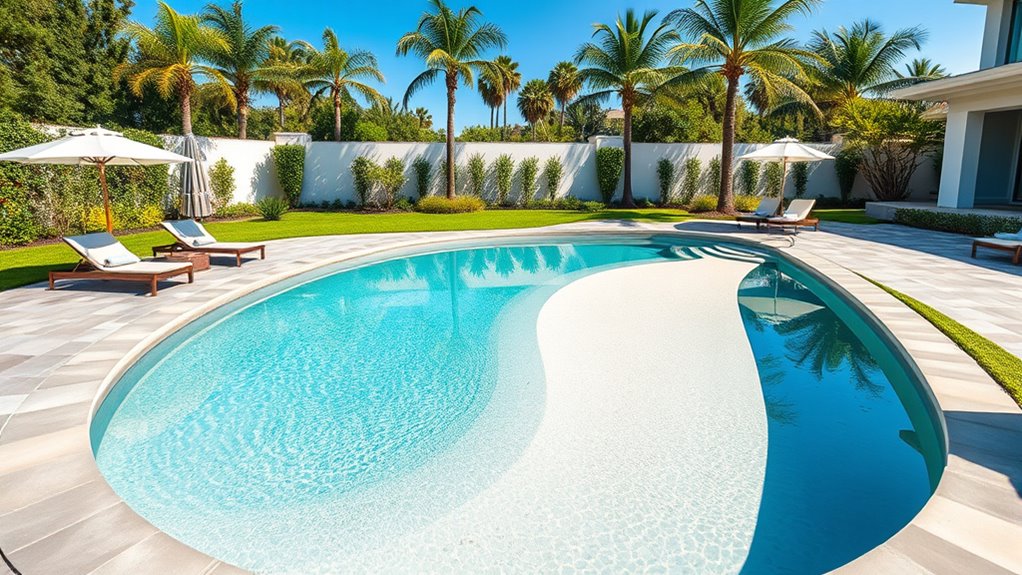
Choosing the right location and layout is essential for guaranteeing your zero-entry pool blends seamlessly with your backyard and meets your needs. Start by evaluating your yard’s topography—flat areas work best, but gentle slopes can be incorporated thoughtfully. Consider sunlight exposure throughout the day; placing the pool where it gets ample sunlight encourages natural warmth and keeps algae at bay. Think about privacy and how the pool fits with existing landscape features like trees, patios, or gardens. Guarantee there’s enough space for safe entry, movement, and future accessories like loungers or a waterfall. A well-planned layout minimizes disruption to your yard’s natural flow and enhances visual harmony. Prioritize functionality and aesthetics to create a relaxing, cohesive outdoor space that invites you to unwind.

SUNREEK 9 Inches Metal Fish Wall Art, Coastal Beach Nautical Hanging Decor, Outdoor Ocean Pool Wall Decor (4, Fish-A)
Metal Fish Wall Decor: 4 sets of sea fish wall art have four different colors, including green, yellow,…
As an affiliate, we earn on qualifying purchases.
As an affiliate, we earn on qualifying purchases.
Selecting Materials and Finishes for a Natural, Beach-Like Aesthetic
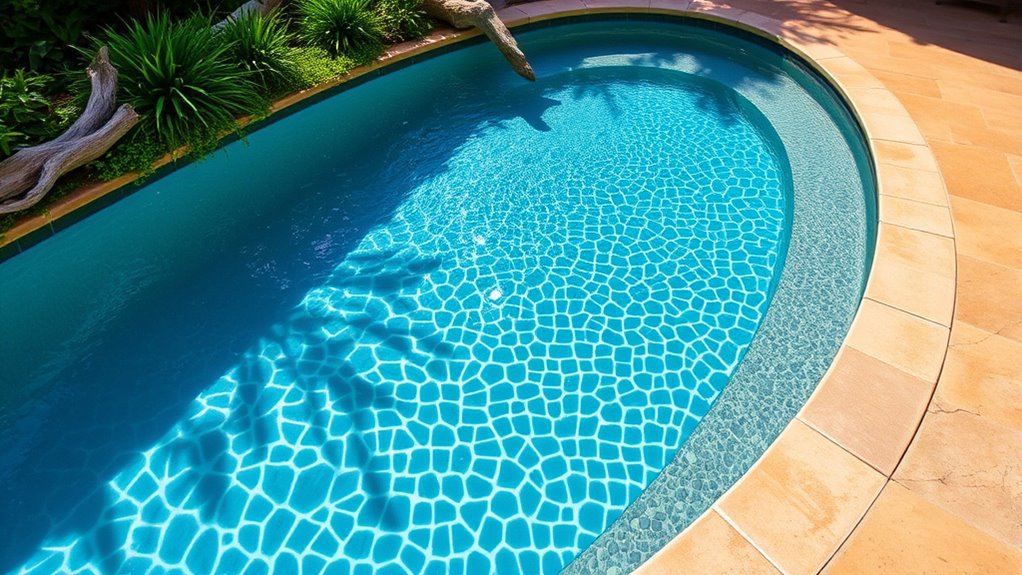
What materials and finishes best evoke a natural, beach-like vibe for your zero-entry pool? Opt for textured, natural stone or pebble finishes to mimic sandy shores and ocean floors. These surfaces add tactile interest and create a seamless shift from pool to landscape. Consider materials like quartz or exposed aggregate, which resemble natural sand and rock textures. Light, neutral colors—such as soft beiges, warm browns, and muted grays—enhance the relaxed, beachy atmosphere. Incorporate materials like weathered wood or composite decking around the pool perimeter to evoke driftwood or shoreline boardwalks. Keep finishes matte rather than glossy to avoid a manufactured look. Additionally, selecting finishes with natural textures can further reinforce the organic, beach-inspired aesthetic and help your pool blend effortlessly into a serene, coastal setting.
Essential Features to Enhance Accessibility and Safety
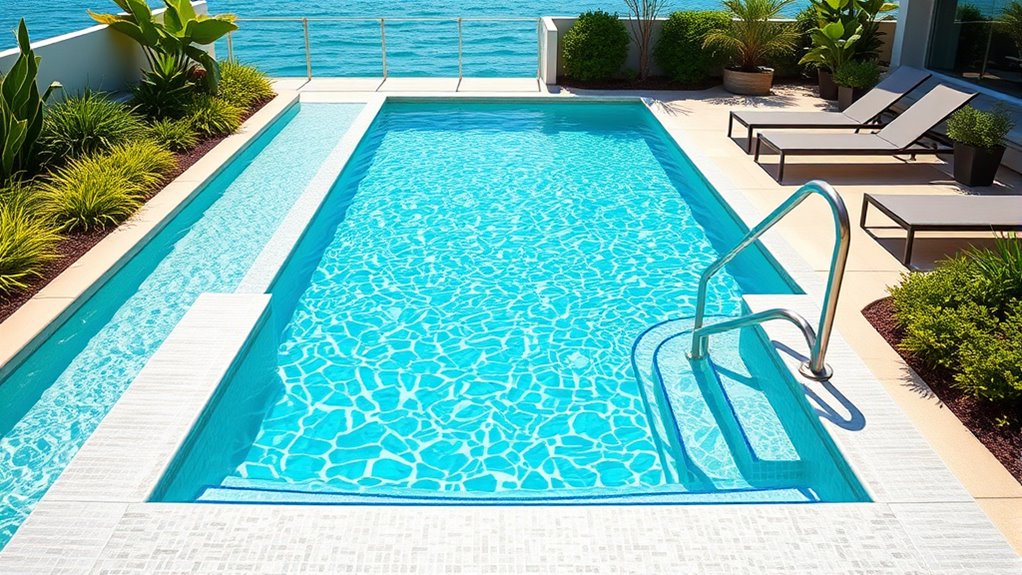
To guarantee your zero‑entry pool is safe and accessible for everyone, incorporating key features like non-slip surfaces, handrails, and gradual slopes is essential. Non-slip surfaces prevent accidents, especially when the area gets wet, ensuring stability underfoot. Handrails provide support for entering and exiting the pool, reducing fall risks and aiding those with limited mobility. Gradual slopes mimic natural beach waves, making entry and exit easier and more comfortable for all users, including children and seniors. Clear signage indicating depth changes and safety guidelines further enhances safety. Additionally, ensuring proper lighting around the entry area improves visibility during evening swims. These features work together to create a safer, more inclusive environment, encouraging everyone to enjoy your zero‑entry pool with confidence. Incorporating Accessible design principles can further enhance usability for individuals with diverse needs.
Maintenance Tips for Keeping Your Zero-Entry Pool Pristine
To keep your zero-entry pool looking its best, you need to stay on top of water quality. Regular water testing helps you spot imbalances before they become problems, while maintaining proper chemical levels keeps the water safe and clear. Sticking to a routine cleaning schedule guarantees your pool stays pristine and inviting for every swim. Additionally, monitoring water quality with appropriate tools can help prevent costly repairs and extend the lifespan of your pool equipment.
Regular Water Testing
Have you checked your pool water recently? Regular water testing is essential to keep your zero-entry pool clean and inviting. Use test strips or a liquid test kit weekly to monitor key parameters like pH levels, alkalinity, and sanitizer levels. Proper testing helps catch imbalances early, preventing issues like cloudy water or algae growth. When testing, follow the instructions carefully to ensure accurate results. Keep a record of your test results to track trends over time. If any levels are off, you’ll need to adjust chemicals accordingly—though that’s a topic for the next step. Consistent testing saves you money and effort by maintaining your pool’s clarity and safety. Make it a routine to check your water, especially during peak swimming season. Utilizing reliable testing methods, such as digital testers with precision and easy readouts, can further enhance your pool maintenance routine.
Proper Chemical Balance
Regular water testing helps you identify imbalances early, making it easier to maintain a pristine zero-entry pool. To keep your water balanced, focus on these key steps:
- Adjust pH levels: Keep the pH between 7.2 and 7.6 to prevent skin irritation and equipment damage.
- Maintain sanitizer levels: Use chlorine or bromine to keep levels steady, typically between 1-3 ppm, to inhibit algae and bacteria growth.
- Balance total alkalinity and calcium hardness: Proper alkalinity (80-120 ppm) and calcium hardness (200-400 ppm) prevent cloudy water and scaling issues.
Consistently monitoring and modifying these chemical levels ensures your pool remains safe, inviting, and crystal-clear all season long.
Routine Cleaning Schedule
Establishing a routine cleaning schedule is essential for keeping your zero-entry pool pristine and inviting. Regular skimming removes leaves, bugs, and debris that can accumulate quickly. Use a leaf net or vacuum to keep the bottom clear of dirt and debris, especially after storms or heavy use. Test the water’s pH and sanitizer levels weekly, adjusting chemicals as needed to maintain proper balance. Brushing the pool’s walls and steps prevents algae buildup and keeps surfaces looking fresh. Don’t forget to clean the skimmer baskets and pump filters regularly to guarantee proper water flow. Additionally, inspecting and maintaining your pool’s filtration system ensures optimal performance and water clarity. Consistent maintenance minimizes algae growth and extends the lifespan of your pool equipment. By sticking to a schedule, you’ll enjoy clear, clean water and a beautiful zero-entry pool that’s always ready for use.
Budgeting and Cost Considerations for Your Zero-Entry Pool Project
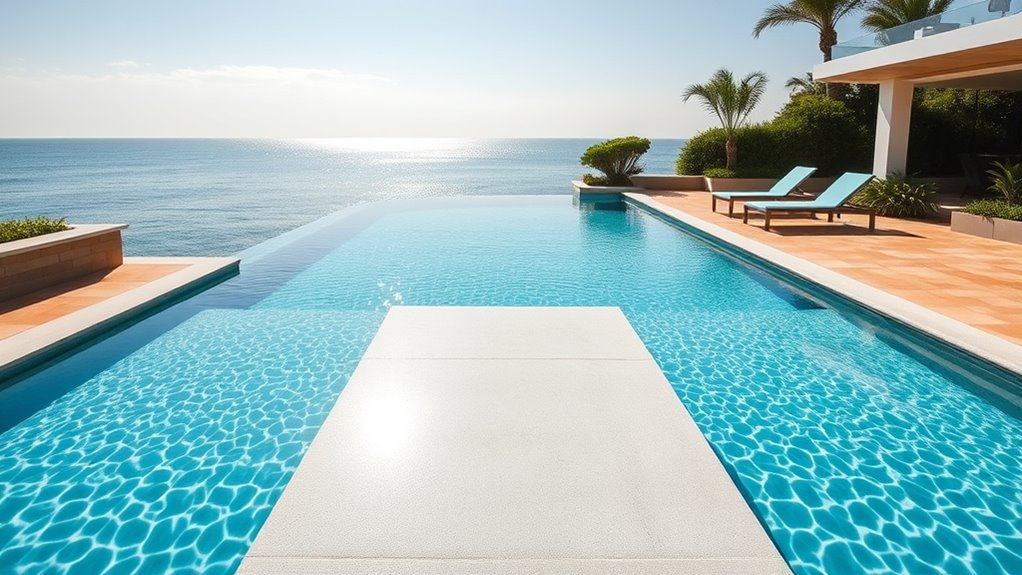
Creating a budget for your zero‑entry pool requires careful planning to cover all costs upfront. You should consider both the obvious expenses and hidden factors that might add up unexpectedly. Being prepared with a solid budget guarantees you can enjoy your pool without surprises down the line. Incorporating effective organization strategies can help keep your project on track and prevent unnecessary expenditures.
Budget Planning Strategies
Thinking about building a zero-entry pool? Effective budget planning is key to bringing your vision to life without surprises. Start by outlining your top priorities—whether it’s size, features, or materials—and allocate funds accordingly. Consider these strategies:
- Set a realistic budget based on research and quotes from contractors.
- Prioritize essential features to avoid overspending on extras.
- Include a contingency fund of around 10-15% to cover unexpected costs.
- Conduct a cost comparison to ensure your investments are optimized for value and durability.
Sticking to a clear plan helps you stay on track financially. Also, get multiple quotes to compare costs and quality. Remember, while it’s tempting to splurge on luxury features, balancing your desires with your budget ensures you get the pool you want without financial stress. Proper planning now saves headaches later.
Hidden Cost Factors
Have you considered the hidden costs that can sneak into your zero-entry pool project? These unexpected expenses can quickly inflate your budget if you’re not prepared. For instance, site preparation might reveal unforeseen issues like underground utilities or poor soil conditions, leading to extra excavation or foundation work. Additionally, upgrades such as specialized decking, lighting, or water features can add significant costs beyond initial estimates. Permits and inspections often come with fees that you might overlook initially. Maintenance requirements can also be underestimated; zero-entry pools may need more frequent cleaning and chemical treatments. Moreover, the artistic elements incorporated into the pool design can influence both initial costs and ongoing maintenance expenses. In conclusion, factor in potential costs for future repairs or upgrades. Being aware of these hidden factors helps you create a more accurate budget and avoid surprises down the line.
Incorporating Landscaping and Surroundings to Complete the Look
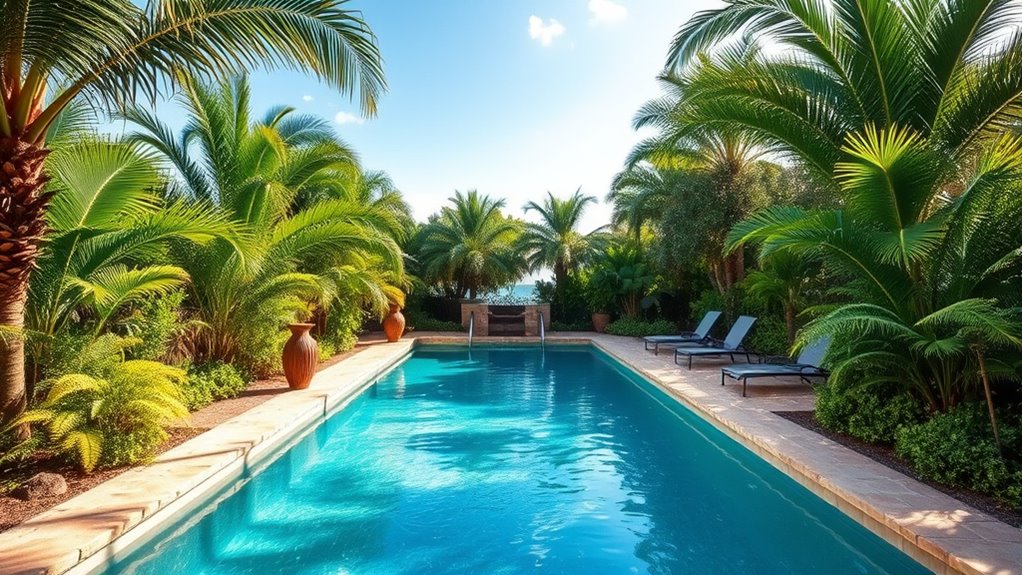
To truly enhance the appeal of your zero-entry pool, you should carefully select landscaping and surrounding features that complement its sleek design. Thoughtful choices will create a seamless connection from nature to your pool area. Consider these key elements:
- Native Plants – Use low-maintenance, drought-resistant plants that blend naturally with your environment, adding greenery without overwhelming the space.
- Hardscaping – Incorporate natural stone or sleek pavers around the pool to frame it beautifully and provide functional lounging areas.
- Lighting – Install subtle landscape lighting to highlight features and create a relaxing ambiance at night.
Frequently Asked Questions
How Long Does It Typically Take to Install a Zero-Entry Pool?
Installing a zero-entry pool usually takes between 4 to 8 weeks, depending on factors like pool size, design complexity, and site preparation. You can expect excavation, plumbing, and concrete work to take the most time. If you work closely with your contractor and choose a straightforward design, the process can be quicker. Keep in mind that weather and permits may also influence the overall timeline.
Are Zero-Entry Pools Suitable for All Climate Zones?
You might worry about zero-entry pools in colder climates, but they’re suitable everywhere with proper insulation and heating systems. If you live in a zone with harsh winters, you can still enjoy a zero-entry pool by winterizing it annually. Regular maintenance and climate-specific features guarantee durability and comfort. So, regardless of your location, a zero-entry pool can bring that beach vibe right to your backyard.
Can Zero-Entry Pools Be Customized With Features Like Waterfalls or Spas?
Yes, you can customize zero-entry pools with features like waterfalls or spas. You choose the add-ons that suit your style and budget, and your contractor can integrate them seamlessly into your pool’s design. Waterfalls add visual appeal and soothing sounds, while spas offer relaxation. Make sure to discuss your preferences early in the planning process so your pool builder can incorporate these features for a personalized, luxurious backyard oasis.
What Are the Energy Implications of Maintaining a Zero-Entry Pool?
Maintaining a zero-entry pool does use more energy, mainly due to its larger surface area and additional features like waterfalls or spas. You’ll see increased costs from running the pumps, filters, and heating systems. To minimize energy use, consider energy-efficient equipment, smart timers, and proper insulation. Regular maintenance also helps keep energy consumption down, ensuring your pool stays enjoyable without skyrocketing your utility bills.
How Do Zero-Entry Pools Impact Property Value and Resale Potential?
You’ll likely see a boost in your property’s value and curb appeal with a zero-entry pool, making it attractive to potential buyers. Its modern, accessible design enhances the overall outdoor space, signaling luxury and convenience. Resale potential improves because zero-entry pools appeal to families, seniors, and those with mobility concerns. Keep in mind, though, that maintenance costs and local market trends also influence how much your property’s value increases.
Conclusion
A zero-entry pool offers a stunning, beach-like experience right in your backyard, and with proper planning, it can boost your home’s value by up to 15%. By choosing the right location, materials, and features, you create a safe, beautiful oasis you’ll enjoy for years. Remember, regular maintenance keeps it pristine, ensuring your investment pays off. Embark on your zero-entry pool project and transform your outdoor space into a relaxing paradise today.