TL;DR
Automatic pool cleaners collect everyday debris and cut down on manual vacuuming, but they do not replace water testing, pool circulation, or routine maintenance. Suction-side, pressure-side, and robotic models work differently, so match the cleaner to your pool’s shape, surfaces, debris, existing equipment, and upkeep budget. Check the manufacturer’s current specifications before buying.
A windstorm can turn a clear blue pool into a floating map of leaves, grit, and seed pods overnight. Automatic pool cleaners can take much of the vacuuming off your weekend list, but choosing one means matching its design to your pool and the debris that actually lands in it.

Get pool and patio gear delivered free with Prime
- Fast, free delivery on millions of items
- Prime Video, Amazon Music and more included
- Member-only deals all year
You’ll find three main types: suction-side, pressure-side, and robotic. They collect dirt in different ways, rely on different equipment, and ask for different kinds of upkeep. A cleaner that works well in a small, screened pool may frustrate you in a deep pool surrounded by oak trees.
This guide explains what each type does, what to check before buying, and how to keep expectations realistic. You’ll also see why a cleaner can remove dirt and debris with limited hands-on work while leaving water chemistry, circulation, and basic pool care in your hands. Check each manufacturer’s current specifications before you buy; features and compatibility vary by model.
Choose a cleaner based on pool compatibility, debris, coverage, and upkeep—not category labels or headline features alone.
Suction-side cleaners use the pool’s filtration system; pressure-side models often collect debris in a bag; robotic models filter through their own unit.
Confirm whether your model cleans floors, walls, and the waterline, since coverage varies by product.
Plan to empty baskets, rinse filters or bags, and inspect parts; an automatic cleaner does not replace pool care.
Follow manufacturer safety instructions, supervise children around water, and never treat a cleaner as a safety device.
What an automatic pool cleaner does—and what it leaves to you
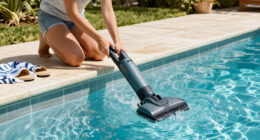
An automatic pool cleaner moves around the pool to collect debris or scrub surfaces, cutting down on manual vacuuming and some brushing. It does not replace water testing, balanced chemistry, circulation, or filter care. Think of it as a helpful worker with a narrow job description: it can pick up leaves, but it cannot diagnose cloudy water.
For example, imagine you return from a weekend away to find pine needles scattered across the floor. A cleaner may gather many of them during a cycle, saving you the time of guiding a manual vacuum. You still need to empty the skimmer basket, check the cleaner’s filter or bag, and test the water as part of ordinary pool care.
What about algae? A pool cleaner may scrub or collect some loose material, depending on its design, but it does not replace chemical treatment. If algae is growing on a wall, a cleaner alone may leave the underlying problem untouched. Follow pool-care guidance for treating the water, then use brushing and filtration as directed.
Results also depend on the pool and the debris. Large leaves can block some systems; fine sand or pollen can pass through a filter that is too coarse. So “automatic” means less hands-on cleaning, not a pool that looks after itself. Keep up with routine brushing and equipment checks, and you’ll give the machine a better chance to do its part.
Products Worth Considering

Sony 65 Inch BRAVIA 5 Mini LED 4K HDR Smart Google TV (K-65XR50)

Dyson Cyclone V10 Origin Cordless Vacuum

Levoit Core 300S-P Smart WiFi Air Purifier
As an affiliate, we earn on qualifying purchases.
Choose among the three cleaner types by looking at your equipment
Suction-side cleaners connect to a skimmer or dedicated suction line, pressure-side cleaners use a return line or booster pump, and robotic cleaners filter water through their own onboard unit. These connections determine more than how the machine moves: they decide which parts of your pool system do extra work and where collected debris ends up. Before comparing prices, check what your pool already has, since buying a cleaner that requires a line or pump you lack can add installation cost or rule out that model.
| Type | How it works | Good fit when | Trade-off |
|---|---|---|---|
| Suction-side | Uses pool suction and the existing filtration system | You want a simple option for everyday dirt and small debris | It adds work for the pump and filter; performance depends on suction |
| Pressure-side | Moves with return-line pressure; many models collect debris in a bag | You often deal with larger debris or want some debris collected outside the main filter | Booster-pump models add equipment and energy use; bags need emptying |
| Robotic | Runs on electricity and filters through its own onboard filter | You value independent filtration or features such as wall scrubbing on a suitable model | Often costs more upfront and still needs handling and filter care |
A suction-side unit draws debris into the pool’s filtration path. That can be a straightforward fit when the plumbing and pump are compatible, but the main filter may need attention more often, and cleaner performance can depend on available suction. A pressure-side cleaner can put much of the collected debris into its own bag, which may reduce what reaches the main filter. The trade-off is that some models need a booster pump, adding an equipment and energy consideration. A robotic cleaner has its own filter and motor, so it does not rely on the pool’s suction to move and collect debris; you still have to lift it out, clean its filter, and confirm its coverage.
Say your pool already has strong suction and mostly collects dust and small bits of leaves. A suction-side model might suit that setup, though you should account for the filter-cleaning routine. If a nearby tree drops broad leaves, a pressure-side model with a debris bag could be worth comparing because the bag may be easier to empty than repeatedly cleaning the main filter. A robot may appeal if independent filtration fits your priorities, but check whether its stated coverage includes your pool’s walls and waterline.
These are category-level patterns, not guarantees. Models differ within each type, and a pool’s plumbing, pump schedule, debris, and shape can change the practical trade-offs. Verify compatibility, debris capacity, operating requirements, and maintenance instructions in the product specifications before deciding.
Match cleaning coverage to your pool’s shape and mess
The right cleaner must fit your pool surface, shape, steps, slope, and debris. A machine that covers a broad, flat floor may leave tight corners or wall debris behind. Coverage matters because an uncleaned spot still needs manual brushing or vacuuming; a high-speed cycle is poor value if it repeatedly misses the areas that collect the most dirt. Check exactly which surfaces a model cleans instead of assuming that every automatic cleaner climbs walls or scrubs the waterline.
- Map the pool. Note its surface, deepest point, steps, corners, and any attached spa.
- Name your usual debris. Is it fine sand, pollen, small leaves, or large seed pods and acorns?
- Confirm the stated coverage. Look for floor, wall, and waterline details that match your pool.
- Check collection and upkeep. Compare filter fineness, bag capacity, and how easily you can remove and rinse each part.
For instance, a pool beneath a mature oak may collect acorns and broad leaves after a windy day. A cleaner designed for fine everyday dirt could clog or need frequent emptying, interrupting cycles and adding hands-on work just when debris is heaviest. In a screened pool that gathers mostly dust, large-debris capacity may matter less than a filter fine enough for small particles and easy to rinse. Matching capacity to the mess helps balance cleaning time against filter maintenance.
Features such as debris sensors, app controls, and scheduled cycles can make a routine more convenient, but a long feature list does not prove better coverage. A schedule saves effort only if the cleaner can reach the problem areas and handle what accumulates there. Look for model-specific information about the debris it handles and the pool shapes it supports. If your pool has unusual steps or a steep slope, compatibility deserves more attention than a flashy timer because a cleaner that cannot navigate those areas leaves you with the same manual work.
Compare the costs you’ll pay after the purchase
The purchase price tells only part of the story: running costs, replacement parts, cleaning time, and equipment needs also affect what a pool cleaner costs to own. Actual expenses depend on the model, how often it runs, electricity rates, and your existing pool setup. A lower sticker price can come with more pump use or filter cleaning; a higher price can buy independent filtration or convenience, but only if those benefits matter in your routine. Check the equipment and maintenance requirements before treating one type as the cheaper choice.
A suction-side cleaner may be an accessible starting point, but it uses the pool’s circulation system and adds work for the pump and main filter. The real trade-off is the combined effect of pump operation and more frequent filter attention, which varies by system and schedule. A pressure-side model with a booster pump can need extra equipment and energy, although many models collect debris in a separate bag. That bag may simplify debris disposal, but the pump’s operating cost and bag maintenance still belong in the comparison. A robotic cleaner has a higher upfront price in many cases, yet its onboard filtration works independently of the pool’s circulation system. That independence can reduce the cleaner’s demand on the main filtration path, but it does not eliminate electricity use, filter cleaning, or repair costs.
Picture two neighbors after a windy week. One has a suction cleaner and must empty the pool basket and clean the main filter more often; the other has a pressure-side unit and empties its debris bag. The second owner may find that routine quicker, while the first may have spent less upfront or avoided installing a booster pump. Neither setup is automatically cheaper. Their results depend on the pool’s pump schedule, local electricity cost, debris, maintenance time, and the machines themselves.
Before buying, compare replacement filters, bags, brushes, hoses, cables, batteries, and repair availability where applicable. Parts affect both direct cost and downtime: an inexpensive cleaner can become frustrating if a worn hose or filter is difficult to replace. Convenience features change quickly, especially among robotic models promoting cordless operation, app controls, and scheduling. Confirm current specifications and consult independent reviews for the exact model. A convenient feature matters most when it solves a real annoyance in your pool routine, and its value should be weighed against purchase price and upkeep.
Build a simple routine that keeps the cleaner working
A short routine helps an automatic cleaner collect debris instead of carrying yesterday’s dirt through the pool. Check the collection system, clear blockages, and inspect moving parts at the intervals the manufacturer recommends. These checks matter because a clogged filter or worn moving part can reduce pickup, strain equipment, or leave debris behind even when the cleaner completes its cycle. The exact schedule varies, so start with the manual and adjust as you learn how quickly your pool gets dirty.
- Before a cycle, remove large debris that could clog the cleaner, and check that baskets and filters are ready.
- After a cycle, empty the onboard filter or debris bag, then rinse it as directed.
- Inspect contact and moving parts, including brushes, wheels, hoses, or cables, for wear or tangles.
- Store the unit as instructed, particularly when the pool is closed for the season or the manufacturer specifies storage care.
For a practical example, after a windy afternoon, you might first remove a thick mat of leaves by hand so they do not clog the cleaner. Then run a cycle and rinse the filter afterward. Clearing the biggest debris first can prevent a short, ineffective run and make the remaining cleanup easier. On a calm week, you may find the cleaner needs less frequent attention. Weather, tree cover, season, and pool use all change how quickly debris builds up, so let the pool’s condition guide adjustments rather than assuming every day needs the same cycle.
There is no universal running schedule. Use the pool’s condition and the maker’s guidance to set one, and keep pump, filter, and water-chemistry care on your normal checklist. A clean filter helps the cleaner do its job; balanced water and circulation address conditions the cleaner cannot fix. Follow all manufacturer safety directions, including guidance about operation while people are swimming. Where children use the pool, keep a responsible adult supervising them closely; a cleaner is never a drowning-prevention device.
Use a buying checklist to avoid a poor fit
A good purchase starts with pool compatibility and cleaning needs, then moves to price and convenience features. Confirm the cleaner suits your pool’s shape and surface, handles your typical debris, and can reach the areas you want cleaned. This order matters because compatibility and coverage determine whether the machine can do the job at all; price and features only help distinguish among models that already fit. That sequence can prevent an expensive mismatch, such as choosing a floor-only cleaner when wall coverage matters to you.
- Pool fit: Verify pool size limits, surface compatibility, steps, slope, and attached-spa requirements.
- Coverage: Check whether the model cleans floors, walls, or the waterline.
- Debris: Match filter or bag design to what lands in your pool, from fine pollen to large leaves.
- Upkeep: Find out how to remove and rinse the filter, clear clogs, and get replacement parts.
- Ownership cost: Consider pump or booster-pump use, the cleaner’s power needs, and expected service costs.
- Convenience: Decide whether a timer, app, or cordless design solves a problem you actually have.
Suppose you have a compact pool, a nearby tree, and little storage space. You might prioritize a manageable debris bag and a simple place to store the cleaner over app control. The bag could reduce trips to the main filter, but its capacity and cleaning effort still matter; a bulky unit may also be awkward if storage is tight. Someone with a larger pool who values programmable cycles may rate those features differently. Neither buyer needs to pay for functions they will rarely use.
Recent models increasingly advertise easier filter access, scheduling, app controls, and cordless operation. Those options can help, but performance claims are model-specific and not standardized. Compare tested coverage, cycle time, maintenance effort, and debris handling for the models you are considering. Think through how those measures affect your routine: a shorter cycle is useful only if coverage is adequate, and easy filter access saves time only if the filter suits your debris. Check current manufacturer specifications before booking the purchase.
Frequently Asked Questions
Which type of automatic pool cleaner is best?
The best type depends on your pool, debris, existing plumbing, budget, and maintenance preferences. Suction-side models use the filtration system, pressure-side models often collect debris in a bag, and robotic models filter through their own onboard unit. Compare the specific model’s compatibility and coverage before buying.
Do automatic pool cleaners clean walls and the waterline?
Some models clean walls or the waterline, and others focus on the floor. Check the product’s stated coverage and verify that it suits your pool’s surface, shape, and steps. A cleaner’s category alone does not confirm what it can reach.
Can a pool cleaner pick up leaves, sand, or algae?
Capabilities vary: large leaves may clog some systems, while fine particles may pass through a coarse filter. Some cleaners collect loose debris or scrub surfaces, but they do not replace the chemical treatment needed to address algae. Check the model’s debris and filter specifications.
How often should I run an automatic pool cleaner?
There is no universal schedule. Trees, weather, season, and pool use affect how quickly debris collects, so follow the manufacturer’s guidance and adjust to what you see in your pool. After each run, check whether the filter or bag needs emptying.
Can an automatic pool cleaner run while people are swimming?
Follow the manufacturer’s safety instructions for your exact model and pool setup. Many owners run cleaners when the pool is not in use. When children are near water, maintain close adult supervision; a pool cleaner does not prevent drowning.
Does a robotic cleaner replace the pool pump or filter?
No. A robotic cleaner generally filters water through its own onboard unit, while the pool still needs its regular circulation and filtration. Continue normal water testing, equipment care, and pool maintenance.
Conclusion
Choose the cleaner that matches the mess your pool actually collects and the equipment you already own. Check its coverage, upkeep, and total ownership costs, then confirm current model specifications before buying.
A cleaner can give you back part of a Saturday. You still supply the water checks and care that keep the pool clear enough to see the blue tiles at the bottom.