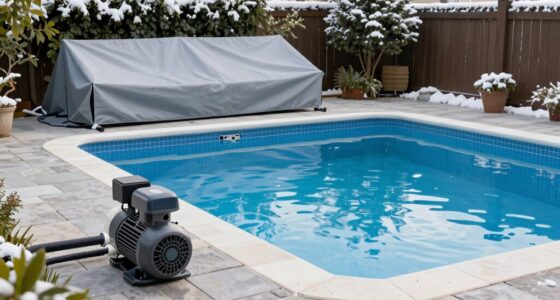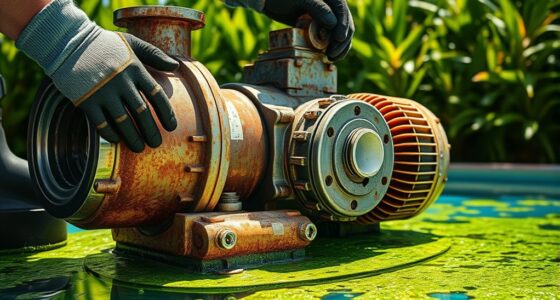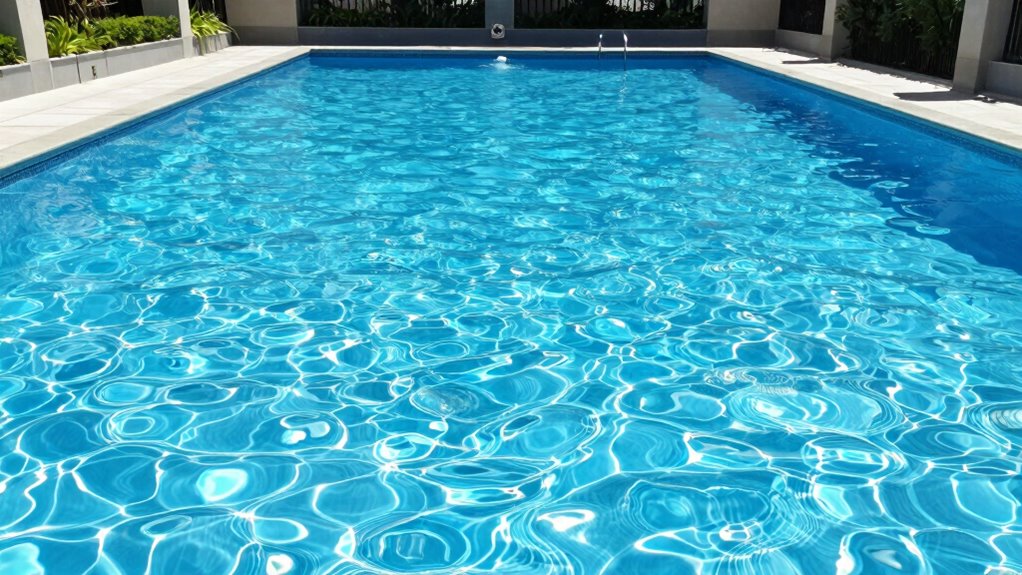

To prevent dead zones in your pool, guarantee water circulates evenly by adjusting return jets and using eyeball fittings to direct flow toward stagnant areas. Regularly check and maintain your pump and filter system, running it 8-12 hours daily. Clean skimmer baskets and brush pool walls frequently to keep debris from settling. Monitoring chemical balance also helps maintain flow and prevent stagnation. For more tips, you’ll discover how small adjustments can make a big difference.

Get pool and patio gear delivered free — and shop member deals
- Fast, free delivery on millions of items
- Access to Prime Big Deal Days deals on October 6–7
- Prime Video, Amazon Music and more included
Key Takeaways
- Reposition or install return jets to promote even water flow throughout the pool.
- Regularly check and clean skimmer baskets and pump strainers to prevent blockages.
- Use eyeball fittings to direct water flow effectively toward stagnant areas.
- Maintain proper chemical balance to support consistent water movement and prevent stratification.
- Brush walls and floors frequently to remove debris and algae in low-flow zones.
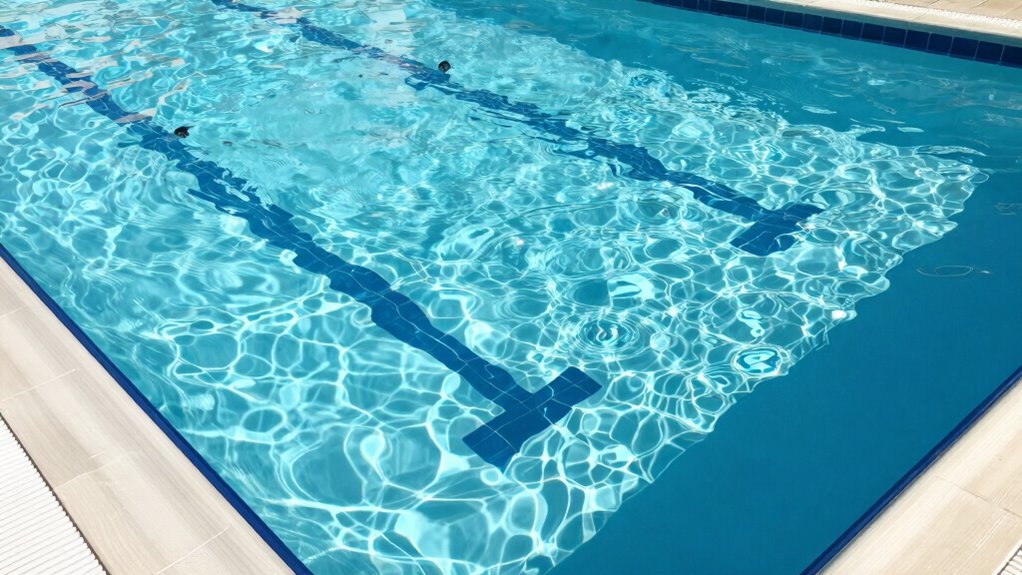
Even with a well-maintained pool pump, certain areas can become stagnant, forming circulation dead zones where water moves little or not at all. These spots often develop when water flow isn’t evenly distributed across the pool, leading to poor water quality and potential algae growth. To prevent this, you need to pay close attention to your pool’s circulation and guarantee proper pool maintenance. Maintaining the correct chemical balance is vital because imbalanced chemicals can cause water to become cloudy or develop algae, especially in stagnant zones. Regular testing of pH, chlorine levels, alkalinity, and stabilizer ensures that the water remains healthy and prevents dead zones from forming.
Even with a well-maintained pump, uneven water flow can create dead zones and algae growth.
Proper circulation begins with your pump and filter system. Make sure your pump is rated appropriately for your pool size and runs long enough each day to circulate all the water thoroughly. Running the pump for at least 8-12 hours daily helps push water into all corners of the pool. Additionally, check your returns and skimmers regularly to confirm they are unobstructed and functioning effectively. Adjust the return jets to create a current that directs water toward dead zones, encouraging flow in those areas. This simple tweak can greatly improve circulation and reduce stagnant spots.
Another essential aspect of pool maintenance involves using additional circulation aids when necessary. Consider installing or repositioning eyeball fittings on your return jets to direct water flow more effectively. For larger pools, a booster pump or additional circulation equipment might be needed to reach all areas. Regularly cleaning your skimmer baskets and pump strainer ensures unobstructed water flow, preventing blockages that could lead to dead zones. Also, periodically brushing the pool walls and floor helps loosen debris and algae, which often accumulate in areas with poor circulation. Ensuring proper water flow distribution is key to maintaining a healthy and well-circulated pool. Paying attention to circulation patterns and addressing any areas with reduced flow will help prevent stagnation.
Finally, keep an eye on your pool’s chemical levels—imbalances can cause water to stratify and stagnate. Proper chemical balance promotes ideal water movement and prevents dead zones by discouraging algae growth and ensuring the water remains evenly mixed. Combining diligent pool maintenance with strategic adjustments to your circulation system will help you avoid creating dead zones, keeping your pool clean, clear, and inviting. Remember, consistent care and attention to circulation not only improve water quality but also extend the lifespan of your pool equipment.
pool return jet adjustment fittings
As an affiliate, we earn on qualifying purchases.
As an affiliate, we earn on qualifying purchases.
Frequently Asked Questions
Can Pool Size Affect Circulation Dead Zones?
Yes, pool size can affect circulation dead zones. Larger pools often have reduced circulation efficiency because water moves more slowly, creating areas where flow is limited. To prevent dead zones, you should adjust your pump and skimmer placement based on your pool size, ensuring even flow throughout. Properly sized circulation systems help maintain clean, balanced water and prevent stagnant areas, no matter your pool’s size.
How Often Should I Run My Pool Pump?
Ever wonder how to keep your pool water crystal clear? You should run your pool pump about 8-12 hours daily, especially during peak usage or hot weather. This guarantees proper water circulation, preventing dead zones and reducing algae growth. Regular pool maintenance depends on consistent pump operation, which keeps chemicals evenly distributed and water fresh. So, staying on schedule with your pump helps maintain a healthy, inviting pool for everyone to enjoy.
Do Pool Covers Impact Circulation Efficiency?
Pool covers can impact circulation efficiency by trapping debris and reducing water movement. While they help with insulation, debris accumulation can clog skimmers and filters, hindering circulation. To maintain ideal flow, you should regularly remove debris from beneath the cover and guarantee your pump runs long enough to circulate water effectively. Using a cover with proper ventilation can also help balance insulation benefits with circulation needs.
What Chemical Imbalances Contribute to Dead Zones?
Did you know that improper chemical balance is a leading cause of dead zones, affecting nearly 60% of pools? Chemical imbalances like unstable pH levels and inconsistent chemical stability hinder proper water circulation. When pH drifts out of ideal range, it creates zones where chemicals don’t disperse evenly. To prevent dead zones, regularly test and adjust your chemicals, maintaining stable pH and chemical levels for peak circulation and water clarity.
Can Adding More Return Jets Reduce Dead Zones?
Adding more return jets can help reduce dead zones by improving flow disruption and ensuring better water circulation. Proper jet placement is essential; you want jets directed toward stagnant areas, creating a sweeping effect. This prevents stagnation and distributes chemicals evenly. When you optimize jet placement and increase the number of return jets, you enhance overall flow, reducing dead zones and maintaining a healthier, more balanced pool environment.
As an affiliate, we earn on qualifying purchases.
Conclusion
To keep your pool sparkling, you need to eliminate dead zones in circulation. Think of these areas as shadows where debris and bacteria can hide, just like a quiet corner in a busy room. Regularly check and adjust your skimmers, return jets, and pump settings to guarantee water flows smoothly everywhere. By staying proactive, you’ll prevent stagnation and enjoy crystal-clear water all season long—like a well-orchestrated symphony where every instrument plays its part perfectly.
As an affiliate, we earn on qualifying purchases.
As an affiliate, we earn on qualifying purchases.
Fall Picks
fall essentials
As an affiliate, we earn on qualifying purchases.