
Vacuuming your pool can be done manually or automatically, each with benefits. Manual vacuuming gives you control and allows you to target specific areas but requires effort and time. Automatic cleaners, like robotic or suction-side models, work independently and save you effort, especially for larger pools. The choice depends on your budget, pool size, and how often you want to clean. To find out which method suits your needs best and how to use them effectively, keep exploring.

Get pool and patio gear delivered free with Prime
- Fast, free delivery on millions of items
- Prime Video, Amazon Music and more included
- Member-only deals all year
Key Takeaways
- Manual vacuums offer targeted cleaning and control but require more effort and time, ideal for smaller pools or detailed work.
- Automatic vacuum systems operate independently, efficiently cleaning large debris and hard-to-reach spots with minimal user input.
- Cost-wise, manual vacuums are less expensive but demand physical effort, while automatic systems have higher upfront costs but offer convenience.
- Both methods help maintain water clarity, proper chemical balance, and reduce algae growth for safer swimming conditions.
- Choosing between them depends on pool size, cleaning frequency, budget, and desired level of convenience.
Keeping your pool clean is essential for safe and enjoyable swimming, and vacuuming is one of the most effective ways to remove dirt and debris from the bottom and sides. Regular vacuuming helps maintain water clarity, reduces algae growth, and supports overall pool safety. When you vacuum your pool properly, you prevent dirt from settling and creating breeding grounds for bacteria, which makes chemical balancing easier and more effective. Clean, well-maintained water is safer to swim in, minimizing skin and eye irritation caused by imbalanced chemicals or debris.
Regular pool vacuuming ensures water clarity, safety, and easier chemical balancing for a healthier swimming environment.
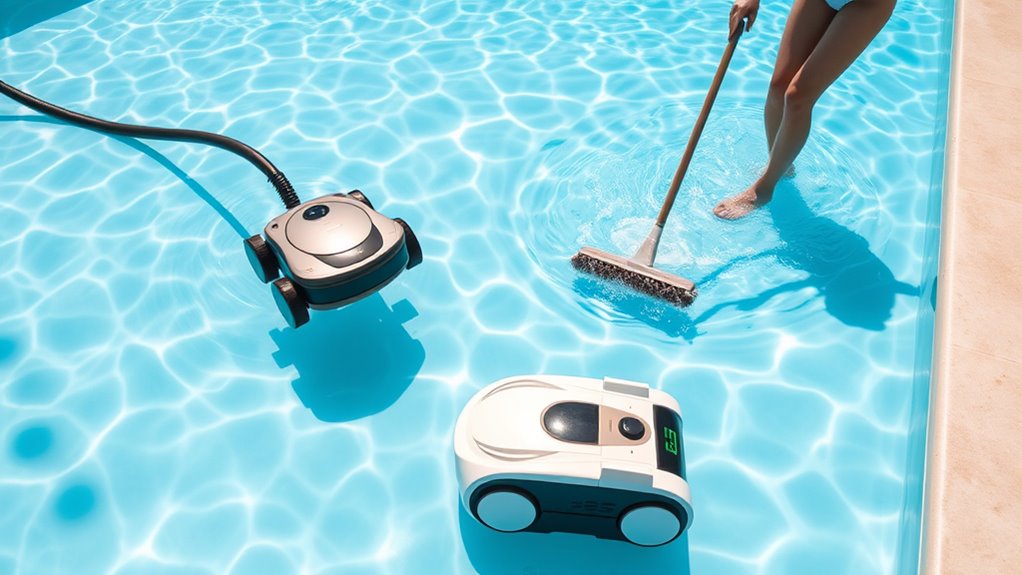
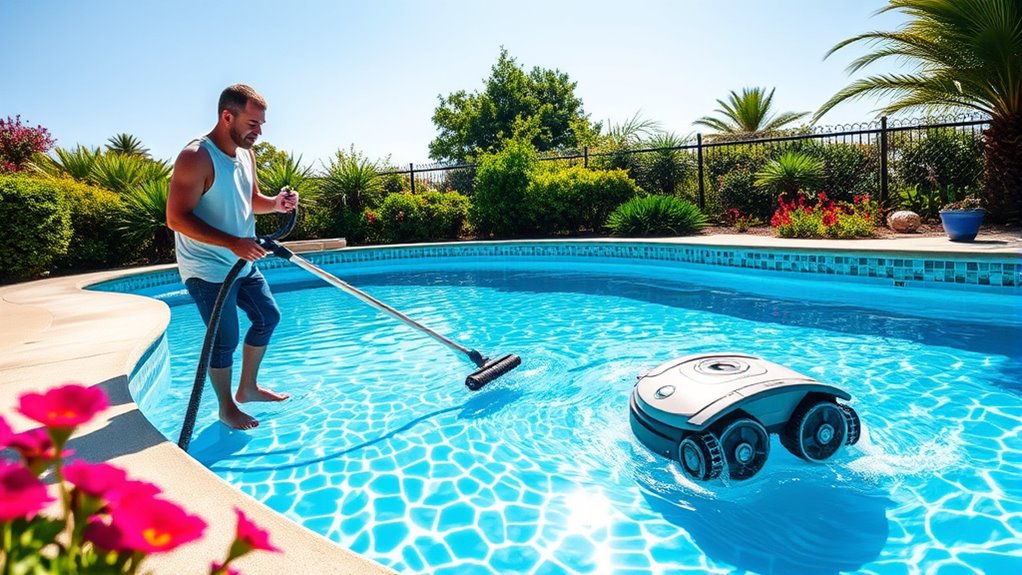
You have two main options for vacuuming your pool: manual vacuuming and automatic systems. Manual vacuuming requires physical effort—you’re in charge of connecting a hose or telescoping pole to a vacuum head and guiding it across the pool floor. This method allows you to target specific areas that tend to accumulate more dirt, like corners or steps. It also gives you more control over the cleaning process, which can be useful if your pool has uneven surfaces or delicate features. However, manual vacuuming can be time-consuming, especially if your pool is large or if debris builds up frequently. It also demands a good eye for detail to ensure you cover the entire bottom and sides thoroughly.
Automatic pool vacuums, on the other hand, are designed to do the work for you. These devices range from robotic cleaners to suction-side and pressure-side models. Robotic vacuums are popular because they operate independently, steering the pool floor and walls without much input from you. They are generally more efficient at cleaning large debris and fine dirt, and many models come with programmable schedules. Automatic vacuums can save you time and effort, making it easier to maintain a clean pool consistently. Plus, they often perform better at reaching tricky spots, which helps keep your pool safe by preventing dirt buildup that could interfere with chemical balancing.
Choosing between manual and automatic vacuuming depends on your pool size, budget, and how much time you want to spend cleaning. Manual vacuums are less expensive but require more effort, while automatic models are more costly upfront but offer convenience and thorough cleaning. Remember, regardless of the method you pick, regular vacuuming supports proper chemical balancing, which is critical for pool safety. When your pool is free of debris, you can more accurately monitor chlorine and pH levels, preventing unsafe conditions. Both methods help keep your water crystal-clear, reduce the risk of algae blooms, and ensure your swimming experience remains safe and enjoyable. Additionally, understanding the importance of projector technology can help you create the perfect home cinema environment for your entertainment needs.
As an affiliate, we earn on qualifying purchases.
Frequently Asked Questions
How Often Should I Vacuum My Pool?
You should vacuum your pool at least once a week to maintain proper pool maintenance and keep the water clean. If you notice more debris or algae buildup, increase your cleaning frequency accordingly. Regular vacuuming helps prevent algae and dirt from accumulating, making your pool safer and more inviting. Adjust the cleaning schedule based on your pool usage, surrounding environment, and weather conditions to keep your pool in top shape.
What Is the Average Cost of Automatic Pool Cleaners?
You can expect to pay around $300 to $700 for an automatic pool cleaner, depending on features and brand. When it comes to pool maintenance, investing in a good cleaner can reduce your cleaning frequency and keep your pool spotless. Consider how often you need to clean, as higher-end models may be more efficient, saving you time and effort in the long run.
Can Manual Vacuuming Damage My Pool Liner?
Think of your pool liner as a delicate canvas. Manual vacuuming, if done gently, won’t damage it, but pushing too hard or using a rough-bristled brush can cause vacuum damage. You need to be careful to avoid scratching or tearing the liner. Use soft attachments and gentle strokes, and your manual cleaning will keep your pool sparkling without risking harm to your liner.
Are Robotic Pool Cleaners Energy-Efficient?
Robotic pool cleaners are generally energy-efficient because they use minimal power compared to traditional vacuuming methods. They often feature solar efficiency, harnessing solar power to extend battery life and reduce electricity consumption. This means you save money and energy over time. Plus, their efficient cleaning cycles and smart features guarantee your pool stays pristine without wasting energy, making them a smart choice for eco-conscious pool owners.
Which Method Is Better for Algae Removal?
You should choose automatic pool cleaners for algae control because they cover more surface area efficiently, reducing algae buildup quickly. Manual vacuuming can be effective if you target specific spots, but it’s time-consuming and less thorough. For ideal pool maintenance, combining both methods helps ensure thorough algae removal, keeping your pool clean and safe. Regular use of automatic cleaners simplifies algae control and maintains a healthy swimming environment.
As an affiliate, we earn on qualifying purchases.
Conclusion
So, whether you choose to manually scrub every inch or let an automatic cleaner do the work, you might find yourself surprised — it’s not quite the relaxing chore you imagined. Ironically, the easiest option may turn out to be the most time-consuming in the long run. Either way, at least you’ll get a good arm workout. Just remember, no matter what method you pick, a spotless pool is worth the effort (or so they say).
As an affiliate, we earn on qualifying purchases.
As an affiliate, we earn on qualifying purchases.
Fall Picks
fall essentials
As an affiliate, we earn on qualifying purchases.