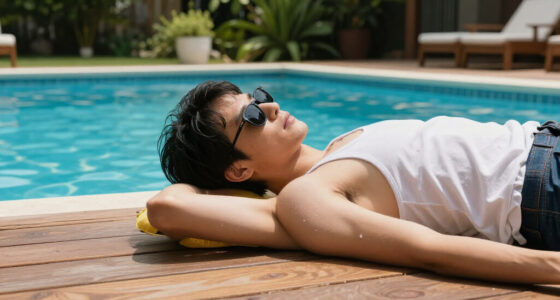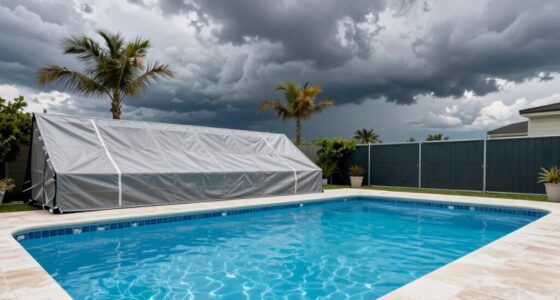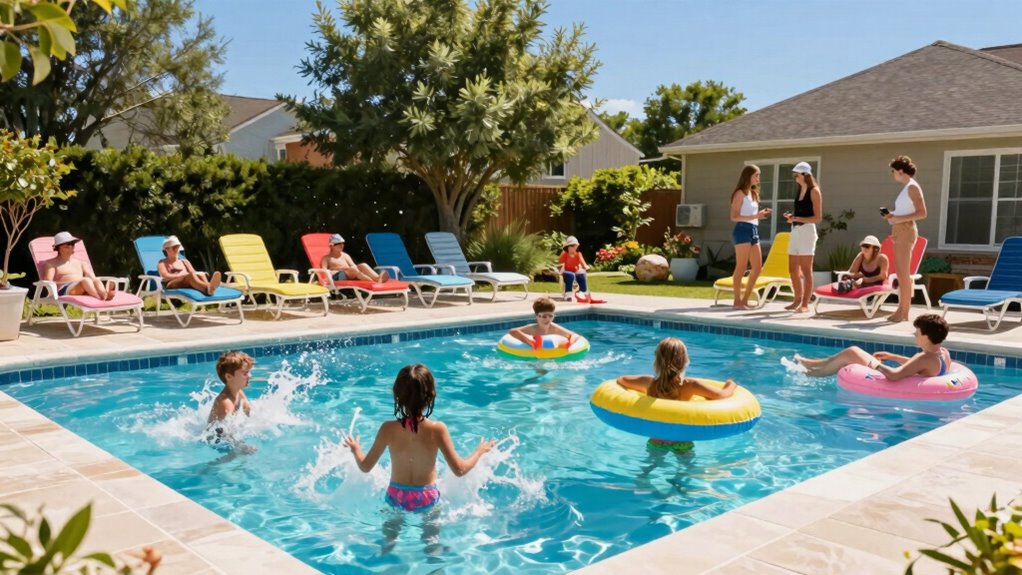

In the U.S., your pool usage peaks during late spring through early fall, demanding regular maintenance like water chemistry checks and debris removal. During colder months, use drops off, and many homeowners close or winterize their pools to prevent damage. Climate variations mean you should adjust your routines based on your region’s weather, especially if you enjoy extended seasons. Staying on top of seasonal changes helps keep your pool safe, clean, and ready for enjoyment year-round. Discover more tips to optimize your pool care.

Get pool and patio gear delivered free with Prime
- Fast, free delivery on millions of items
- Prime Video, Amazon Music and more included
- Member-only deals all year
Key Takeaways
- Pool demand peaks in late spring through early fall, requiring increased maintenance and safety measures during warmer months.
- Off-season use drops in late fall and winter, often leading to pool closures or reduced activity to prevent damage.
- Regional climate variations influence extended or shortened swimming seasons and maintenance routines.
- Year-round use in milder climates demands continuous upkeep, winterizing, and safety precautions.
- Proper planning for seasonal changes ensures safety, water quality, and equipment longevity throughout the year.
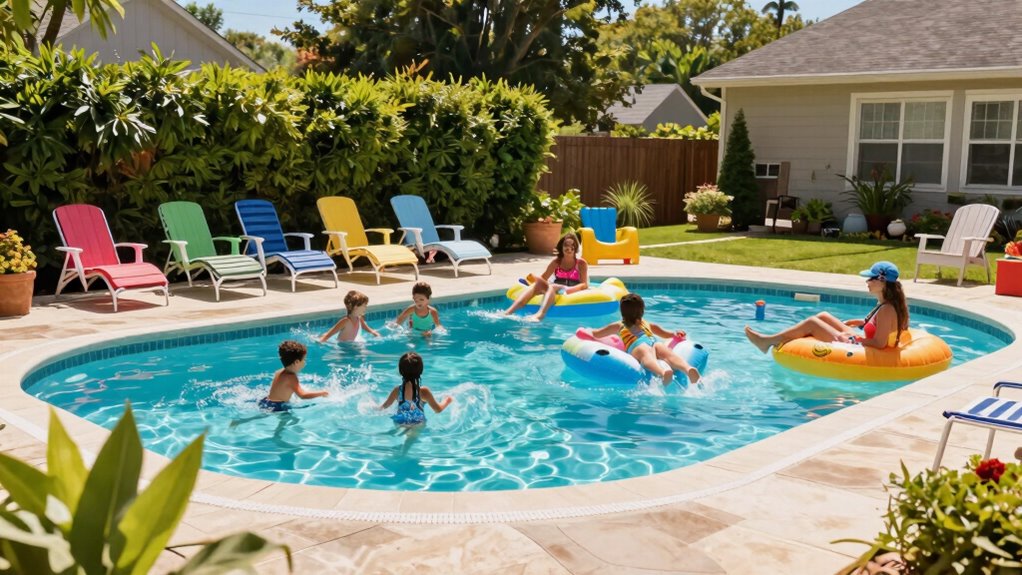
Understanding when people in the U.S. use pools throughout the year can help homeowners, pool operators, and policymakers plan better and maximize enjoyment. Knowing seasonal patterns allows you to prepare accordingly, ensuring your pool remains safe, clean, and ready for use when needed. In warmer months, typically late spring through early fall, demand for pools peaks. During this time, you’re likely to see families, friends, and neighbors enjoying swimming, lounging, or hosting pool parties. This increased usage means pool maintenance becomes more critical. Regularly checking water chemistry, cleaning filters, and removing debris help keep the water safe and inviting. It’s also essential to follow safety guidelines, especially when multiple people are using the pool. Installing proper barriers, ensuring life-saving equipment is accessible, and supervising children at all times are vital steps to prevent accidents. Proper water chemistry management is crucial to maintain water quality during peak usage periods, especially since high usage can influence chemical balance and sanitation.
As temperatures drop in late fall and winter, pool use diminishes significantly. Many homeowners opt to close their pools or reduce usage during these months. If you decide to keep your pool operational year-round, you’ll need to adjust your pool maintenance routine. This may include winterizing equipment or maintaining a lower water temperature for minimal use. Even if you’re not swimming, maintaining your pool’s equipment and water quality remains important to prevent damage or costly repairs when spring rolls around. For those who do choose to swim year-round, safety guidelines should still be a priority. Slippery surfaces and reduced visibility in colder months can pose hazards, so regular inspections and proper lighting are necessary. Additionally, climate variations can influence your pool’s maintenance and usage schedules, especially in regions with unpredictable weather patterns. Incorporating hydrotherapy techniques into your routine may also be beneficial, especially during colder months when outdoor activities decrease. Being aware of pool climate patterns can help you better prepare for seasonal changes and optimize your pool’s longevity. Furthermore, understanding local climate patterns can assist in selecting appropriate pool covers and heating options for year-round use.
In some regions with milder climates, pool use can extend beyond the traditional summer months. You might find yourself swimming comfortably into early fall or even late winter, depending on local weather patterns. This extended season demands that you stay vigilant about pool maintenance, adjusting your routines based on how often you use the pool and the weather conditions. Proper safety measures should be in place regardless of the season, especially if you’re swimming during off-peak times when supervision might be less frequent. By understanding these seasonal use patterns, you can plan your pool upkeep more efficiently, ensuring safety and enjoyment all year long. Whether you’re opening your pool for the summer or closing it for winter, staying informed about these trends helps you make smarter decisions that protect your investment and enhance your swimming experience.
As an affiliate, we earn on qualifying purchases.
Frequently Asked Questions
How Do Regional Climate Differences Affect Pool Season Lengths?
Regional climate differences directly influence pool season lengths through climate zones and seasonal variability. In warmer zones like the South, pools stay open longer, sometimes year-round. Cooler regions, such as the North, experience shorter seasons due to colder temperatures and unpredictable weather. These climate variations mean you’ll likely swim more consistently in warm areas, while in cooler zones, the pool season is limited by seasonal variability, requiring you to plan around weather patterns.
What Are the Safety Considerations During Off-Season Pool Use?
Imagine your pool as a silent guardian during off-season months. To keep it that way, prioritize pool safety by securing covers and gates, preventing curious children or pets from unintended dips. Watch for off-season hazards like falling debris or freezing pipes that can cause damage or injury. Regularly inspect and maintain safety equipment, and never leave the area unattended. These steps turn your pool into a protected oasis, even when not in use.
How Do Pool Maintenance Routines Change With Seasonal Use?
When seasons change, you adjust your pool maintenance routines by focusing on chemical balancing and equipment maintenance. In colder months, you’ll reduce chemical levels and make certain your heater and pump are properly winterized. During peak season, you’ll frequently check water chemistry and clean filters to prevent algae and bacteria. Regularly inspecting your equipment helps avoid costly repairs, guaranteeing your pool remains safe, clean, and ready for use whenever you want.
Are There Economic Benefits to Extending or Shortening Pool Seasons?
Extending your pool season can boost economic incentives by increasing seasonal profitability, allowing you to generate more income from longer usage. Conversely, shortening the season may reduce costs related to maintenance and energy, improving overall profitability during off-peak times. By adjusting your pool’s operational period based on demand and weather patterns, you can maximize financial benefits, balancing costs and revenue effectively throughout the year.
How Do Holiday and Event Scheduling Influence Pool Usage Patterns?
Holiday trends and event planning majorly shape your pool usage, like a puppet master pulling strings. When you plan a Fourth of July bash or a summer wedding, you’re more likely to leap in. Conversely, during off-peak holidays, pools often sit lonely, neglected. Your swim schedule dances to the rhythm of these occasions, making pool use a theatrical performance scripted by holiday trends and social calendars.
As an affiliate, we earn on qualifying purchases.
Conclusion
As summer fades and pools close, remember that these patterns are like tides—cyclical and ever-changing. Embrace the rhythm of the seasons, knowing that each splash and silent moment marks a chapter in the year’s aquatic story. Whether you’re diving in or waiting for the next swell, understanding these ebb and flows helps you stay in tune with nature’s watery dance. So, stay buoyant, and let the seasons guide your splash through the year.
As an affiliate, we earn on qualifying purchases.
As an affiliate, we earn on qualifying purchases.
Columbus Day / Indigenous Peoples' Day Picks
long weekend sales
As an affiliate, we earn on qualifying purchases.