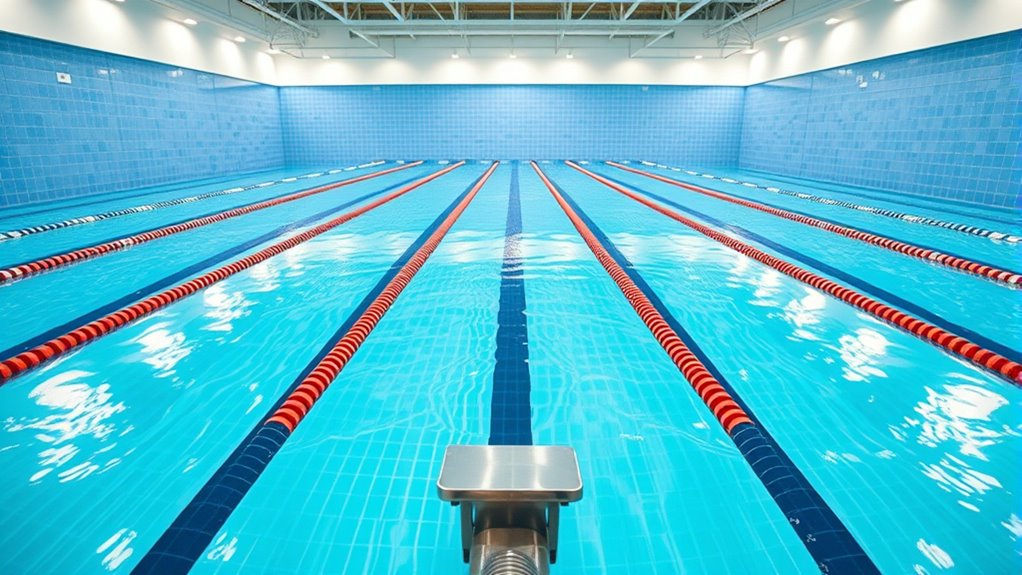

An Olympic-size pool measures exactly 50 meters in length, 25 meters wide, with 8 lanes each 2.5 meters wide. The standardized layout includes precise markings and lane configurations that promote fair competition and ideal performance. Proper water features and lane ropes minimize turbulence, helping swimmers maintain speed and balance. The 50-meter length is vital for consistent records and fair comparisons worldwide. To understand more about these fundamental features and their impact, keep exploring further.

Get pool and patio gear delivered free — and shop member deals
- Fast, free delivery on millions of items
- Access to Prime Big Deal Days deals on October 6–7
- Prime Video, Amazon Music and more included
Key Takeaways
- Olympic pools are standardized at 50 meters in length to ensure fairness and consistency in international competitions.
- They are divided into 8 lanes, each 2.5 meters wide, to prevent interference and turbulence during races.
- The 50-meter length aligns with FINA regulations, supporting record comparisons and global standards.
- Proper lane and water management create optimal conditions for performance and safety for competitive swimmers.
- The 50-meter dimension promotes endurance, strategic pacing, and maintains the integrity of the sport worldwide.
Standard Dimensions and Layout of Olympic Pools
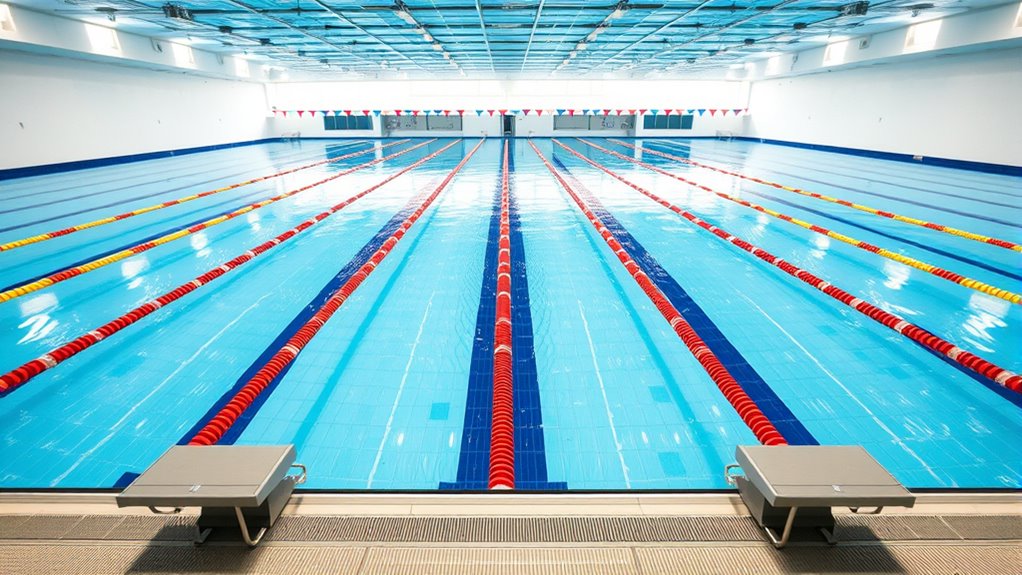
Have you ever wondered what makes an Olympic pool different from a regular swimming pool? The main difference lies in its precise dimensions and layout. An Olympic pool measures exactly 50 meters in length, with a width of 25 meters, divided into 8 evenly spaced lanes. Each lane is 2.5 meters wide, providing enough space for competitive swimming and minimizing wave interference. The depth typically ranges from 2 to 3 meters to guarantee safety and maximize water conditions. The pool’s rectangular shape and standardized measurements guarantee consistency in competitions worldwide. Markings on the bottom and sides indicate distances, helping swimmers maintain proper pace. These strict specifications allow for fair, standardized competition and record-breaking performances across international events.
The Importance of Lane Configuration and Water Features
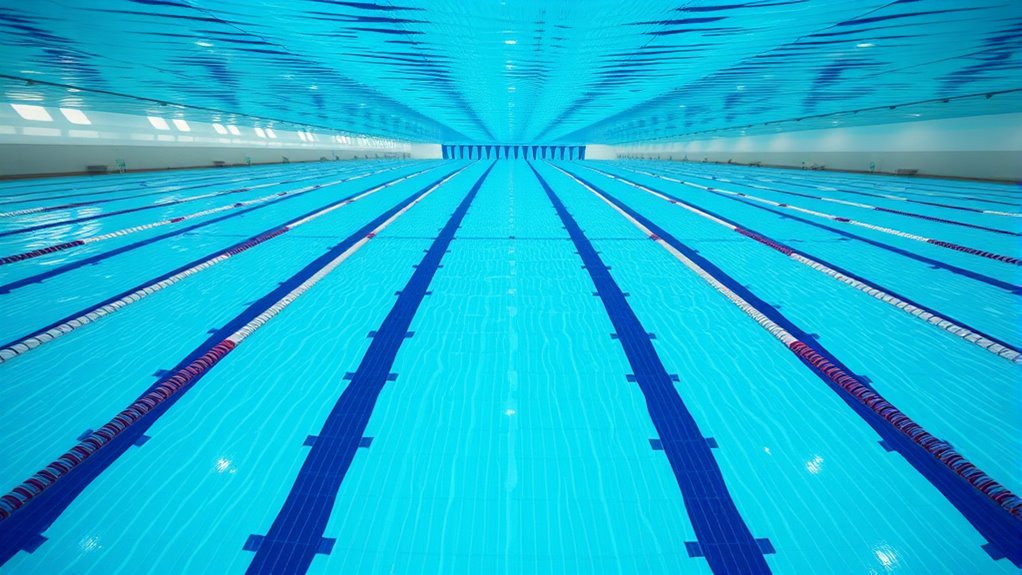
Lane configuration plays a crucial role in ensuring fair competition and ideal swimming conditions. Properly spaced lanes help prevent swimmers from interfering with each other’s strokes, minimizing turbulence and water resistance. Typically, lanes are numbered, with the middle lanes reserved for the fastest competitors, offering the best visibility and reduced wave interference. Water features like lane ropes and wave-breaking devices are essential, as they absorb and deflect waves, maintaining calmer water in each lane. This stability allows swimmers to maintain their rhythm and speed. Additionally, lane ropes are often colored to mark different sections, aiding swimmers in pacing. Choosing the right pool dimensions is vital for competitive swimming, as it impacts race strategy and swimmer performance. Overall, thoughtful lane configuration and water features create a fair, safe, and efficient environment that helps athletes perform at their best.
The Significance of the 50-Meter Length in Competitive Swimming
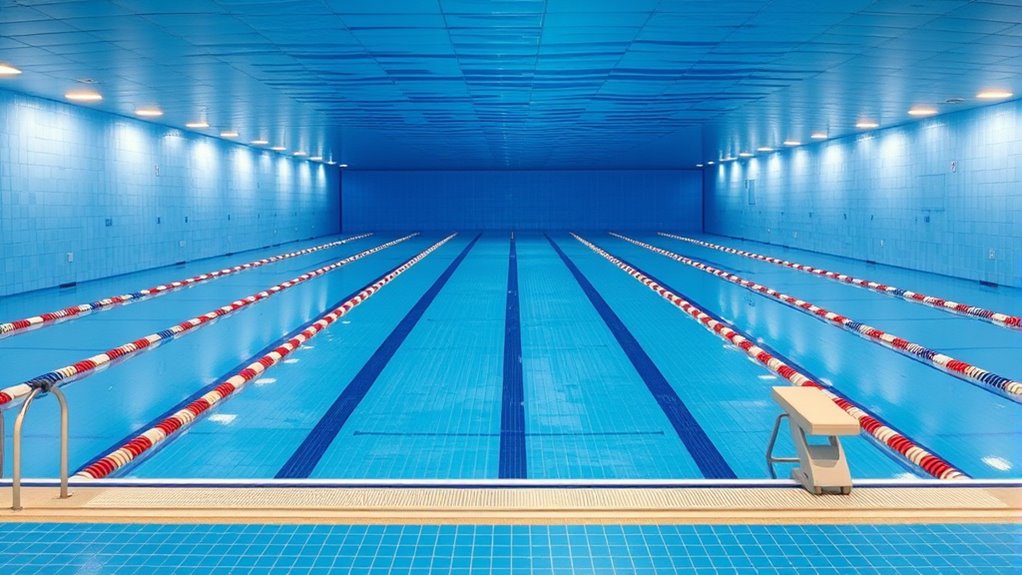
The 50-meter length of Olympic pools has become the standard for competitive swimming because it offers a consistent and fair environment for athletes worldwide. This standardization guarantees that swimmers train and compete under the same conditions, making performances comparable across events and countries. A 50-meter pool, often called a long course pool, also aligns with international competition rules set by FINA, promoting uniformity. It allows swimmers to develop endurance and pacing strategies suited for longer races. Shorter pools, like 25 meters, can alter race dynamics, favoring turns and pushing times down artificially. By maintaining the 50-meter length, the sport preserves its integrity, ensuring that records are meaningful and that athletes compete on a level playing field. Additionally, the 50-meter configuration facilitates standardized training practices worldwide, fostering fair competition at the highest levels.
Frequently Asked Questions
How Are Olympic Pools Maintained to Meet International Standards?
You guarantee Olympic pools meet international standards by regularly testing and maintaining water quality, adjusting chemical levels like chlorine and pH to keep the water safe and clear. You also monitor temperature, keep the lanes marked precisely, and inspect the pool structure for any damage. Routine cleaning and filtration keep the water clean and free of debris. Adhering to strict guidelines guarantees the pool remains compliant and ready for competition.
What Technologies Are Used to Ensure Water Quality and Safety?
You rely on advanced filtration systems, including sand and cartridge filters, to keep the water clean. UV sterilizers and ozone generators disinfect the water without harsh chemicals, ensuring safety. Automated pH and chlorine monitors constantly adjust chemical levels for ideal balance. Additionally, real-time sensors detect contaminants, alerting staff to maintain water quality. These technologies work together to create a safe, hygienic environment for swimmers.
How Do Different Pool Sizes Impact Training and Competition?
You’ll find that larger pools, like Olympic-sized ones, provide more space for swimmers to train and race without frequent turns, helping improve endurance and technique. Smaller pools may limit training variety and can cause more turns, impacting performance. For competitions, standard sizes ensure fairness and consistency. You’ll notice that choosing the right pool size depends on your goals, whether training or competing, to optimize speed, stamina, and overall performance.
Are There Variations in Olympic Pool Design Across Countries?
You’ll find that Olympic pools across countries are remarkably standardized, with over 90% conforming to international regulations. However, some variations exist, like slight differences in depth or lane width, to accommodate local design preferences or venue constraints. These small differences rarely impact competition, but they do reflect regional architectural styles. Overall, the core dimensions remain consistent to guarantee fairness and comparability in international swimming events.
What Environmental Considerations Are Involved in Constructing Olympic Pools?
When constructing Olympic pools, you should consider energy and water efficiency. Using sustainable materials, solar heating, and efficient filtration systems reduces environmental impact. You also need to manage water resources carefully, recycling and conserving where possible. Incorporating eco-friendly designs minimizes chemical use and maintains water quality. By prioritizing these considerations, you help protect the environment while building a facility that meets international standards and supports sustainable sports practices.
Conclusion
Understanding the dimensions and features of Olympic pools is like revealing the secret to world-class swimming. The 50-meter length isn’t just a number; it’s the heartbeat of competitive swimming, setting the stage for athletes to shine. When you see the lanes and water features, picture a meticulously crafted arena where every detail fuels greatness. Mastering these elements turns a pool into a battleground of champions, where every stroke writes history in the water’s endless story.
Fall Picks
fall essentials
As an affiliate, we earn on qualifying purchases.