
To decide which pool fits your lot best, consider your yard size and terrain. Small or irregular lots are better suited for above-ground or plunge pools, while larger spaces can accommodate expansive in-ground options like concrete or vinyl pools. Think about the soil and slope, as these affect construction costs and durability. Planning around your long-term goals and terrain helps you choose the right type. Keep exploring to discover how to match your lifestyle with the perfect pool for your lot.

Get pool and patio gear delivered free with Prime
- Fast, free delivery on millions of items
- Prime Video, Amazon Music and more included
- Member-only deals all year
Key Takeaways
- Assess your lot size, shape, and terrain to determine which pool types fit and maximize space.
- Consider site accessibility and soil conditions to choose a construction method suitable for your terrain.
- Match your maintenance capacity with pool type, opting for low-maintenance options if convenience is a priority.
- Evaluate your budget and long-term goals to balance initial costs with durability and features.
- Choose a pool style that complements your landscape design and aligns with your lifestyle needs.
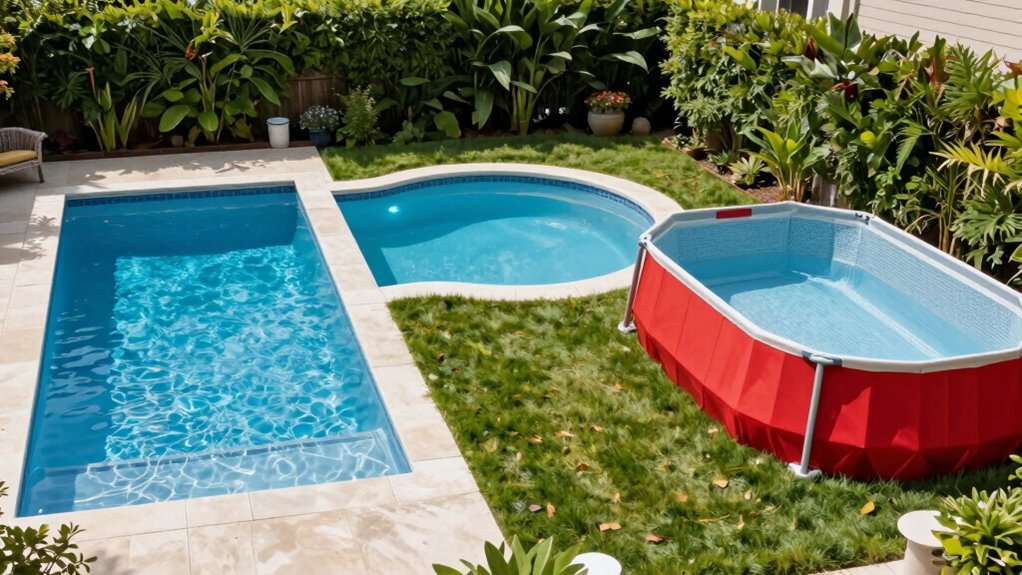
Are you unsure which type of pool is best suited for your property? Deciding on the right pool involves considering several factors, including your lot’s size, shape, and your budget. One of the first things to think about is how much time and effort you’re willing to dedicate to pool maintenance. Some pools, like in-ground concrete or vinyl liner pools, typically require more upkeep, including regular cleaning, chemical balancing, and occasional repairs. On the other hand, above-ground pools often need less maintenance, making them a practical choice if you prefer a low-hassle option. Understanding the level of maintenance each pool type demands helps you make an informed decision aligned with your lifestyle.
Construction costs also play a *crucial* role in your decision. In-ground pools usually have higher construction costs because of excavation, foundation work, and material expenses. A concrete pool can cost *considerably* more initially but offers durability and customization options. Vinyl liner pools tend to be more budget-friendly upfront, but the liners may need replacement every 5 to 10 years. Above-ground pools are generally the least expensive option, with lower installation costs and fewer structural requirements. Remember, choosing a pool that fits your financial situation from the start prevents surprises down the line and helps you plan a feasible project. Additionally, pool construction methods can influence both cost and longevity, making it important to understand the differences.
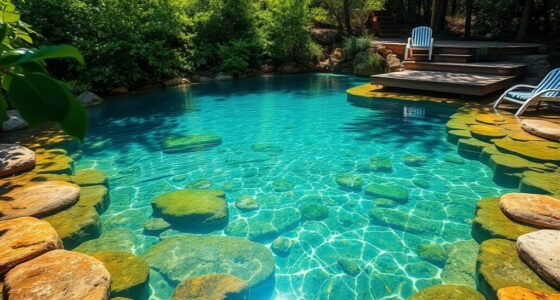
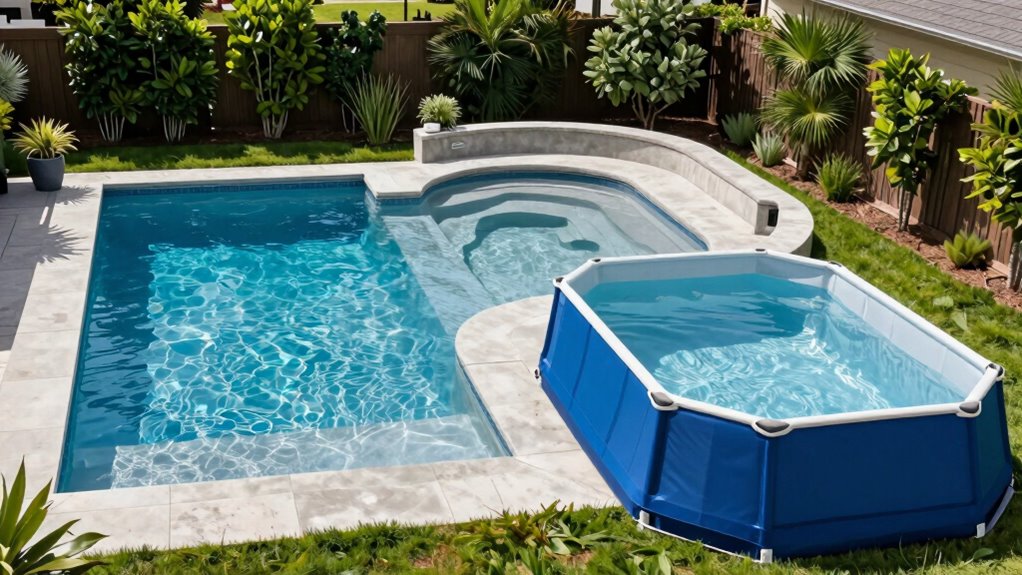
Your lot’s size and shape can influence which pool type fits best. If you have a compact yard, a smaller above-ground or plunge pool might be the perfect fit, offering fun without overwhelming your space. Larger, open lots can accommodate expansive in-ground pools, whether you prefer the classic concrete finish or the more affordable vinyl liner option. The terrain and soil conditions also matter—some lots might require extensive grading or special foundations, impacting both construction costs and the pool’s longevity. For irregularly shaped or sloped lots, custom in-ground pools allow you to maximize space and create a harmonious landscape, but they often come with higher costs and longer construction times. Considering soil conditions and terrain can help you choose a pool that remains durable and cost-effective in the long run. Additionally, evaluating site accessibility is essential to ensure your project proceeds smoothly and within budget.
Additionally, considering the technology used in pool construction, such as the choice between DLP and LCD, can influence the durability and customization options for in-ground pools, especially when it comes to the surface finish and color fidelity. Finally, consider your long-term goals for your pool. Are you looking for a quick, budget-friendly feature or a luxurious centerpiece? Your preferences will guide whether you opt for a simple above-ground pool or invest in a sophisticated in-ground design. Weighing these factors carefully will help you choose a pool type that fits your lot, lifestyle, and budget perfectly, ensuring you enjoy your new backyard oasis for years to come.
above ground pool with low maintenance
As an affiliate, we earn on qualifying purchases.
As an affiliate, we earn on qualifying purchases.
Frequently Asked Questions
What Is the Average Lifespan of Different Pool Types?
The average lifespan of pools varies by material: concrete pools last 25-50 years, vinyl liner pools about 7-15 years, and fiberglass pools typically endure 25-30 years. You can extend their durability by choosing high-quality materials and proper maintenance. Additionally, consider aesthetic customization options, as they can enhance your pool’s appeal over time. Your choice impacts both pool material durability and your ability to personalize, ensuring long-lasting enjoyment.
How Much Do Maintenance Costs Vary Between Pool Types?
You might think all pools cost the same to maintain, but that’s not true. In reality, concrete pools often require more frequent pool chemical adjustments and robust water filtration systems, increasing upkeep costs. Vinyl pools tend to have lower chemical needs but may need liner replacements. So, your maintenance expenses vary considerably based on pool type, emphasizing the importance of understanding how water filtration and chemical balance impact ongoing costs.
Are Certain Pool Types More Eco-Friendly Than Others?
Some pool types are more eco-friendly than others, especially when you choose eco-friendly materials and sustainable pool options. For instance, concrete pools with energy-efficient systems or fiberglass pools with minimal chemical use tend to be greener choices. You can also opt for solar covers and energy-efficient pumps to reduce your environmental impact. By prioritizing these sustainable options, you make your pool more eco-friendly and reduce ongoing maintenance costs.
Which Pool Types Are Best for Small or Uneven Lots?
For small or uneven lots, you should consider compact pools like above-ground or inflatable options, which are space-efficient and budget-friendly. They require less pool size consideration and can be easily customized or relocated if needed. These options save space and cost, making them ideal if you’re working within limited yard size or uneven terrain. They also offer quick installation, so you can enjoy your pool sooner without breaking the bank.
How Do Local Climate Conditions Affect Pool Type Choices?
When it comes to climate adaptation, your pool choice should tackle seasonal considerations head-on—think of it as preparing your backyard for the weather’s mood swings. In colder climates, you’ll want a heated or insulated pool to avoid turning into an icy pond. In hot regions, a saltwater or shaded pool keeps things cool without turning into a solar oven. Your climate’s quirks ultimately steer your pool’s fate—so, choose wisely!
As an affiliate, we earn on qualifying purchases.
Conclusion
So, after all this, you might think choosing the perfect pool is straightforward. But here’s the ironic twist: the more options you weigh, the more you realize that no pool type is truly “perfect”—it’s just about finding the one that fits your lot best. Sometimes, the best decision is recognizing that no matter what you pick, you’ll still be the one enjoying the water. Isn’t it funny how that works?
As an affiliate, we earn on qualifying purchases.
concrete in-ground pool construction kit
As an affiliate, we earn on qualifying purchases.
As an affiliate, we earn on qualifying purchases.
Halloween Picks
halloween
As an affiliate, we earn on qualifying purchases.