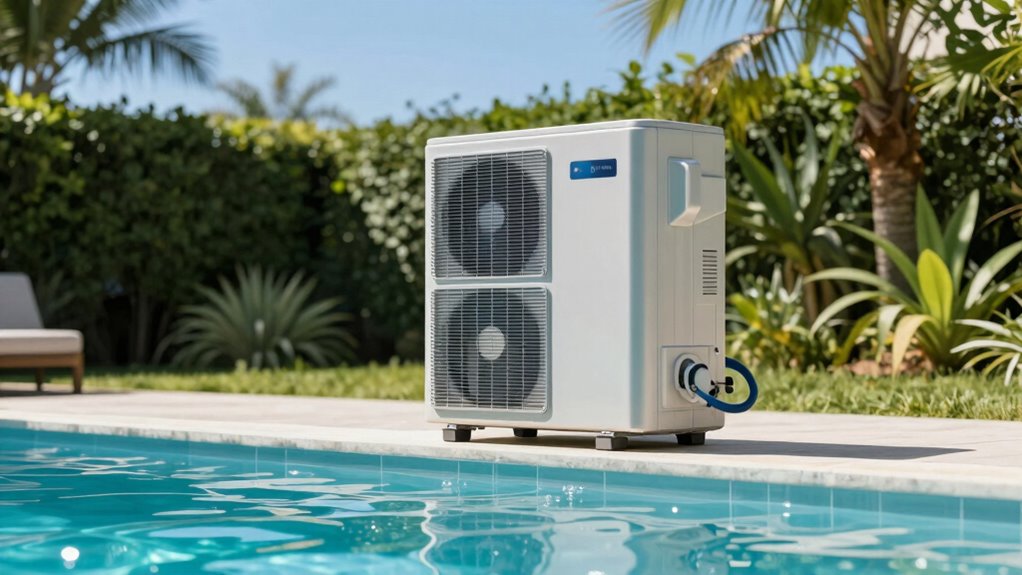

If you’re focused on efficiency, inverter pool heat pumps are an ideal choice because they adjust their compressor speed based on demand, saving energy and maintaining a steady temperature. They run quietly, reduce operational costs, and have a longer lifespan by minimizing wear and tear. Plus, their lower environmental impact helps you stay eco-friendly. Exploring further will reveal how proper installation and sizing can maximize these benefits and keep your pool warm year-round.
Key Takeaways
- Inverter technology adjusts compressor speed for optimal energy use, reducing overall energy consumption.
- Precise temperature control maintains consistent pool warmth with less energy waste.
- Quiet operation enhances comfort and aligns with energy-efficient pool management.
- Proper installation ensures maximum efficiency and longevity, supporting sustainable operation.
- Correct sizing prevents unnecessary energy expenditure and cycling, maximizing efficiency benefits.
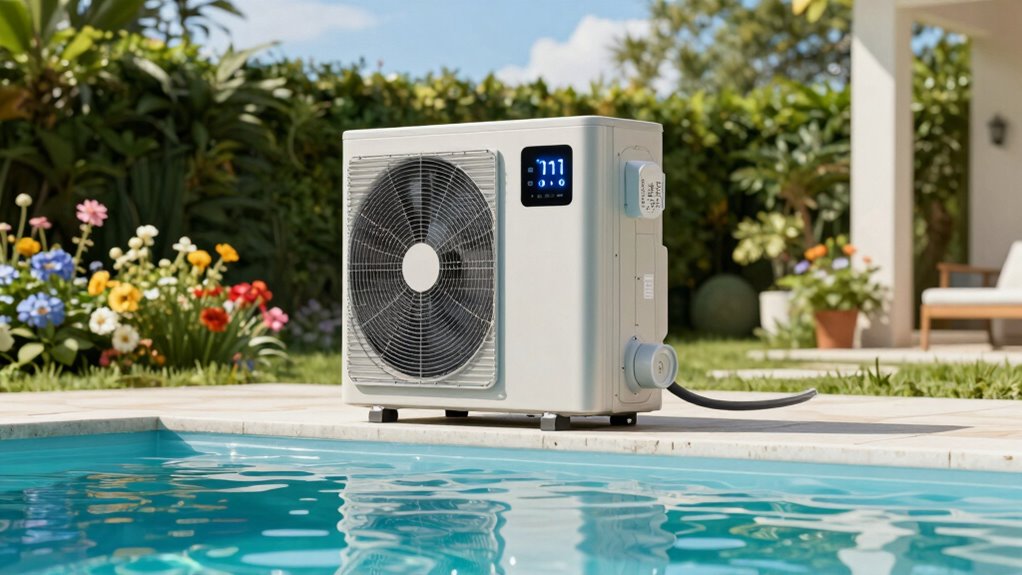
Are you looking for a more efficient way to keep your pool comfortably warm? If so, inverter pool heat pumps might be exactly what you need. These systems offer remarkable energy savings compared to traditional pool heaters, making them a popular choice for owners who want to reduce their energy costs while enjoying a warm, inviting pool. The key to their efficiency lies in the inverter technology, which adjusts the compressor’s speed based on the current heating demand. Instead of constantly cycling on and off like conventional heaters, inverter heat pumps operate at variable speeds, maintaining a consistent temperature with less energy consumption. This not only cuts down on your utility bills but also lessens the environmental impact of heating your pool. Additionally, inverter technology enhances the lifespan of the system by reducing wear and tear caused by frequent cycling.
When considering an inverter pool heat pump, it’s essential to think about installation considerations. These units generally require a bit more planning upfront due to their specific placement needs and electrical requirements. You’ll want to position the heat pump in a location that’s protected from the elements but allows easy access for maintenance. Proper airflow is crucial for ideal performance, so make sure there’s enough space around the unit. Additionally, check your existing electrical system to confirm it can support the power demands of the inverter heat pump. Some models might need upgraded wiring or additional circuit breakers, which could influence your installation costs and timeline. Understanding pool heating efficiency and how inverter technology contributes to it can help you make a more informed decision. Considering system compatibility with your existing setup is also important to ensure seamless operation.
Inverter pool heat pumps are designed to be compatible with various pool sizes and setups, but selecting the right size is essential for maximum efficiency. A unit that’s too small will struggle to maintain the desired temperature, running constantly and consuming more energy. Conversely, an oversized unit may cycle on and off too frequently, reducing its lifespan and efficiency. Consulting with a professional can help you determine the best size based on your pool’s volume, location, and usage patterns. Choosing a unit with a high coefficient of performance rating can also ensure you’re getting the most energy-efficient model for your needs. Knowing how inverter technology optimizes energy use can further assist in making an educated choice.
Choosing the right inverter pool heat pump size ensures optimal efficiency and longevity for your pool.
Once installed, inverter heat pumps deliver precise temperature control, so you can enjoy a consistently warm pool without excessive energy bills. Their quiet operation is another benefit, allowing you to relax in your pool area without disruptive noise. Proper installation plays a significant role in maximizing the efficiency and lifespan of your heat pump, so investing in professional setup is highly recommended. Over time, the combination of energy savings, reduced operational costs, and environmental benefits makes inverter pool heat pumps an appealing choice for owners focused on efficiency. By investing in the right unit and paying attention to installation considerations, you’ll enjoy a more sustainable, cost-effective way to extend your swimming season and keep your pool perfectly heated year-round.
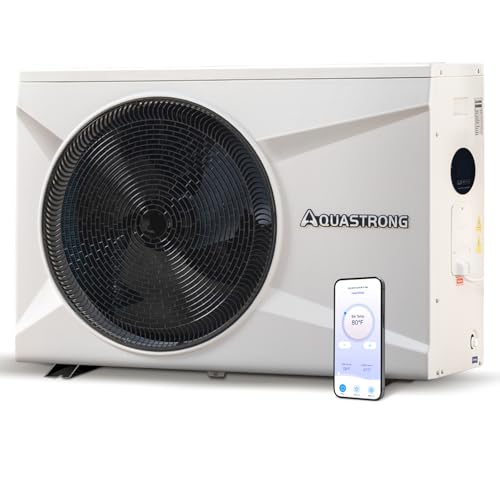
AQUASTRONG Inverter Swimming Pool Heat Pump,Pool Heater for Above Ground and Inground Pool Heating Smart WiFi Control and Cooling Pool Heater Pools Up to, 21000 Gallons
Extend Your Swim Season: The pool heat pump features a dual-mode heating and cooling system that maintains optimal…
As an affiliate, we earn on qualifying purchases.
As an affiliate, we earn on qualifying purchases.
Frequently Asked Questions
How Long Do Inverter Pool Heat Pumps Typically Last?
Inverter pool heat pumps usually last around 10 to 15 years, depending on usage and maintenance. You’ll benefit from energy savings and noise reduction over their lifespan if you keep up with routine upkeep. Proper care, like regular cleaning and inspections, can extend their longevity. Investing in quality models with good warranties also helps guarantee you get the most out of your pump’s efficiency and durability.
Are Inverter Pool Heat Pumps Suitable for All Pool Sizes?
Your pool size shouldn’t be a barrier, as inverter pool heat pumps are remarkably adaptable. They’re suitable for almost any pool size, from tiny plunge pools to massive swimming lagoons. When considering installation requirements, verify your setup matches the pump’s capacity to optimize efficiency. Larger pools may need more powerful units, but with proper sizing, inverter heat pumps deliver consistent heating, making them a smart choice regardless of your pool’s size.
Do Inverter Heat Pumps Require Special Maintenance?
Inverter heat pumps do require some special maintenance to keep them running efficiently. You should regularly clean the filters and check the refrigerant levels, which helps maximize energy savings. Additionally, inverter models often operate more quietly, so monitoring noise levels and ensuring proper airflow keeps them performing at their best. With proper upkeep, you’ll enjoy consistent heating, lower energy bills, and quieter operation, making your pool experience more enjoyable.
Can Inverter Pool Heat Pumps Operate Efficiently in Cold Weather?
Think of your inverter pool heat pump as a skilled sailor adjusting sails to catch every gust, even in cold weather. It can operate effectively during colder months, maintaining energy savings by modulating its compressor speed. While its efficiency drops slightly in cold weather, it still outperforms traditional models, helping you save on energy costs. Proper maintenance guarantees your inverter performs at its best, regardless of the chill in the air.
Are There Any Safety Concerns With Inverter Pool Heat Pumps?
You shouldn’t have major safety concerns with inverter pool heat pumps if you follow proper electrical safety measures, like ensuring correct wiring and grounding. They are designed with safety features, but it’s essential to keep up with regular maintenance. Additionally, inverter heat pumps tend to operate quietly, reducing noise levels around your pool area. Just make sure to install them correctly and have a professional handle any electrical work.

WARMBLU H5 Swimming Pool Heat Pump 18,000BTU 5,000 Gal High Efficiency COP4.1 Energy Save 45% Above Smart WiFi Control 110V
SpringBreath 1.0 Heating System with Quantifiable Results—Built to efficiently handle large pools up to 5,000 gallons. H5, centered…
As an affiliate, we earn on qualifying purchases.
As an affiliate, we earn on qualifying purchases.
Conclusion
Imagine a warm pool on a chilly evening, your comfort effortlessly maintained by an inverter heat pump that’s whisper-quiet and energy-efficient. Unlike traditional systems that cycle on and off, your inverter keeps the water perfectly heated without the noise or waste. It’s like having a reliable, silent partner that adapts to your needs, offering both peace of mind and savings. Embrace this modern solution and enjoy your pool year-round with ease and efficiency.
AQUASTRONG Inverter Swimming Pool Heat Pump,Pool Heater for Above Ground and Inground Pool Heating Smart WiFi Control and Cooling Pool Heater Pools Up to, 9000 Gallons
Extend Your Swim Season: The pool heat pump features a dual-mode heating and cooling system that maintains optimal…
As an affiliate, we earn on qualifying purchases.
As an affiliate, we earn on qualifying purchases.

AQUASTRONG Inverter Swimming Pool Heat Pump,Pool Heater for Above Ground and Inground Pool Heating Smart WiFi Control and Cooling Pool Heater Pools Up to, 7000 Gallons
Strong Heating, Slim Design: Aquastrong 22,000 BTU newly upgraded compact model features a smaller size and more powerful…
As an affiliate, we earn on qualifying purchases.
As an affiliate, we earn on qualifying purchases.