When renting out a home with a pool, you need to make certain you have proper liability insurance that covers pool-related injuries and damages. You should install safety features like fencing, alarms, and clear signage to protect your tenants and reduce liability. Familiarize yourself with local laws on fencing, safety standards, and pool cover requirements. Draft clear lease agreements with safety clauses and liability waivers. Staying proactive with safety measures and legal compliance helps you protect your investment and avoid future disputes.

Get pool and patio gear delivered free — and shop member deals
- Fast, free delivery on millions of items
- Access to Prime Big Deal Days deals on October 6–7
- Prime Video, Amazon Music and more included
Key Takeaways
- Ensure the rental agreement includes clear pool safety rules and liability waiver clauses.
- Obtain adequate liability insurance that explicitly covers pool-related incidents.
- Comply with local safety regulations, fencing, and equipment standards for pools.
- Regularly inspect and maintain pool safety features to prevent accidents and liability.
- Clearly define tenant responsibilities and property owner obligations regarding pool safety in legal documents.
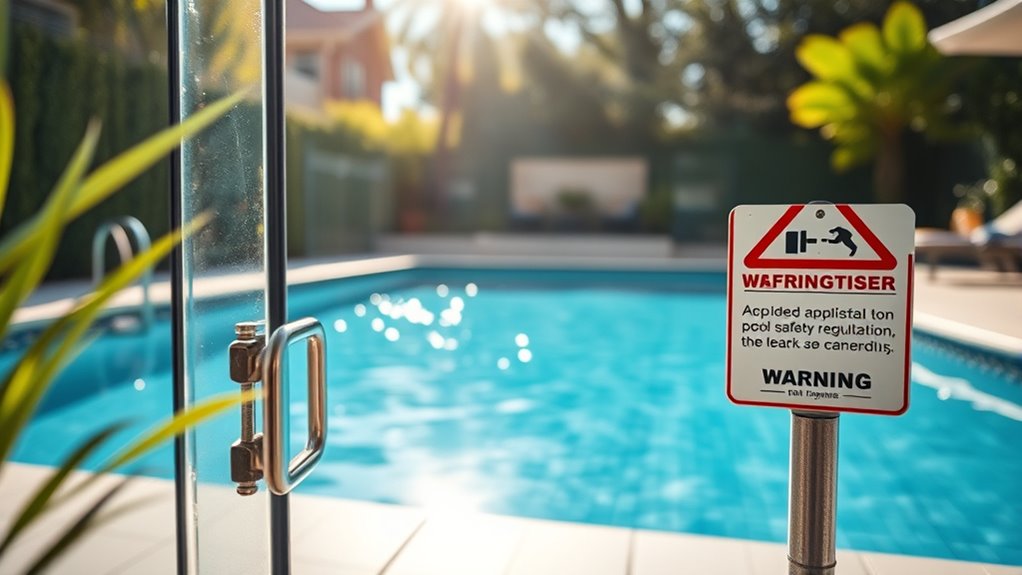
Renting out a home with a pool can be a lucrative opportunity, but it also comes with important legal considerations you need to address. One of the most critical aspects is guaranteeing you have adequate liability insurance. This type of coverage protects you financially if someone gets injured in your pool. Without it, you could be held personally responsible for medical bills, legal fees, or damages resulting from an accident. Since pools are inherently risky, having robust liability insurance is essential to mitigate potential lawsuits and financial losses. Make sure your policy explicitly covers pool-related incidents, and review the coverage limits to verify they’re sufficient for your property’s specifics.
Ensure your pool liability insurance covers accidents to protect your rental investment.
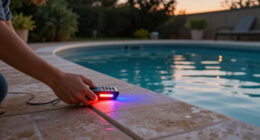
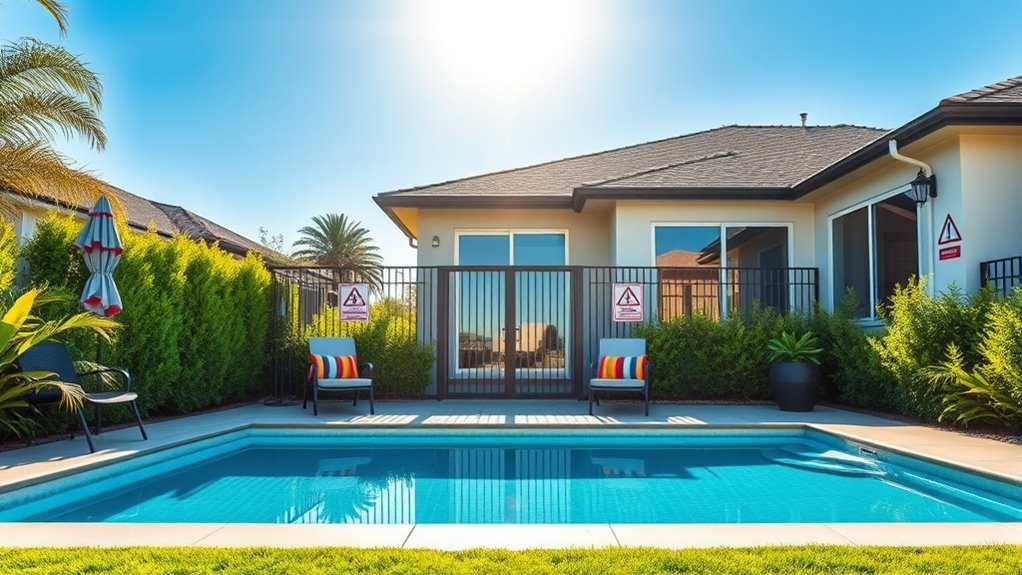
Pool safety should be at the top of your priorities as a landlord. You need to implement measures that minimize risks and promote a safe environment for your guests. Installing proper fencing around the pool area is vital; most jurisdictions require a barrier that prevents unsupervised access, especially if children are involved. You should also consider adding safety features like pool alarms, non-slip surfaces, and clearly visible safety signs. These precautions not only protect your guests but also demonstrate your commitment to pool safety, which can be valuable if any legal questions arise. Regularly inspecting and maintaining the pool equipment, like filters and drains, helps prevent accidents caused by malfunction or neglect. Additionally, understanding regulatory compliance ensures you meet all local safety standards, reducing your legal risks.
In addition to physical safety measures, familiarize yourself with local laws and regulations regarding pools. These rules may specify safety standards, fencing requirements, or even the necessity of pool covers. Complying with these regulations not only keeps you legally protected but also guarantees that your tenants or visitors have a safe experience. It’s also wise to include specific pool rules in your rental agreement, such as prohibiting diving or requiring adult supervision. Clearly communicating these rules helps set expectations and reinforces safety practices.
Finally, consider working with legal professionals or property managers who understand local laws related to pools and rental properties. They can help you draft detailed rental agreements that include clauses about pool safety and liability waivers. This proactive approach reduces the risk of legal disputes and clearly defines responsibilities for both parties. By taking these steps—investing in liability insurance, enhancing pool safety, adhering to local regulations, and drafting thorough agreements—you protect yourself and your tenants, making your rental venture both profitable and legally sound.
pool safety fence for rental property
As an affiliate, we earn on qualifying purchases.
As an affiliate, we earn on qualifying purchases.
Frequently Asked Questions
Are There Specific Insurance Requirements for Pool Rentals?
Yes, you need specific insurance requirements for pool rentals. Make certain your rental insurance includes liability coverage to protect you from potential accidents or injuries. It is vital to inform your insurance provider about the pool to guarantee you’re adequately covered. Some policies may require additional coverage or waivers for pool use. Always review your policy and consult with your insurer to confirm you meet all legal and safety requirements.
How Do Local Laws Regulate Pool Safety Features?
Did you know that drowning is the leading cause of injury-related death for children under five? Local laws often require you to install pool fencing and safety signage to prevent accidents. These regulations help keep renters safe and reduce liability. You must guarantee that fencing surrounds the pool properly and that safety signs are visible and clear, guiding users on safe pool use and emergency procedures.
What Liability Waivers Are Recommended for Pool Renters?
You should include liability waivers in your pool rental agreements to protect yourself from legal claims. These waivers should clearly state that renters assume the risks associated with pool use and release you from liability for injuries. Make sure the waivers are thorough, covering all potential hazards. Having well-drafted liability waivers in your pool rental agreements not only limits your liability but also emphasizes renter responsibility.
Are There Age Restrictions for Pool Renters?
Did you know that children under 14 are at higher risk of pool-related accidents? Yes, age restrictions often apply, requiring adult supervision for minors. You should guarantee child supervision is strict, and maintain proper pool safety measures. Many rental agreements specify age limits for renters to prevent accidents. By enforcing these restrictions, you help keep everyone safe while managing pool maintenance and ensuring responsible use.
How Often Must Pool Equipment Be Inspected Legally?
You should schedule pool equipment inspections regularly, generally at least once a year, to meet legal requirements and guarantee safety. Proper pool maintenance includes checking filters, pumps, and safety features like barriers and alarms. Keep detailed records of inspections and maintenance activities, as these may be required for compliance. Staying proactive helps prevent accidents and ensures your pool remains safe and legally compliant for renters.
As an affiliate, we earn on qualifying purchases.
Conclusion
Think of renting out a home with a pool as sailing a ship through unpredictable waters. Just as you’d chart a course to avoid hidden reefs, you need to navigate legal waters carefully—permits, safety standards, and liability issues. By understanding these considerations, you become the steady captain, steering clear of storms that could sink your rental venture. With proper planning, your property can be a safe harbor, inviting tenants to enjoy its serenity without risking a turbulent voyage.
As an affiliate, we earn on qualifying purchases.
pool cover for safety compliance
As an affiliate, we earn on qualifying purchases.
As an affiliate, we earn on qualifying purchases.
Fall Picks
fall essentials
As an affiliate, we earn on qualifying purchases.