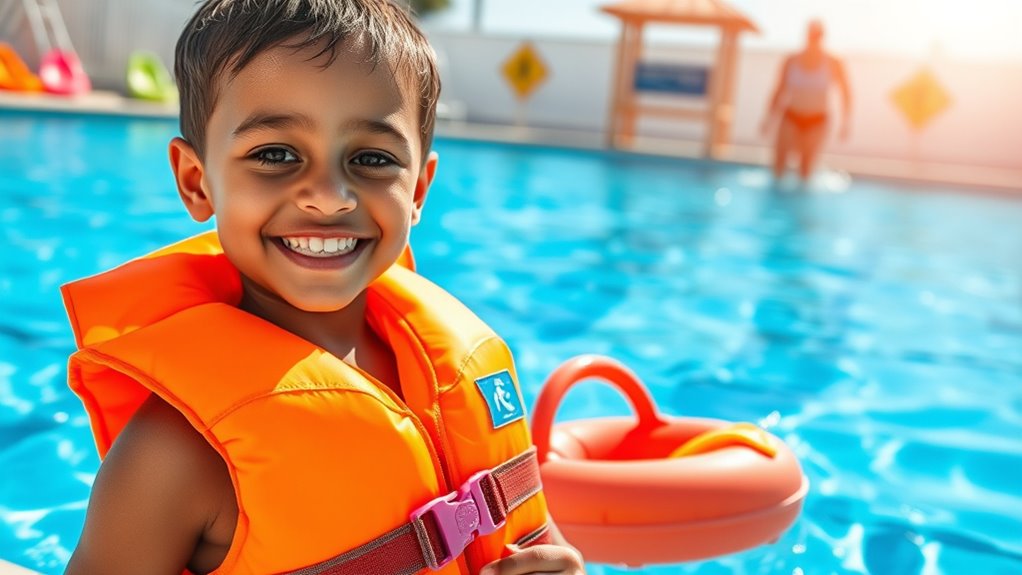

Wearing a properly fitted life jacket in a pool is a crucial safety step, especially if you’re not a strong swimmer or supervising others. Make sure it fits snugly around your torso without restricting movement and is in good condition—no tears or broken buckles. Remember, flotation devices don’t replace supervision or swimming skills, but they add an extra layer of safety. Staying informed about guidelines helps you better protect yourself and others; discover more ways to stay safe below.
Key Takeaways
- Always ensure life jackets fit snugly and are in good condition for effective safety.
- Use life jackets as an additional safety measure alongside supervision and swimming skills.
- Follow local pool rules and manufacturer instructions regarding flotation device use.
- Wear a life jacket especially if you are a weak swimmer or participating in water sports.
- Recognize that proper fitting, supervision, and safety awareness collectively reduce drowning risks.
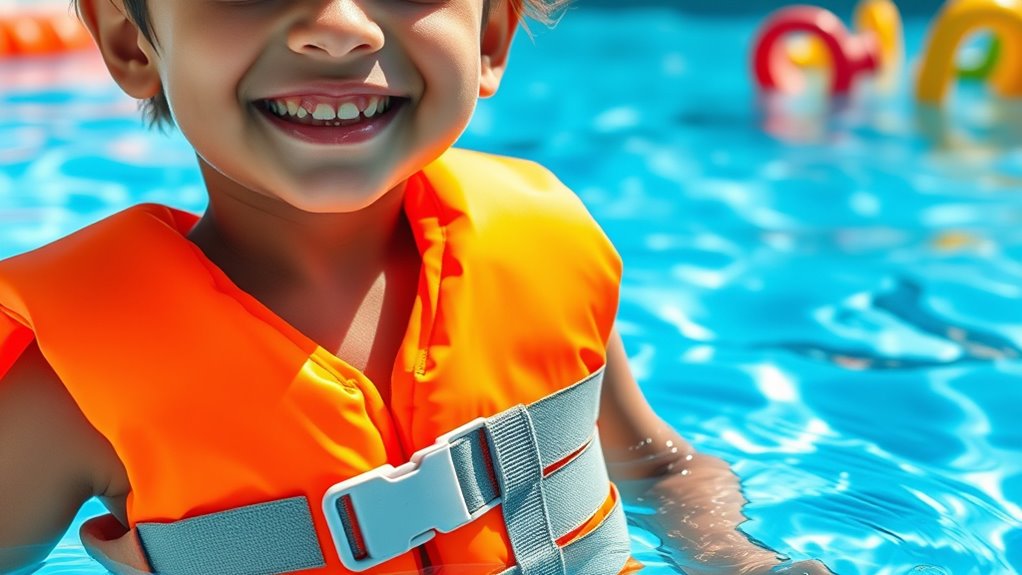
Have you ever wondered if wearing a life jacket in a pool could save a life? It might seem unlikely in a controlled environment like a pool, but understanding the role of flotation devices and proper swimming safety practices can make a huge difference. While most pools are designed for safe swimming and recreation, accidents can still happen, especially to children or inexperienced swimmers. Wearing a life jacket is a proactive step to prevent drowning and guarantee safety in these situations. Life jackets are a type of flotation device that provide buoyancy, helping individuals stay afloat even if they become tired, panicked, or unconscious. They are vital in maintaining safety, especially for non-swimmers or those with limited swimming skills.
Using a life jacket correctly is essential. Always choose a properly fitting device designed for swimming safety. It should snugly fit around your torso without restricting movement or causing discomfort. A poorly fitted life jacket might slip off or fail to provide the necessary buoyancy when needed most. When you’re in the pool, ensure the life jacket is in good condition—no tears, frayed straps, or broken buckles. This reduces the risk of failure during an emergency. Remember, flotation devices aren’t just for children; adults who are weak swimmers or participating in water activities should also consider wearing them for added protection.
Properly fitting life jackets in good condition are essential for safe swimming.
It’s also important to understand that a life jacket isn’t a substitute for supervision or good swimming skills. It’s an added safety measure, especially in situations where lapses in attention could occur. For example, if you’re hosting a pool party with children, having them wear appropriately fitted life jackets can prevent accidents before they happen. Even experienced swimmers benefit from wearing flotation devices in challenging conditions or when participating in water sports. Always follow the manufacturer’s instructions for wearing and maintaining your life jacket to guarantee maximum effectiveness.
In addition, familiarize yourself with local pool rules and safety guidelines. Many public pools have specific regulations about flotation devices, so adhering to these policies helps keep everyone safe. It’s also beneficial to know your swimming abilities and avoid overestimating your skills, which can lead to risky situations. Remember, no safety measure is foolproof, but combining proper use of flotation devices with vigilant supervision and swimming safety education creates a safer environment for everyone. Ultimately, wearing a life jacket in the pool isn’t just about compliance; it’s about being responsible and proactive in protecting yourself and others from preventable accidents.

Stearns Adult Classic Series Life Vest, USCG Approved Type III Life Jacket with Standard & Oversized Fits, Great for Boating, Swimming, Watersports, & More
- USCG Approved Adult Life Vest: US Coast Guard-approved life jacket
- Versatile Water Activity Use: Suitable for boating, tubing, swimming, watersports
- Comfortable & Durable Material: Soft nylon shell with lightweight foam
As an affiliate, we earn on qualifying purchases.
As an affiliate, we earn on qualifying purchases.
Frequently Asked Questions
Are There Specific Age Restrictions for Life Jacket Use in Pools?
Yes, there are specific age restrictions for life jacket use in pools. According to safety guidelines, children under the age of 5 should always wear a properly fitted life jacket when in or around the water. For older children and non-swimmers, life jackets help prevent accidents. You should always follow the safety guidelines and age restrictions to guarantee everyone’s safety. Remember, supervision is equally important alongside wearing the right safety gear.
How Do I Choose the Right Size Life Jacket for a Child?
Choosing the right size life jacket for a child is like fitting a puzzle piece perfectly. You want a proper fit that snugly supports without restricting movement. Check the weight and chest measurements listed on the label, and verify the material is durable and comfortable. A well-fitting jacket keeps your child safe and confident in the water, giving you peace of mind during pool time.
Can Inflatable Life Jackets Be Used in Swimming Pools Safely?
Inflatable life jackets can be used safely in swimming pools if they meet inflatable safety standards and are pool compliant. Always check for proper labeling and certifications to guarantee they provide adequate buoyancy. Never rely solely on inflatables for safety; always supervise children closely. Remember, pool compliance means the device meets local safety regulations, reducing risks. Use them as supplementary safety gear, not the primary life-saving device.
What Maintenance Is Required to Keep a Life Jacket Effective?
To keep your life jacket effective, you need to give it regular attention—think of it as giving it the TLC it deserves. Store it in a cool, dry place away from sunlight and chemicals, and always keep it clean and dry. Conduct regular inspections for tears, frays, or damage, ensuring buckles and zippers work properly. By doing this, you’ll extend its lifespan and make sure it’s ready when you need it most.
Are There Different Regulations for Private vs. Public Pools Regarding Life Jackets?
Yes, there are regulation differences between private and public pools regarding life jackets. Public pools often follow stricter pool safety regulations set by local authorities or health departments, which may require life jackets for non-swimmers or during specific activities. Private pools have more relaxed rules, but it’s still your responsibility to guarantee safety by selecting appropriate life jackets, especially for children or weak swimmers, to prevent accidents and promote pool safety.

REALIKE Kids Swim Vest Toddler Floaties Adjustable Safety Strap Swimming Aids for Toddlers Children Float Swimsuit, Suitable for Age 2-10 Years/22-88lbs
- Premium Material: High-quality neoprene fabric for comfort
- Enhanced Safety: Three safety buckles and adjustable straps
- Sleeveless Design: Allows free arm movement for swimming
As an affiliate, we earn on qualifying purchases.
As an affiliate, we earn on qualifying purchases.
Conclusion
Remember, wearing a life jacket greatly increases your safety in pools. Studies show that life jackets can reduce drowning risk by up to 50%. So, always choose the right one and make sure it fits properly before jumping in. Whether you’re a beginner or just want extra peace of mind, using a life jacket is a simple step to stay safe. Stay vigilant, follow guidelines, and enjoy your time in the water responsibly.

Seachoice Emergency Marine Foam Flotation Cushion, Square, 15 in. X 15 in, Red
- Approval: U.S. Coast Guard Approved Type IV
- Design Purpose: Throwable flotation cushion for emergencies
- Material: Durable nylon outer shell
As an affiliate, we earn on qualifying purchases.
As an affiliate, we earn on qualifying purchases.
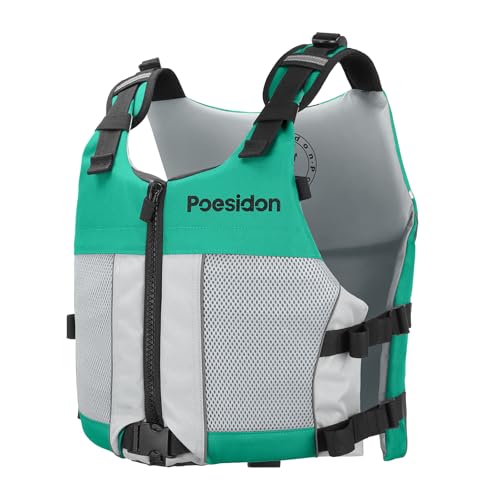
Poseidon Adjustable Water Safety Life Jacket – Classic Unisex Design with Front/Rear Storage Compartments for Multiple Water Activities
- Fashion-Forward Water Vest: Classic colorways and unisex design
- All-Round Safety Protection: High-density buoyancy fabric with reflective strips
- Quick-Release System: 10-second release with adjustable straps
As an affiliate, we earn on qualifying purchases.
As an affiliate, we earn on qualifying purchases.