
To prepare for a pool build on a challenging lot, start with a detailed land survey to identify boundaries, slopes, and existing features. Address drainage issues early through grading, underground pipes, or retaining walls to prevent water problems later. Plan construction access routes carefully to reduce disruptions, and work with professionals like engineers or landscape architects for tailored solutions. If you want to learn more about tackling specific challenges, keep exploring how to turn obstacles into opportunities.
Key Takeaways
- Conduct a detailed land survey to identify boundaries, slopes, and existing features early in planning.
- Address drainage issues and implement grading solutions to prevent water runoff and foundation problems.
- Plan construction access routes carefully to minimize disruption and accommodate equipment movement on difficult terrain.
- Collaborate with professionals like engineers and landscape architects for tailored solutions to land challenges.
- Consider soil stabilization, retaining walls, and other terrain modifications to ensure a stable pool foundation.
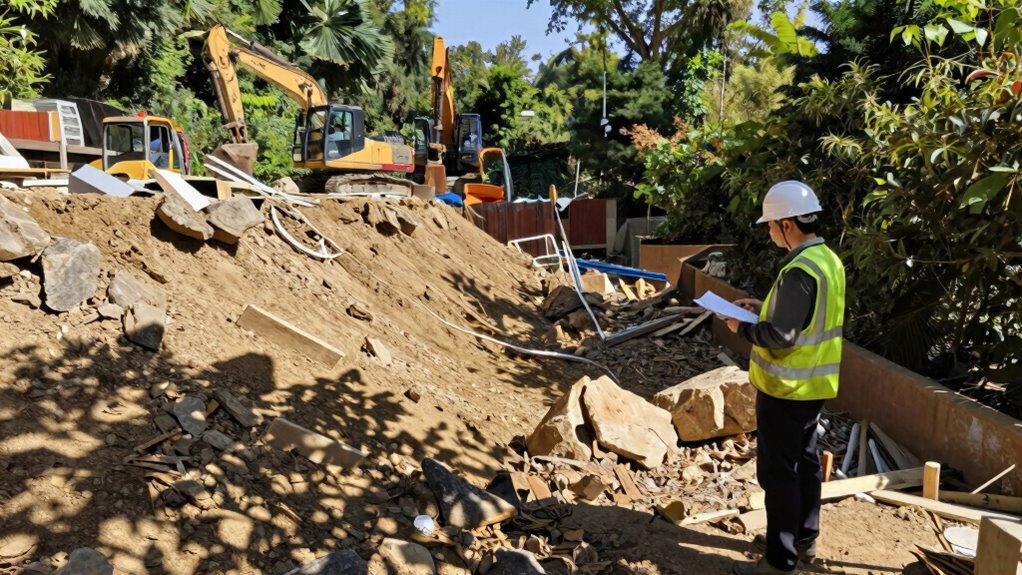
Building a pool on a challenging lot can seem intimidating, but with proper planning and expert guidance, it’s entirely achievable. The first step is understanding your land’s unique features, which requires a thorough land survey. A land survey gives you detailed information about your property’s boundaries, slope, and existing features. This helps you identify potential issues early, like uneven terrain or hidden obstacles, so you can plan accordingly. Knowing the precise layout allows you to work with engineers and contractors to develop a feasible design that fits your space and budget.
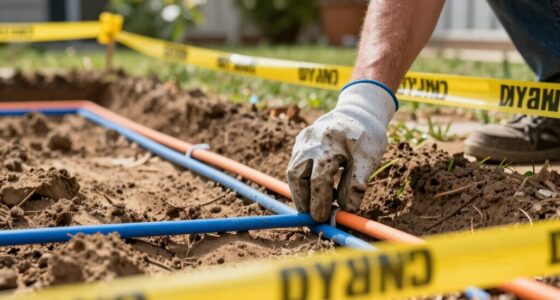
Once you have the land survey, focus on addressing drainage concerns. Challenging lots often have poor drainage or water runoff problems that can undermine your pool’s foundation or cause flooding. Developing an effective drainage solution is vital. This might involve installing underground pipes, creating retaining walls, or adding grading to direct water away from the pool area. A well-designed drainage system not only protects your investment but also guarantees your yard remains functional and safe, especially during heavy rains. Understanding topographical features and how they influence construction can help you better collaborate with your contractors for optimal results.
Next, consider the topography revealed by your land survey. If your lot slopes significantly, you might need to level certain areas before construction. This process involves excavation and fill, which can be complex but is essential for a stable pool foundation. Proper grading ensures water flows away from the pool, reducing the risk of standing water or erosion. Your contractor can suggest methods like soil stabilization or retaining walls to make the terrain more manageable.
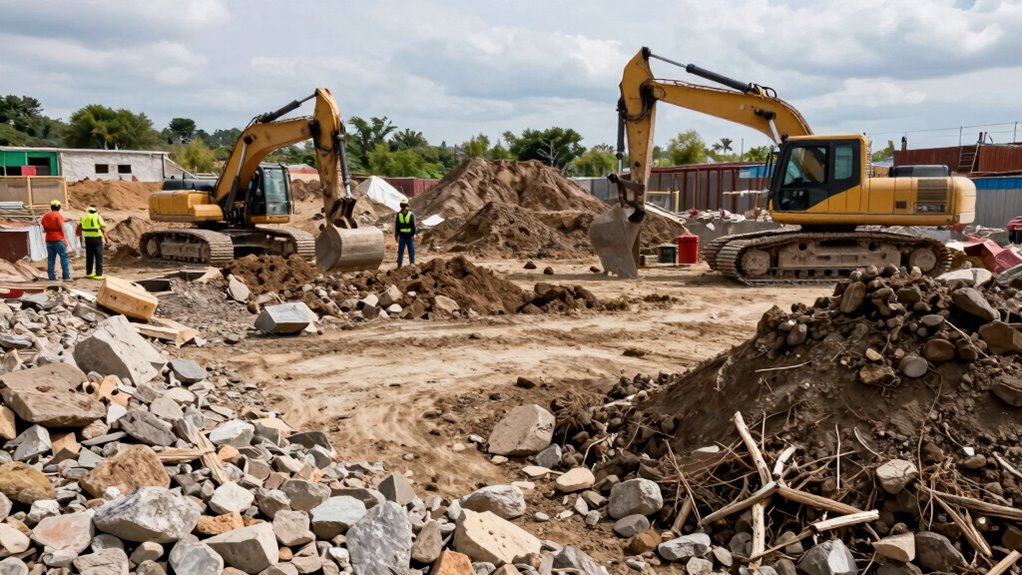
In addition to grading and drainage, evaluate access points for construction equipment and materials. Challenging lots often have limited access, so planning a clear route minimizes disruption and speeds up the build process. Clearing trees or shrubs may also be necessary, but always check local regulations to ensure you’re compliant. Engaging professional expertise early in the process can help identify potential access issues and develop solutions before construction begins.
Finally, consult with professionals early in the process. An experienced landscape architect or engineer can interpret your land survey and design a customized plan that accounts for all challenges. They can recommend specific solutions tailored to your lot’s features, ensuring your pool project stays on track. With thorough preparation and expert advice, you can transform a difficult lot into a beautiful backyard oasis, turning obstacles into opportunities for creative design.
land survey tools for property boundaries
As an affiliate, we earn on qualifying purchases.
As an affiliate, we earn on qualifying purchases.
Frequently Asked Questions
How Long Does a Pool Build Typically Take on Difficult Terrain?
A pool build on difficult terrain usually takes about 3 to 6 months, but this can vary depending on the pool design and construction timeline. You might face extra challenges with site preparation, such as grading or excavation, which can extend the process. Staying in close contact with your contractor helps guarantee your project stays on track, and any unforeseen issues are addressed quickly.
What Permits Are Required for Building on a Challenging Lot?
Imagine steering through a maze of permits and approvals to unlock your backyard paradise. You’ll need to obtain local building permits, zoning approvals, and possibly environmental clearances. Prioritize pool safety regulations to guarantee your project complies with safety standards. Selecting a skilled contractor who understands these legalities helps streamline the process. Their expertise guides you through permit applications, saving time and preventing costly delays, turning your challenging lot into a stunning oasis.
How Much More Does Challenging Terrain Add to Costs?
Challenging terrain can add 20% to 50% extra to your pool build costs, depending on the complexity of the site. You should conduct a thorough terrain assessment to accurately estimate these additional expenses. This assessment helps identify necessary modifications like grading, retaining walls, or specialized equipment. By understanding these factors early, you can create a more precise cost estimation, avoiding surprises and ensuring your project stays within budget.
Can Existing Trees or Vegetation Impact the Construction Process?
Existing trees and vegetation can considerably impact your pool construction. They create landscaping challenges, requiring careful planning to protect roots and prevent soil instability. Removing large trees may cause soil erosion or destabilize the area, leading to delays and added costs. You’ll need to assess the root systems and soil condition beforehand, possibly consulting an arborist or geotechnical expert to guarantee the site remains stable and the build proceeds smoothly.
What Are the Best Drainage Solutions for Uneven Lots?
To handle uneven lots, prioritize drainage planning early. You should consider installing French drains or swales to redirect water effectively. Soil stabilization is essential; use methods like geotextiles or retaining walls to prevent erosion and settle the land. Proper drainage solutions prevent pooling and foundation issues, making your pool build smoother. Collaborate with professionals to design a drainage system tailored to your lot’s specific challenges and guarantee long-term stability.
drainage system for backyard pool
As an affiliate, we earn on qualifying purchases.
As an affiliate, we earn on qualifying purchases.
Conclusion
With a little patience and a solid plan, you can turn even the toughest lot into your backyard oasis. Think of it as gardening—you might face a few weeds along the way, but with persistence, your dream pool will bloom. Trust your experts, stay flexible, and remember that every challenge is just another stepping stone in creating your perfect retreat. Soon, you’ll be diving into paradise, feeling like you’ve struck gold in your own backyard.
As an affiliate, we earn on qualifying purchases.
pool construction access route planning
As an affiliate, we earn on qualifying purchases.
As an affiliate, we earn on qualifying purchases.