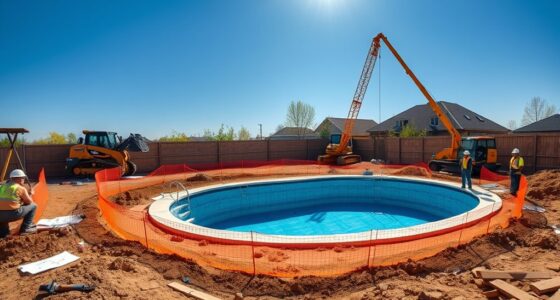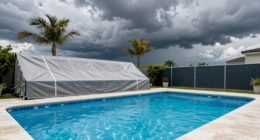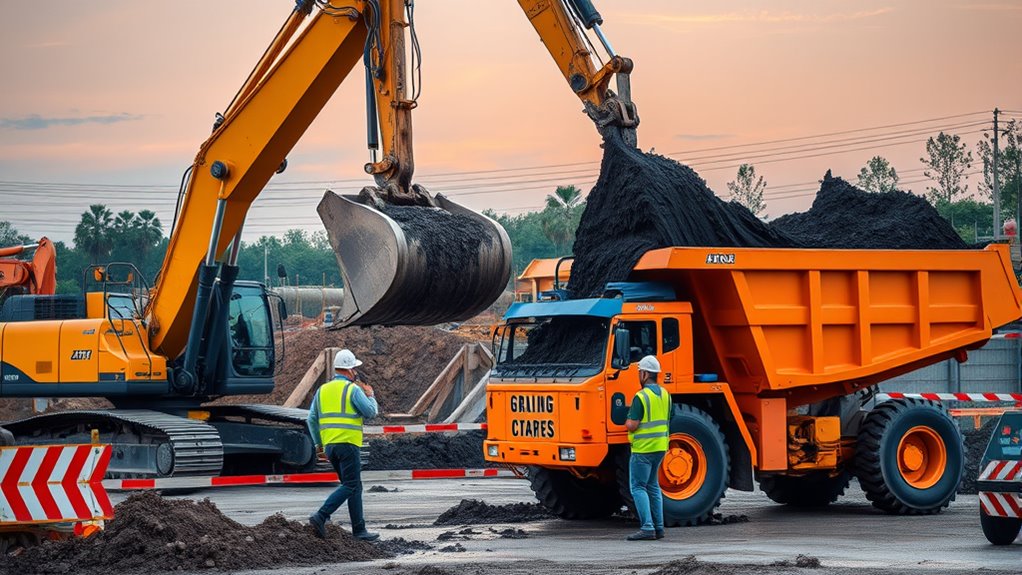
When excavating for a pool, you’ll need equipment like excavators, backhoes, or skid steers for efficient digging, especially for larger projects. Proper planning is key to avoid underground utilities and drainage issues, while safety measures like wearing protective gear and keeping a safe distance from machinery help prevent accidents. Post-excavation, careful backfilling guarantees stability. To get a detailed guide on equipment choices, methods, and safety tips, keep exploring the essential steps outlined below.
Key Takeaways
- Use heavy-duty machinery like excavators and backhoes for efficient and accurate soil removal during pool excavation.
- Plan excavation carefully to avoid underground utilities and ensure proper drainage and landscape integration.
- Prioritize safety by assessing hazards, wearing protective gear, and following safety protocols during equipment operation.
- Ensure precise excavation depth and shape to match design plans, facilitating easier maintenance and pool longevity.
- Conduct careful backfilling with proper soil compaction to prevent shifting, settling, and structural issues post-excavation.

Excavating a pool is a critical first step in building your backyard oasis, and doing it right sets the foundation for a successful project. When you start digging, you’re laying the groundwork not just for the pool itself but also for the overall landscape design you envision. Proper excavation guarantees the pool’s shape and depth align with your plans, making future pool maintenance easier and more effective. A well-executed excavation minimizes the risk of shifting soil or structural issues down the line, which can complicate water circulation, filtration, and cleaning. Remember, the precision of this phase impacts the longevity and safety of your pool, so it’s worth investing time and effort into getting it right. Additionally, selecting equipment with the appropriate high precision capabilities ensures accurate shaping and depth control throughout the excavation process. Choosing the right equipment is essential for efficient excavation. Heavy-duty excavators, backhoes, or skid steers are commonly used, depending on the size of the pool and the terrain. These machines allow you to remove soil quickly, reducing labor time and ensuring a consistent depth and shape. For smaller projects, manual tools like shovels and picks can suffice, but they demand more physical effort and time. Once you have the right equipment, you need to plan the excavation carefully, taking into account underground utilities, drainage considerations, and the surrounding landscape. Proper planning helps avoid costly mistakes, such as damaging underground lines or creating drainage issues that could affect your landscape design and pool maintenance in the future.
Safety should always be your top priority during the excavation process. Make sure to conduct a thorough site assessment before starting, identifying potential hazards like unstable soil or nearby structures. Always follow safety protocols, wear protective gear, and keep a safe distance from operating machinery. If you’re unfamiliar with heavy equipment, consider hiring professionals—incorrect excavation can lead to soil collapse or damage to existing structures. Additionally, be mindful of environmental regulations and erosion control measures, especially if your site is prone to runoff or soil displacement. Once the excavation is complete, backfilling around the pool’s perimeter should be done carefully to prevent shifting or settling that could compromise your landscape design or future pool maintenance.
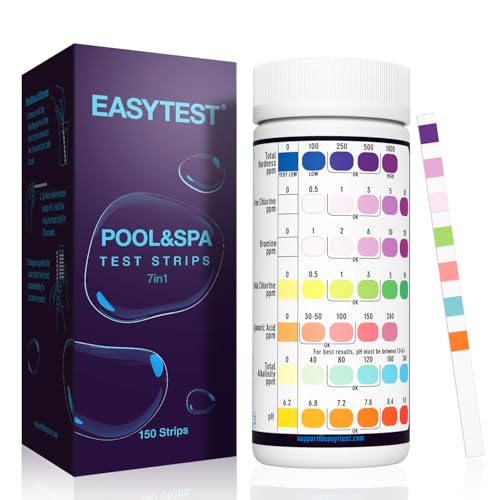
EASYTEST 7-Way Pool Test Strips, 150 Strips Water Test for Hot tub and Spa
- Includes 150 Test Strips: Enough for regular water testing
- Quick and Accurate Results: Soak for 1 second, read in 15 seconds
- 7-in-1 Water Testing: Tests Bromine, pH, Chlorine, and more
As an affiliate, we earn on qualifying purchases.
Frequently Asked Questions
What Permits Are Needed for Residential Pool Excavation?
You’ll need to check local permit requirements and excavation regulations before starting your residential pool excavation. Typically, you must obtain a building permit from your city or county, which guarantees your project complies with safety and zoning codes. Some areas also require permits for trenching or digging, especially if you encounter utilities. Contact your local planning department early to avoid delays and ensure you follow all necessary permit requirements.
How Long Does Pool Excavation Typically Take?
Typically, pool excavation takes about 1 to 3 days, depending on factors like size, soil type, and weather. Your project’s timeframe estimation can vary, but most residential excavations are completed within this window. You should plan for some flexibility, as unexpected issues may extend the excavation duration. Staying in close contact with your contractor guarantees you’re aware of any changes to the planned timeline.
What Are the Environmental Impacts of Pool Excavation?
You might notice soil disruption during pool excavation, which can lead to environmental impacts like erosion or sediment runoff. For example, in a hypothetical case, improper excavation near a waterway caused sediment to clog local habitats, harming aquatic life. These impacts highlight the importance of controlling soil disturbance and implementing erosion controls. Proper planning and mitigation measures reduce environmental harm, ensuring excavation supports both construction goals and ecological health.
How Do Weather Conditions Affect Excavation Schedules?
Weather conditions can substantially impact your excavation schedule due to weather delays and seasonal constraints. Heavy rain or snow can halt work, causing delays and potential safety hazards. Extreme temperatures, whether hot or cold, also affect productivity and equipment performance. You should plan your project with flexibility, monitor weather forecasts closely, and prepare for possible interruptions to keep your excavation on track despite unpredictable weather challenges.
What Are the Common Signs of Excavation Site Safety Issues?
You can’t ignore signs of safety issues at your excavation site—they’re like flashing neon lights. Watch for trench walls that look unstable or crack, water pooling, or shifting soil that threatens trench stability. Unusual sounds or vibrations also signal hazards. Recognize these signs early to prevent accidents. Effective hazard recognition and monitoring trench stability are your best defenses to keep everyone safe and avoid disaster.

AquaChek Yellow 4-Way Pool and Spa Test Strips - 50 Yellow Test Strips - Swimming Pool Test Strips For pH, Free Chlorine, Total Alkalinity, and Cyanuric Acid - Quick and Accurate Results - Testing Kit
- Number of Test Strips: 50 strips for a full season
- Tested Parameters: pH, Free Chlorine, Total Alkalinity, Cyanuric Acid
- Accuracy: Fresh, precise results
As an affiliate, we earn on qualifying purchases.
Conclusion
As you wrap up your pool excavation journey, remember that safety and the right equipment are your guiding stars—like Theseus steering the labyrinth. With careful planning and attention to detail, you’ll soon find yourself basking in the satisfaction of a job well done, much like Icarus reaching for the sun (but safely!). Keep your focus sharp, follow the methods, and you’ll create a backyard oasis that’s truly a myth worth telling.

Pool Test Strips with App 7 in 1 (150 Strips) Easy & Accurate Testing
- Large, easy-to-read strips: Extra long with large pads and color chart
- 7-in-1 pool parameter testing: Alkalinity, pH, chlorine, hardness, stabilizer, bromine, total chlorine
- Smart pool management app: Get personalized recommendations for pool balancing
As an affiliate, we earn on qualifying purchases.

Inflatable Unicorn Flamingo Pool Floats - Jasonwell 2 Pack Pool Floaties Inflatables Rafts for Swimming Pools Tubes for Floating Lake Beach Floaty Swim Rings Pools Party Toys for Adults Kids
- Value Pack Includes: 2 pool floats: unicorn and flamingo
- Cute Design: Adorable flamingo and unicorn floaties
- Adult Size: 42-inch diameter for comfortable floating
As an affiliate, we earn on qualifying purchases.