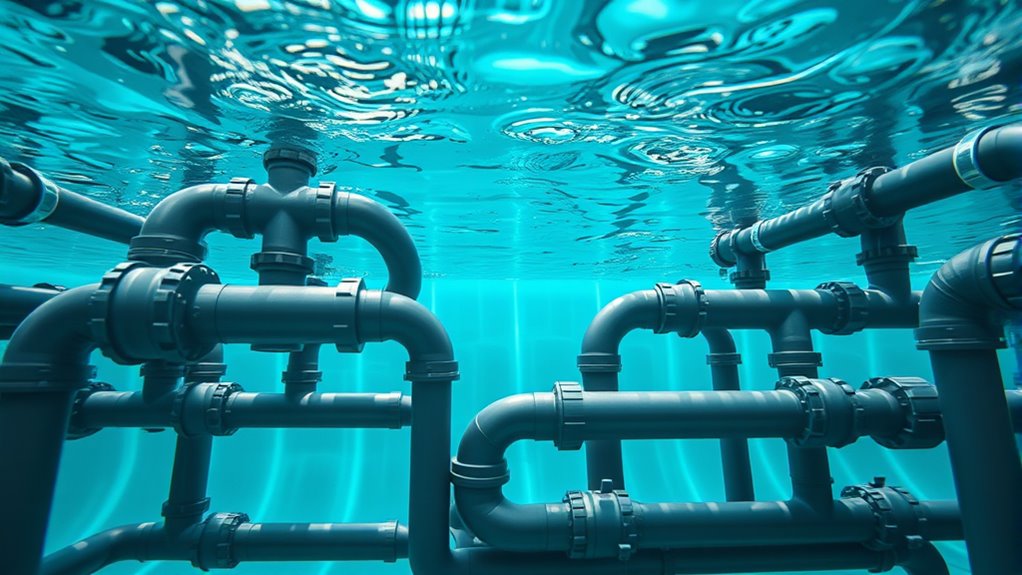
Understanding your pool’s plumbing system helps guarantee proper water flow, which keeps your pool clean and running efficiently. It involves pipes, fittings, and pumps that work together to circulate water through filters, heaters, and other equipment. Choosing the right materials, like PVC pipes, and installing everything correctly prevents restrictions and leaks. By grasping these basics, you can optimize your pool’s performance and avoid costly repairs—there’s more to discover that will help you maintain your system effectively.

Get pool and patio gear delivered free — and shop member deals
- Fast, free delivery on millions of items
- Access to Prime Big Deal Days deals on October 6–7
- Prime Video, Amazon Music and more included
Key Takeaways
- Pool plumbing systems consist of pipes, fittings, and pumps that circulate water efficiently.
- Proper pipe sizing and material choice (like PVC) optimize flow and reduce pump strain.
- Well-designed systems prevent restrictions, leaks, and maintain water quality.
- Components such as filters and heaters depend on proper plumbing for effective operation.
- Correct installation and maintenance ensure consistent water flow and system longevity.
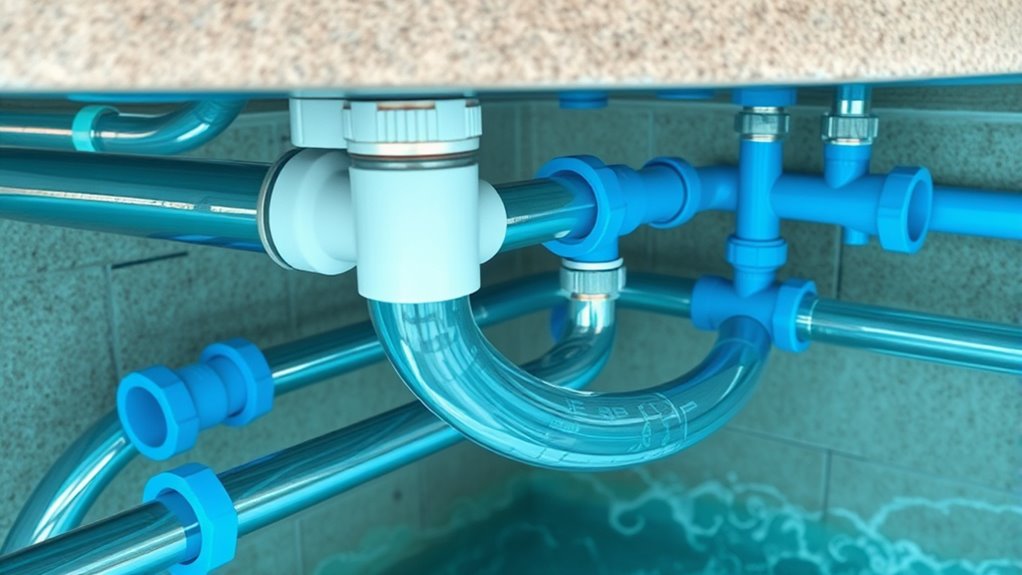
Have you ever wondered how water flows smoothly through your pool? It’s all thanks to a well-designed plumbing system that moves water efficiently and keeps your pool clean and inviting. At the heart of this system is the way water flow is managed through a network of pipes, fittings, and pumps. The key to that smooth flow lies in understanding pipe materials and how they influence the overall performance of your pool’s plumbing. Different pipe materials are chosen to optimize durability, water flow, and ease of installation, which directly impacts how well your pool functions.
When it comes to pipe materials, PVC (polyvinyl chloride) is the most common choice for residential pools. It’s lightweight, easy to work with, and resistant to corrosion, making it ideal for handling the constant exposure to water and chemicals. PVC pipes come in various diameters, which are selected based on the volume of water you need to move and the pressure within your system. Larger diameter pipes generally allow for better water flow, reducing the strain on pumps and ensuring that water circulates efficiently through filters, heaters, and other equipment. The smooth interior surface of PVC pipes also minimizes friction, helping water flow more freely and reducing energy costs.
Other pipe materials, such as flexible hoses or metal pipes, are less common but still have their uses. Flexible hoses, for instance, are handy for connecting equipment or in tight spaces where rigid pipes might be difficult to install. Metal pipes, like copper or galvanized steel, aren’t typically used for main water lines in pools because they can corrode over time and cause water contamination. However, they might be part of certain specialized applications or older systems. Additionally, pipe material selection plays a crucial role in preventing leaks and maintaining the integrity of the plumbing system over time.
Choosing the right pipe material isn’t just about durability—it’s also about maintaining ideal water flow. Incorrect sizing or low-quality materials can lead to restrictions in water movement, increasing the workload on your pump and potentially causing issues like reduced circulation, algae growth, or equipment strain. Proper installation is equally important; ensuring joints are secure and pipes are free of leaks helps sustain consistent water flow and prevents costly repairs down the line.
Understanding how water flow interacts with pipe materials helps you grasp the importance of a well-planned plumbing system. It’s about more than just connecting pipes—it’s about creating a system that works efficiently, minimizes maintenance, and keeps your pool crystal clear. When you pay attention to these details, you’re setting up your pool for reliable, trouble-free operation and a more enjoyable swimming experience.
As an affiliate, we earn on qualifying purchases.
Frequently Asked Questions
How Often Should I Inspect My Pool Plumbing for Leaks?
You should inspect your pool plumbing for leaks at least once a month. During inspections, check for signs like low water levels or unexplained increases in chemical use. Use pressure testing to identify hidden leaks, and examine pipe insulation for cracks or damage that could cause leaks. Regular checks help catch issues early, preventing costly repairs and ensuring your pool stays in top condition.
What Are Common Signs of Plumbing Blockages?
You’ll notice signs of a plumbing blockage when your pool’s flow slows down, the pump struggles, or you see inconsistent water levels. Unusual gurgling sounds and increased energy bills can also signal a pipe blockage. Conduct leak detection to rule out leaks, then inspect for clogs in pipes or filters. Addressing these signs promptly keeps your pool functioning smoothly and prevents costly repairs later.
Can I Upgrade My Pool Plumbing Myself?
You can upgrade your pool plumbing yourself if you’re comfortable with DIY plumbing and have some experience. Start by researching different pool pipe materials like PVC or flexible hoses, and plan your new layout carefully. Be sure to turn off the power and water supply before beginning. While DIY upgrades are possible, you should know your limits—consult tutorials or a professional if you’re unsure about any step.
How Long Does Pool Plumbing Typically Last?
Pool plumbing typically lasts 10 to 25 years, depending on pipe material and maintenance schedule. PVC pipes, common in pool systems, tend to last longer with proper upkeep, while metal pipes may corrode faster. Regular inspections, cleaning, and timely repairs extend your plumbing’s lifespan. By sticking to a consistent maintenance schedule and choosing durable materials, you can guarantee your pool’s plumbing stays functional and efficient for years to come.
What Is the Best Way to Prevent Pipe Corrosion?
Did you know that pipe corrosion can reduce your pool’s lifespan by up to 50%? To prevent corrosion, you should regularly maintain your pipes by checking for leaks and ensuring proper chemical balance. Using corrosion-resistant materials and applying protective coatings also helps. Consistent pipe maintenance, including cleaning and inspecting for early signs of corrosion, keeps your plumbing system in top shape and extends its lifespan, saving you money in the long run.
As an affiliate, we earn on qualifying purchases.
Conclusion
Understanding your pool plumbing system helps you troubleshoot issues and guarantee smooth operation. For example, if you notice decreased water flow, checking for clogged pipes or leaks can save you from costly repairs later. By staying familiar with your system’s components, you can quickly identify problems and maintain ideal performance. Remember, regular inspections and maintenance are key to enjoying a safe, clean, and fully functional pool all season long.
As an affiliate, we earn on qualifying purchases.
As an affiliate, we earn on qualifying purchases.
Fall Picks
fall essentials
As an affiliate, we earn on qualifying purchases.