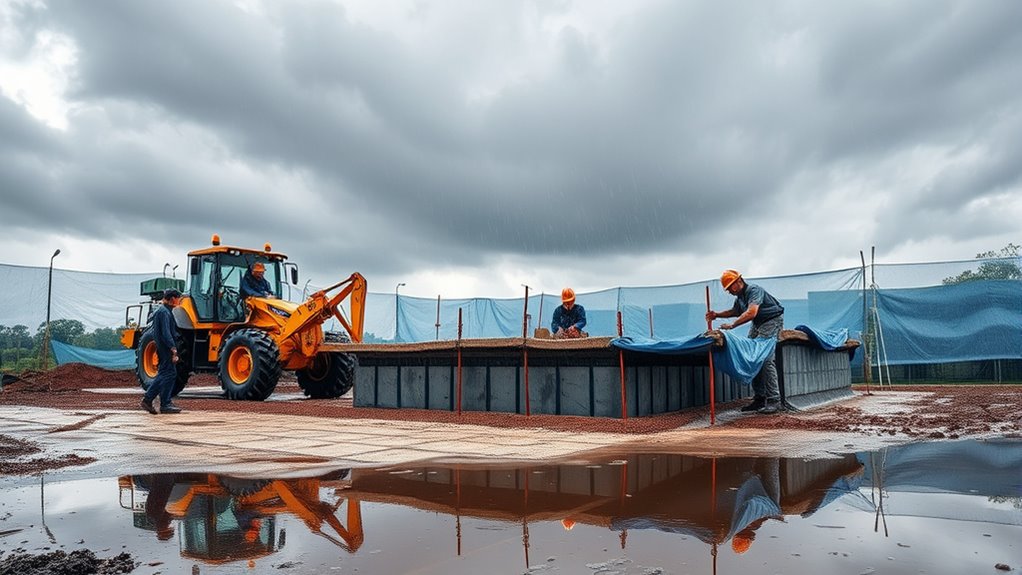

To manage pool construction during rainy or wet conditions, monitor weather forecasts closely and adjust your schedule to prioritize dry tasks like planning and material delivery. Cover exposed surfaces and materials with tarps, and use waterproofing membranes early in the process. Protect equipment and materials from water damage and keep site surfaces dry. Developing contingency plans and maintaining clear communication with your team helps keep progress steady. Continue exploring strategies to keep your project on track despite the weather.
Key Takeaways
- Adjust schedules proactively by monitoring weather forecasts and rescheduling rain-affected tasks to prevent delays.
- Use protective coverings and temporary shelters to keep surfaces and materials dry during rain.
- Apply waterproofing membranes and seal joints before pouring concrete or installing the pool shell.
- Store materials in dry, covered areas and select weather-resistant products to prevent moisture damage.
- Keep the construction team informed of weather updates and develop contingency plans for quick adaptation.
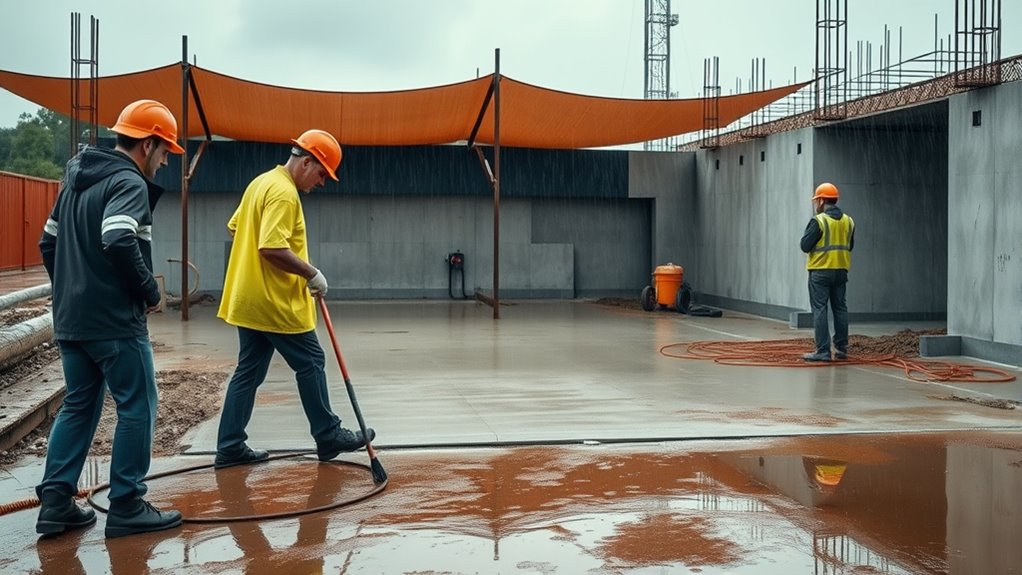
Constructing a pool during wet or rainy conditions can pose significant challenges, but with proper planning, you can keep your project on track. Rain delays are common, but proactive rain delay strategies help minimize setbacks and guarantee your construction timeline stays intact. One of the most effective approaches is to monitor weather forecasts closely and adjust your schedule accordingly. If rain is expected, you might reschedule certain tasks or prioritize work that isn’t affected by the weather, such as planning or material delivery. When rain does occur, covering exposed surfaces and equipment with tarps or temporary shelters can prevent water accumulation, reducing the risk of delays. These measures keep the site dry enough to continue work as soon as conditions improve, avoiding costly stoppages.
Proper planning and protective measures can keep your pool project on schedule despite rain delays.
Waterproofing techniques are also vital during rainy periods. These methods protect your pool structure from water ingress, which can cause delays and damage. Before pouring concrete or installing the pool shell, apply effective waterproofing membranes or sealants to vulnerable areas. These coatings act as barriers, preventing water from penetrating the structure even if rain persists during construction. During the backfilling process, ensure that the soil around the pool is properly compacted and that drainage systems are in place to divert water away from the site. This helps prevent water pooling that could undermine the foundation or cause uneven settling.
In addition to waterproofing, you should consider the quality of materials used. Opt for weather-resistant products that can withstand exposure to moisture without degrading. For example, using corrosion-resistant rebar and sealing joints thoroughly can protect against future leaks and structural issues. Keeping materials covered and stored in dry areas also minimizes the risk of damage, reducing rework and delays later on.
Communication plays a pivotal role in managing construction during rainy weather. Keep your team informed about weather forecasts and possible adjustments to the schedule. Clear communication ensures everyone is prepared for changes, whether that means shifting tasks or implementing additional waterproofing measures. Having contingency plans in place allows you to react quickly and maintain momentum, even when weather conditions turn unfavorable. Incorporating proper waterproofing techniques can significantly reduce the impact of rain on your project’s progress.
As an affiliate, we earn on qualifying purchases.
Frequently Asked Questions
How Can I Prevent Delays Due to Rain During Pool Construction?
To prevent delays caused by rain, you should implement rain delay mitigation strategies and adopt weather resistant planning. Keep an eye on weather forecasts, and schedule critical tasks during dry periods. Cover exposed areas with tarps or temporary shelters, and coordinate with your team to adjust timelines if rain is anticipated. Staying proactive and flexible ensures your pool construction stays on track despite adverse weather conditions.
What Are the Safety Precautions for Workers in Wet Conditions?
You should guarantee workers wear slip-resistant footwear and proper protective gear to prevent accidents on wet surfaces. Keep the work area clear of water and debris, and use signage to warn about slip hazards. Regularly inspect equipment and safety gear for damage. Encourage workers to take breaks if conditions become too slippery, and train them on safety protocols for wet conditions to minimize risks and maintain a safe environment.
How Does Rain Affect the Durability of Pool Foundation Materials?
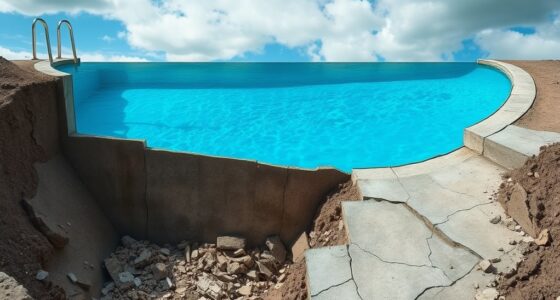
As rain pours down, it can cause soil erosion around your pool foundation, weakening the structure. The constant moisture accelerates material degradation, compromising the durability of your foundation materials. When rain seeps into the soil, it can lead to shifting or settling, increasing the risk of cracks or instability. You need to take extra precautions, like proper drainage and waterproofing, to protect your pool’s foundation against these weather-induced damages.
Are There Specific Waterproofing Techniques for Rainy Construction Seasons?
Yes, there are specific waterproofing techniques for rainy seasons. You should use waterproofing membranes, such as flexible sheet or liquid-applied options, to guarantee a strong barrier against moisture. Applying protective coatings over the membranes adds extra durability, preventing water infiltration and damage. These techniques help maintain the integrity of the pool structure, even during heavy rain, ensuring your construction stays on track and resists water-related issues.
Can Construction Schedules Be Adjusted to Accommodate Unpredictable Weather?
It’s a no-brainer—you can definitely adjust construction schedules to handle unpredictable weather. Think of it as being a modern-day weatherman, relying on accurate weather forecasting to stay ahead. By implementing flexible scheduling, you can shift work around rainy days, ensuring quality and safety. This proactive approach minimizes delays and keeps your project moving forward, even when Mother Nature throws a curveball.
waterproofing membrane for pools
As an affiliate, we earn on qualifying purchases.
As an affiliate, we earn on qualifying purchases.
Conclusion
Managing pool construction during wet or rainy conditions can be challenging, but with proper planning, you can mitigate delays and maintain quality. Did you know that heavy rain can delay construction projects by up to 30%? By scheduling around weather forecasts and implementing effective drainage solutions, you ensure the project stays on track. Embrace these strategies, and you’ll enjoy a smooth build, even when the skies aren’t cooperating. Your dream pool is still within reach, rain or shine.
weather-resistant construction materials
As an affiliate, we earn on qualifying purchases.
As an affiliate, we earn on qualifying purchases.
construction site temporary shelters
As an affiliate, we earn on qualifying purchases.
As an affiliate, we earn on qualifying purchases.