When installing a pool, you must guarantee proper grounding using dedicated wires bonded to your home’s electrical system, install appropriately sized circuit breakers to protect your equipment, and use weather-resistant wiring suited for outdoor use. Grounding and breaker sizing are critical for safety and compliance, so hiring a licensed electrician is highly recommended. Additionally, installing GFCI outlets and breakers helps prevent electrical shocks. If you want to ensure your setup is safe and up to code, there’s more to learn about the specifics.
Key Takeaways
- Ensure all pool electrical components are properly grounded and bonded to the main grounding system.
- Use appropriately sized circuit breakers matching the pool equipment’s electrical load.
- Install waterproof, outdoor-rated wiring protected by conduit according to local electrical codes.
- Incorporate GFCI outlets and breakers to protect against ground faults and electric shocks.
- Hire licensed electricians to perform installation, testing, and ensure compliance with safety standards.
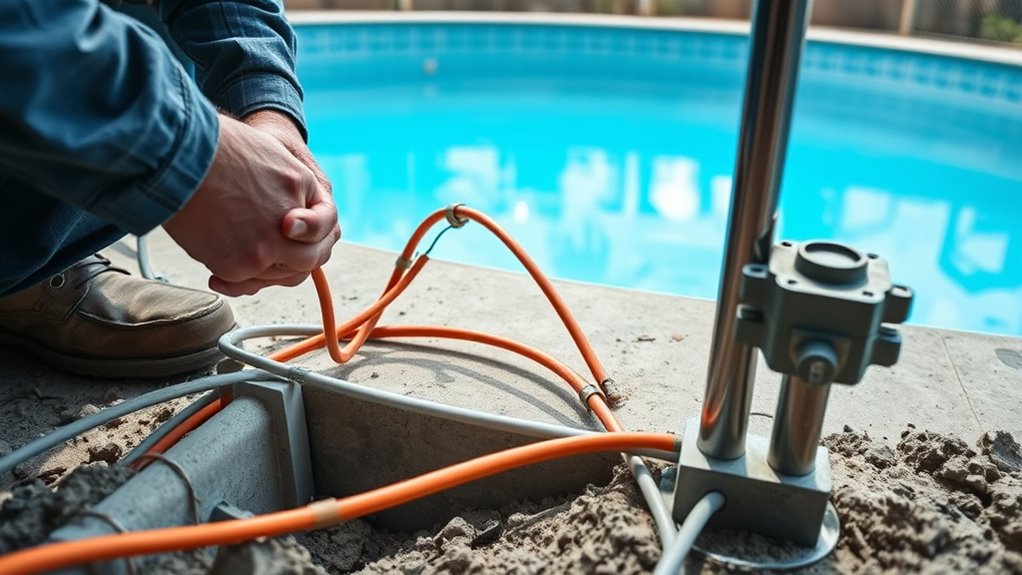
Installing a pool requires careful attention to electrical requirements to guarantee safety and compliance. One of the most critical aspects is ensuring proper grounding systems are in place. Grounding acts as a safety net, directing any stray electrical current safely into the ground, which helps prevent electric shock and equipment damage. When installing your pool, you must use a dedicated grounding system that includes a grounding wire connected to the pool’s metal components, reinforcing the entire electrical setup. This wiring should be bonded to the main grounding system of your property, which ties all grounding points together. Proper grounding isn’t just a recommendation; it’s a legal requirement designed to protect you and your family from potential electrical hazards. Additionally, regular inspection and maintenance of grounding connections are essential to ensure ongoing safety and compliance.
Proper grounding is essential for pool safety and legal compliance.
In addition to grounding systems, circuit breaker sizing plays a vital role in the safety and functionality of your pool’s electrical system. The circuit breaker acts as a safeguard, shutting off power if it detects an overload or a short circuit. Sizing the circuit breaker correctly is essential because an undersized breaker might trip too frequently, disrupting your pool operations, while an oversized breaker could fail to trip during a fault, posing a severe safety risk. To determine the proper size, you’ll need to consider the specific electrical load of your pool equipment, such as pumps, heaters, and lighting. Typically, pool pump circuits require a dedicated breaker rated according to the pump’s horsepower, following manufacturer specifications. When in doubt, consult with a licensed electrician who can evaluate your equipment and ensure the circuit breaker capacity aligns with safety standards and local electrical codes.
Beyond grounding and breaker sizing, you should also pay attention to the wiring methods used for your pool’s electrical components. Use waterproof, outdoor-rated wiring to withstand weather conditions and prevent corrosion. All connections should be protected with appropriate conduit and fittings, and be sure to follow local electrical codes for installation practices. Installing GFCI (Ground Fault Circuit Interrupter) outlets and breakers is non-negotiable; these devices cut power immediately if a ground fault is detected, drastically reducing the risk of electric shock. Remember, electrical work for pools isn’t a DIY project unless you’re qualified; always hire a licensed electrician to ensure all components are correctly installed and tested. Ensuring proper electrical safety standards can prevent potential accidents and is crucial for peace of mind.
Ultimately, proper grounding systems and circuit breaker sizing are the backbone of a safe, reliable pool electrical setup. They ensure your pool operates efficiently while minimizing risks. By prioritizing these elements and adhering to safety standards, you create a safer environment for enjoying your pool and protect your investment from electrical faults. Never compromise on electrical safety—consult professionals, follow code requirements, and double-check your system before filling your pool with water.
As an affiliate, we earn on qualifying purchases.
Frequently Asked Questions
Can I Install a Pool Electrical System Myself?
You shouldn’t install a pool electrical system yourself. Handling electrical components requires proper knowledge to guarantee safety and code compliance, especially when considering pool cover controls and water chemistry sensors. Attempting this without expertise risks electric shock, fire, or damage. Hire a licensed electrician who understands pool-specific electrical needs. Proper installation guarantees safe operation, prevents accidents, and keeps your water chemistry balanced for enjoyable, worry-free swimming.
What Safety Measures Are Necessary During Installation?
You should always prioritize safety during pool installation, as electrical accidents cause about 50 fatalities annually. Make sure to follow grounding requirements and install proper circuit protection to prevent shocks. Keep electrical tools away from water, and wear insulated gloves. Turn off power when working near live circuits. Consulting a professional guarantees adherence to safety standards, reducing risks and protecting everyone around your new pool.
How Often Should Pool Electrical Components Be Inspected?
You should inspect your pool’s electrical components at least once a year, following electrical codes and inspection schedules. Regular inspections help identify potential issues like corrosion, loose connections, or damaged wiring. Turn off power before inspecting, and consider professional assistance for thorough checks. Staying proactive guarantees safety, prevents electrical hazards, and keeps your pool running smoothly. Keep detailed records of each inspection for ongoing safety and compliance.
Are There Specific Permits Required for Electrical Work?
Yes, you need specific permits for pool wiring to verify compliance with electrical codes. Before starting work, check with your local building department, as permits vary by location. Securing the proper permit guarantees your electrical work meets safety standards and avoids potential fines. Always follow electrical codes when installing or modifying pool wiring, and consider hiring a licensed electrician to ensure everything is up to code and safely installed.
What Are the Energy Efficiency Options for Pool Electrical Systems?
To boost your pool’s energy efficiency, consider solar-powered systems that enhance solar effectiveness and reduce energy costs. Installing energy-saving features like variable speed pumps, LED lighting, and timers helps cut electricity use. Additionally, insulating pipes and using energy-efficient heaters maintain ideal temperatures without excessive power. These options guarantee your pool runs efficiently, saving you money and supporting eco-friendly practices.

TAUROX 1/2-Inch 10 Gauge Electrical Wires Liquid Tight Conduit Wire with Ground Nonmetallic Flexible Conduits AC Disconnect Box Outdoor Electrical Whip Kit Power Whip Assembly(6FTx1/2Inch)
- Easy Installation: Quick and convenient hookup
- High-Quality Material: Made of saltwater-resistant PVC
- Flexible Design: Non-metallic, highly flexible PVC conduit
As an affiliate, we earn on qualifying purchases.
As an affiliate, we earn on qualifying purchases.
Conclusion
By understanding the electrical requirements for your pool, you’re not just following rules—you’re safeguarding your paradise. Think of these guidelines as the heartbeat of your backyard oasis, ensuring safety and longevity. Don’t let overlooked details turn your dream into a nightmare. With proper wiring and adherence to codes, you’re the architect of a safe, sparkling retreat. Remember, a well-electrified pool isn’t just about fun—it’s about peace of mind, glowing brighter than the sun itself.
As an affiliate, we earn on qualifying purchases.
weatherproof outdoor wiring for pool
As an affiliate, we earn on qualifying purchases.
As an affiliate, we earn on qualifying purchases.