To understand soil stabilization techniques for pools, recognize that they reinforce the ground to support the pool’s weight and prevent shifting. Methods include adding materials like geogrids or geotextiles, and chemically treating the soil with lime or cement to bind particles. Often, combining these methods offers stronger support. Soil testing helps determine the best approach for your site. Keep exploring to discover how these techniques guarantee a safe, stable pool foundation tailored for your soil conditions.

Get pool and patio gear delivered free with Prime
- Fast, free delivery on millions of items
- Prime Video, Amazon Music and more included
- Member-only deals all year
Key Takeaways
- Soil stabilization prevents uneven settling and structural damage by strengthening ground support for pool installation.
- Techniques include soil reinforcement with geogrids or geotextiles, and chemical stabilizers like lime or cement.
- Combining physical reinforcement and chemical stabilization enhances soil strength and durability under pool loads.
- Conducting soil tests helps determine soil type and strength, guiding effective stabilization method selection.
- Proper stabilization ensures safety, prevents shifting, and maintains the integrity of the pool over time.
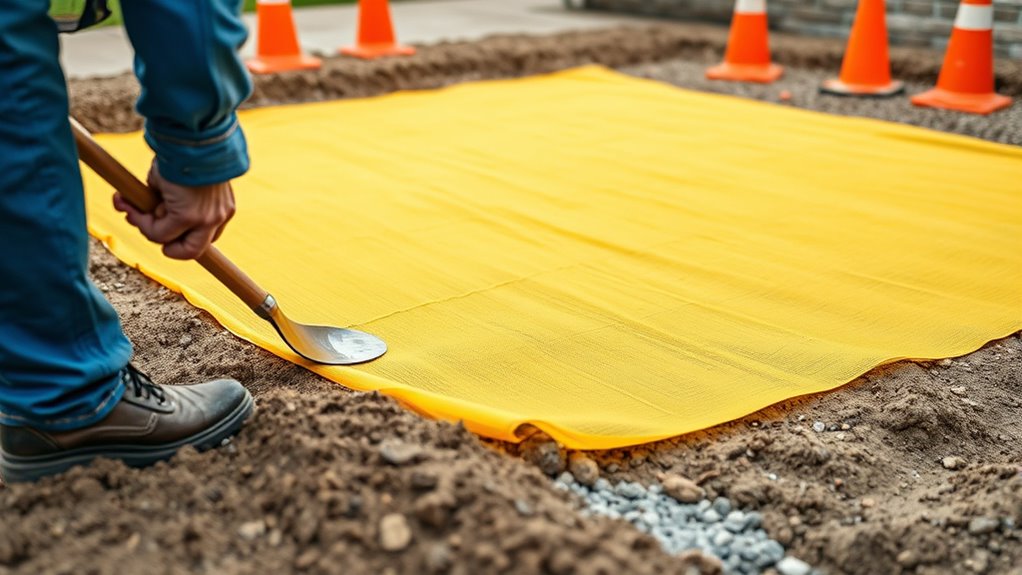
A stable and secure pool installation depends heavily on effective soil stabilization techniques. When you’re planning to install a pool, guaranteeing the ground beneath it can support the weight and resist shifting is essential. Without proper stabilization, you risk uneven settling, cracking, or even structural failure. Soil reinforcement plays a critical role here, as it involves adding materials like geogrids, geotextiles, or soil nails to improve the strength and stability of the soil. These reinforcements help distribute loads more evenly, reducing the likelihood of movement or deformation under the weight of the pool and water. Incorporating soil reinforcement is especially important if your soil is loose, sandy, or clayey, which tend to shift or compress easily.
Chemical stabilization is another effective method you can consider. It involves adding chemical agents, such as lime, cement, or other soil stabilizers, to the soil to improve its properties. When you apply these chemicals, they react with the soil particles, binding them together and increasing the overall cohesion and bearing capacity. This process transforms unstable or weak soils into more solid, dependable foundations capable of supporting heavy loads like pools. Chemical stabilization is particularly useful in areas with highly plastic clay or organic soils that tend to expand or contract with moisture changes. By chemically treating the soil, you create a more uniform and predictable foundation, which minimizes the risks of shifting or settling after installation. Additionally, understanding the soil’s bearing capacity can help determine the most suitable stabilization method for your site.
Both soil reinforcement and chemical stabilization are often used together to maximize soil stability. For example, you might reinforce the soil with geogrids and then chemically stabilize it with lime or cement to achieve ideal support. This combination ensures that the soil’s strength is enhanced physically and chemically, providing a robust base for your pool. It’s also worth noting that the choice of stabilization method depends on the specific soil conditions and the weight of your pool. Conducting a soil test beforehand will give you valuable insights into the soil’s composition and strength, guiding you toward the most effective stabilization techniques.
geogrid soil reinforcement for pools
As an affiliate, we earn on qualifying purchases.
As an affiliate, we earn on qualifying purchases.
Frequently Asked Questions
How Long Does Soil Stabilization Typically Last?
Soil stabilization typically lasts between 5 to 10 years, depending on factors like soil erosion and the effectiveness of chemical treatments used. If you apply proper chemical treatments, you can prolong the lifespan by preventing erosion and maintaining soil integrity. Regular inspections and reapplications, if needed, help ensure your pool area stays stable longer. Keep an eye on weather conditions and soil movement to maximize durability.
Are There Eco-Friendly Soil Stabilization Options Available?
Oh, absolutely, eco-friendly options like organic stabilization are the latest trend in soil stabilization. You can opt for natural materials such as bio-based polymers, plant-based binders, or composted organic matter that do the job without harming Mother Earth. These methods not only stabilize your soil effectively but also keep your conscience clear. So yes, you can have a stable pool foundation and save the planet—what a win-win!
Can Soil Stabilization Be Done in All Weather Conditions?
Yes, soil stabilization can be impacted by seasonal challenges and weather considerations. You should plan stabilization work during favorable weather conditions, avoiding heavy rain, freezing temperatures, or extreme heat, which can compromise the process. In wetter seasons, moisture can weaken the stabilization materials, while cold weather may hinder curing. By choosing the right timing and monitoring weather forecasts, you guarantee the soil stabilizes effectively, supporting your pool installation successfully.
What Is the Cost Difference Between Various Stabilization Methods?
You’ll find that the cost comparison between stabilization methods varies widely, with prices ranging from $2 to $8 per square foot depending on the technique. For example, chemical stabilization tends to be more affordable but less durable, while deep soil mixing offers higher efficiency but at a higher cost. Your choice depends on balancing initial expenses with long-term method efficiency to guarantee a stable pool foundation.
How Do I Maintain Soil Stability Over Time?
To maintain soil stability over time, you should regularly monitor your soil composition and address any changes, such as erosion or shifting. Improve drainage around your pool area to prevent water buildup, which can weaken the soil. Consider adding organic matter or stabilizing agents if needed. Consistent maintenance, including proper grading and ensuring good drainage, will help keep the soil stable and your pool secure for years to come.
soil stabilizer cement lime for foundation
As an affiliate, we earn on qualifying purchases.
As an affiliate, we earn on qualifying purchases.
Conclusion
Understanding soil stabilization techniques is key to building a safe, durable pool. By choosing the right method, you can prevent costly shifts and cracks down the line. Did you know that improperly stabilized soil can cause pool failure in as little as five years? That’s why investing in proper soil prep isn’t just smart — it’s essential. Take the time to explore your options so your pool remains a safe, enjoyable retreat for years to come.
geotextile fabric for soil stabilization
As an affiliate, we earn on qualifying purchases.
As an affiliate, we earn on qualifying purchases.
pool soil stabilization chemical treatment
As an affiliate, we earn on qualifying purchases.
As an affiliate, we earn on qualifying purchases.
Halloween Picks
halloween
As an affiliate, we earn on qualifying purchases.