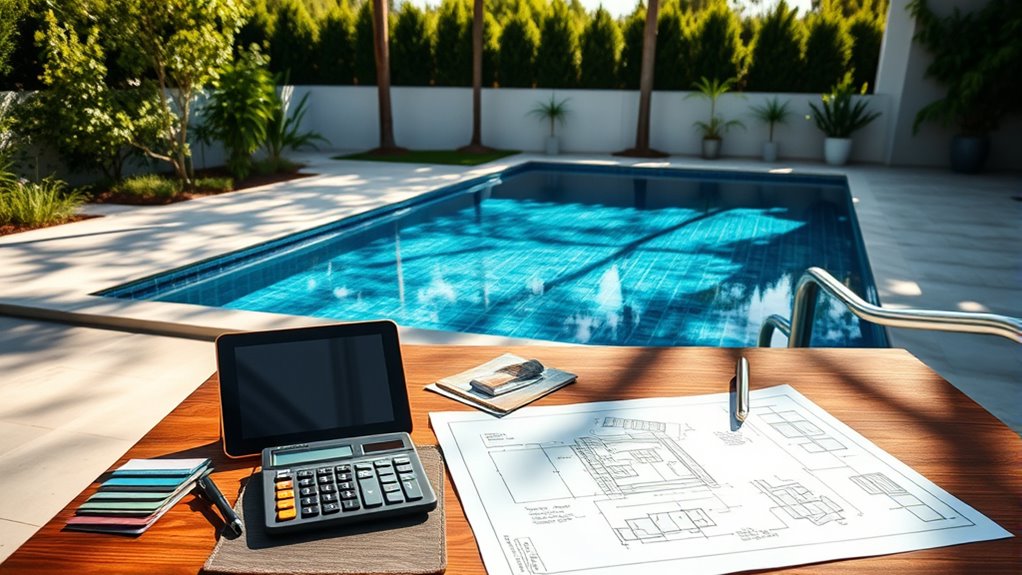
To create a pool design checklist from budget to features, first determine your overall budget, considering costs for shape, material, and additional features. Decide on the pool shape that fits your yard and style preferences, then select a durable material like plaster, vinyl, or fiberglass based on climate and maintenance needs. Incorporate safety features and plan the layout to complement your landscape and home architecture. Explore more tips to guarantee your pool combines style, safety, and affordability seamlessly.

Get pool and patio gear delivered free — and shop member deals
- Fast, free delivery on millions of items
- Access to Prime Big Deal Days deals on October 6–7
- Prime Video, Amazon Music and more included
Key Takeaways
- Define your budget early, considering material costs, shape complexity, and additional features.
- Choose a pool shape that complements your yard layout and personal style.
- Select appropriate materials based on durability, maintenance, and climate suitability.
- Incorporate safety features and plan for easy maintenance to ensure long-term usability.
- Consult professionals to align design choices with your budget, preferences, and backyard integration.
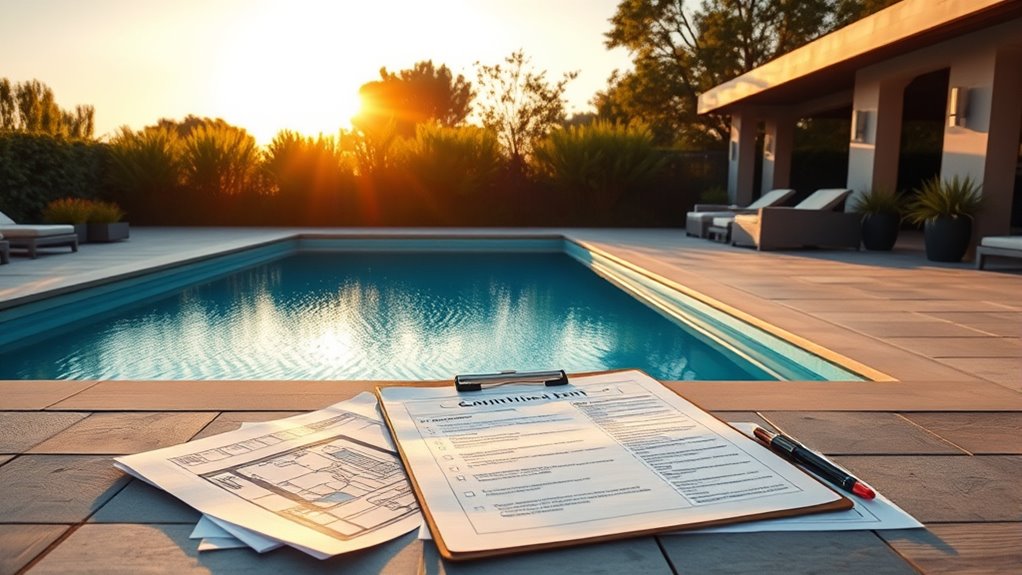
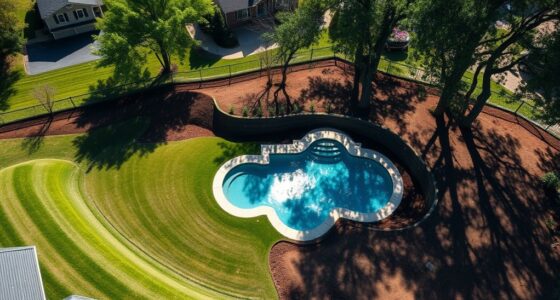
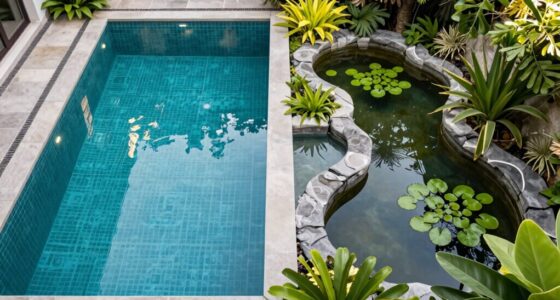
Are you ready to create the perfect backyard oasis? The first step is planning your pool’s design, which means considering the pool shape and material options. Your pool shape plays a fundamental role in how your backyard looks and functions. Do you want a sleek rectangular pool that offers a modern vibe, or would a freeform design better suit your landscape’s natural curves? Maybe a kidney shape or a lagoon-style pool appeals to you for a more organic feel. Each shape influences how you’ll use the space and the overall aesthetic, so think about your lifestyle and style preferences. Keep in mind that certain shapes may also impact the construction process and cost, so it’s smart to consult with a professional to understand what’s feasible within your budget.
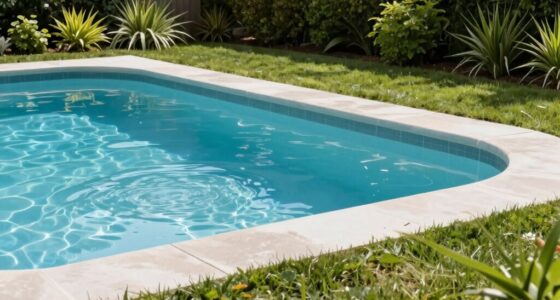
Alongside shape, material options are equally important when creating your pool design. The right materials can enhance durability, appearance, and maintenance needs. Popular choices include gunite or concrete, which allow for custom shapes and finishes, giving you flexibility in design. Vinyl liners are more budget-friendly and quick to install but may require replacements over time. Fiberglass pools are pre-molded, offering a smooth surface and quick installation, but they come in limited shapes and sizes. Think about how much maintenance you’re willing to do and the climate in your area, as these factors influence which material is best. For example, concrete pools are highly customizable but can be more prone to staining and cracking, while fiberglass pools are low-maintenance but less customizable. Additionally, incorporating farmhouse-inspired decor elements such as natural materials and vintage accents can create a cozy, inviting atmosphere around your pool area.
When selecting your pool shape and materials, it’s essential to consider how these choices integrate with your yard’s layout, your home’s architecture, and your personal style. Measure your space carefully and visualize how each option will look and feel. Budget constraints also matter—more complex shapes and custom finishes can increase costs, so weigh the aesthetic appeal against your financial limits. Don’t forget to think about safety features, especially if you have children or pets, and how your choices will affect pool maintenance and longevity. Consulting with a pool designer or contractor early on can help you navigate these decisions, ensuring your choices align with your goals and budget. With thoughtful planning around pool shape and material options, you’ll be one step closer to creating a stunning, functional backyard retreat tailored just for you.
Frequently Asked Questions
How Do I Choose the Best Pool Shape for My Yard?
To choose the best pool shape for your yard, consider your available space and desired pool size. Think about pool placement to maximize sunlight and privacy, ensuring it fits well without overwhelming your yard. Do you want a freeform shape for a natural look or a rectangular pool for a modern style? Measure your yard carefully, and select a shape that complements your landscape while accommodating your family’s needs.
What Safety Features Should I Include in My Pool Design?
Prioritize pool safety by including essential features like pool fencing, non-slip surfaces, and a pool cover. Install self-closing, self-latching gates to prevent unauthorized access. Add safety alarms on doors and windows leading to the pool area. Guarantee proper lighting for visibility and easy supervision. Regularly maintain safety equipment like life rings and reach poles. By integrating these features, you create a secure environment for everyone around your pool.
How Can I Incorporate Eco-Friendly Pool Options?
You can incorporate eco-friendly options by choosing sustainable materials like recycled steel or eco-friendly tiles. Opt for solar heating systems to reduce energy consumption and harness renewable energy. Consider energy-efficient pool pumps and LED lighting to further lower your environmental impact. These choices not only make your pool greener but also save you money over time, helping you create an environmentally responsible and cost-effective backyard oasis.
What Maintenance Considerations Are Essential During Planning?
Think of your pool as a living organism that needs careful tending. During planning, prioritize maintenance by choosing efficient filtration systems and planning for regular chemical balance checks. You’ll want to select systems that are easy to access and maintain, ensuring your pool stays crystal clear and safe. Proper planning now simplifies future upkeep, saving you time and money while keeping your pool in peak condition.
How Do Local Regulations Impact My Pool Design Choices?
Local regulations considerably influence your pool design choices. You need to check permit requirements and guarantee your plans comply with neighborhood restrictions, such as fencing, pool size, and safety features. Failing to adhere can lead to fines or delays. Always consult local authorities early in the planning process, so you can design a pool that meets all regulations, avoiding costly modifications later and ensuring a smooth construction process.
Conclusion
Now that you have this pool design checklist, you’re ready to turn your vision into reality. Remember, investing in proper planning can save you time and money—and research shows that well-designed pools increase property value. Don’t just go with the trend; consider your long-term needs and local climate. By thoroughly preparing, you’ll create a beautiful, functional backyard oasis that stands the test of time. Embark on confidently, knowing you’ve got all the essentials covered.
Fall Picks
fall essentials
As an affiliate, we earn on qualifying purchases.