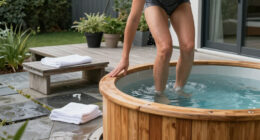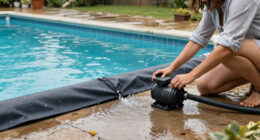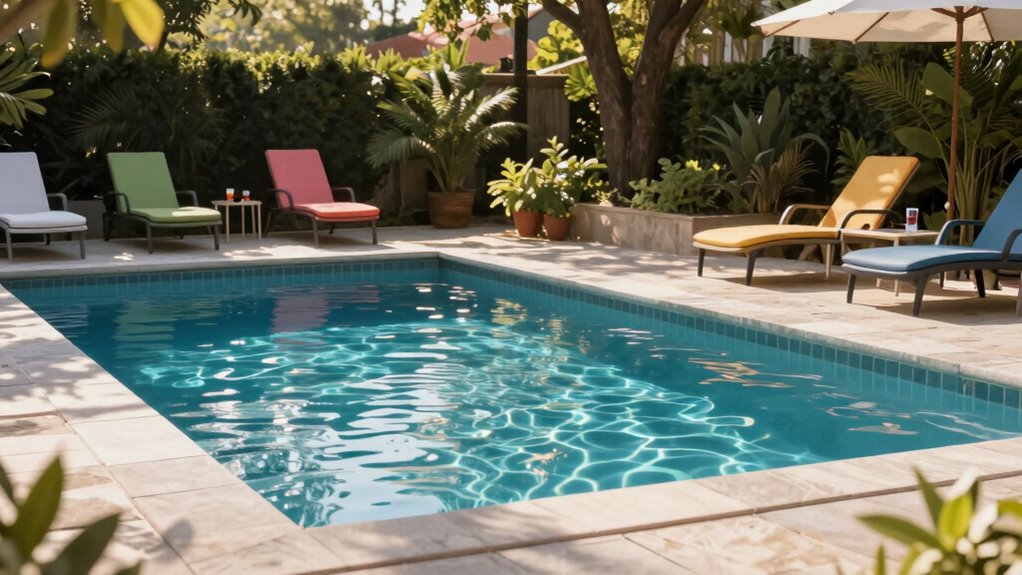

Before building your pool, consider seasonal and daily usage patterns to guarantee safety, efficiency, and enjoyment. Think about peak usage times, such as summer weekends, and plan staffing and safety measures accordingly. Also, account for off-peak months to maintain water quality and safety features year-round. Focus on design elements like good sightlines, non-slip surfaces, and proper lighting. Knowing these factors helps you create a pool that handles all activity levels smoothly—continue to explore for more insights.

Get pool and patio gear delivered free with Prime
- Fast, free delivery on millions of items
- Prime Video, Amazon Music and more included
- Member-only deals all year
Key Takeaways
- Analyze seasonal usage trends to plan for peak summer activity and off-season maintenance needs.
- Design safety features like fencing, alarms, and lighting to accommodate varying usage levels and weather conditions.
- Ensure good sightlines and non-slip surfaces for safety during high-traffic periods and nighttime use.
- Schedule maintenance around usage patterns to balance safety, water quality, and equipment longevity.
- Consider staffing and emergency preparedness based on predictable peak usage times for optimal safety.
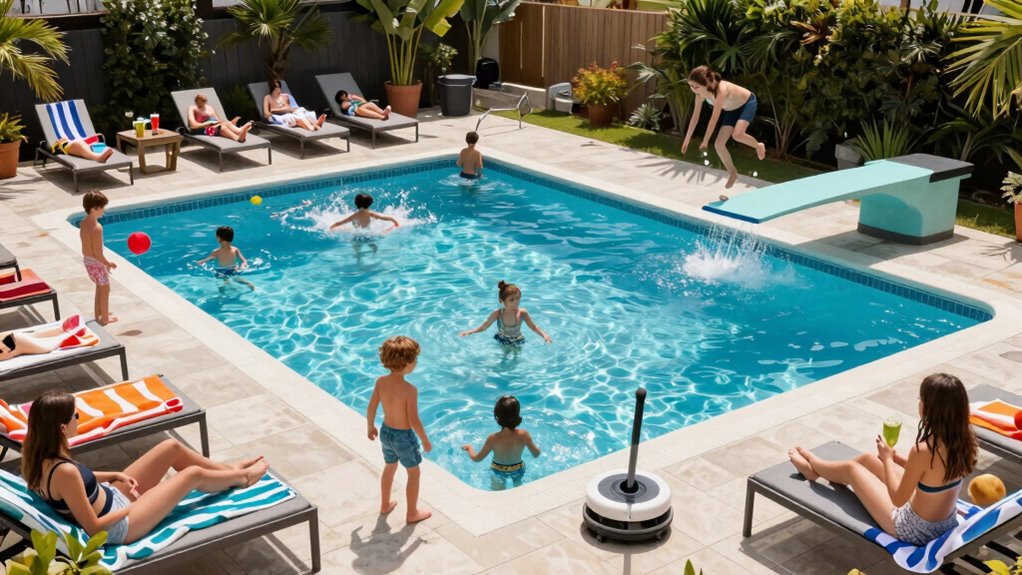
Have you ever wondered how pool usage varies throughout the year or day? Understanding these patterns can make a big difference when you’re planning your pool’s design and operation. During warmer months, especially summer, you’ll notice a spike in usage as families and friends flock to enjoy the water. This increased activity means you’ll need to prioritize regular pool maintenance to keep the water clean, clear, and safe. Skipping routine tasks like skimming debris, checking chemical levels, and cleaning filters can quickly lead to problems, especially when more people are using the pool. Proper pool maintenance isn’t just about keeping the water looking good; it’s essential for safety and health.
In the cooler months, usage drops considerably, often leading to less frequent maintenance but still requiring attention. If you plan to keep your pool open year-round, you’ll need to contemplate weather conditions and how they affect usage. For instance, even in off-peak seasons, some users might still enjoy a dip, so maintaining safety protocols remains important. This includes ensuring that safety features like fencing, alarms, and signage are in place and functional. You’ll also want to think about safety considerations related to varying usage times—like late-night swims or early morning dips—making sure that lighting is adequate and that emergency equipment is accessible. Being aware of seasonal fluctuations in usage can help you better prepare your safety measures and maintenance schedule. Additionally, understanding usage peaks enables better staffing and resource planning, especially in commercial settings.
Daily usage patterns also influence how you approach safety considerations. During peak hours, supervision becomes critical, especially if kids are involved. You might want to install additional safety measures such as pool covers or alarms that alert you if someone enters unexpectedly. Lighting is another key factor—adequate illumination during evening hours helps prevent accidents and allows you to monitor activity easily. If you expect frequent use at different times, consider designing your pool area with clear sightlines and non-slip surfaces to reduce risks. Additionally, understanding pool usage patterns helps you plan for staffing and emergency preparedness. If your pool is in a community or commercial setting, you’ll need staff schedules that match busy times. For private pools, knowing when most activity occurs helps you identify when safety checks are most needed. Overall, knowing how and when people use your pool enables you to balance maintenance needs with safety considerations effectively. It allows you to create a safe, enjoyable environment for everyone while minimizing operational issues and ensuring the longevity of your investment.
Products Worth Considering

Philips Hue Smart Light Starter Kit with Bridge and 4 White and Color A19 Bulbs

Philips Hue Play HDMI Sync Box 4K + 65 Play Gradient Smart TV Strip Light

Blueair Signature SP1i Smart Air Purifier
As an affiliate, we earn on qualifying purchases.
Frequently Asked Questions
How Do Seasonal Changes Affect Pool Usage?
Seasonal fluctuations profoundly impact your pool usage patterns. During warmer months, you’ll likely see increased usage as people seek relief from the heat, while colder seasons bring a decline in activity. You should plan for these changes by adjusting your pool’s maintenance schedule and energy use. Recognizing these seasonal shifts helps you optimize your pool’s operation, ensuring it remains inviting and cost-effective throughout the year.
What Safety Measures Are Recommended for Peak Times?
During peak times, you should prioritize pool safety by enforcing strict supervision and ensuring all safety equipment is accessible. Implement clear rules, like no running or diving in shallow areas, and use signs to remind users. Follow peak regulations by limiting access if necessary, maintaining a low guest-to-supervisor ratio, and regularly inspecting safety devices. These measures help prevent accidents and create a safe environment for everyone enjoying the pool at busy times.
How Can I Optimize Pool Cleaning Schedules?
To optimize your pool cleaning schedule, you should consider your pool’s usage patterns and adjust cleaning frequency accordingly. For high-traffic times, increase pool maintenance to prevent debris buildup and maintain water quality. During quieter periods, reduce cleaning frequency to save energy and resources. Regularly check filters and skimmers, and use automated cleaners where possible, ensuring your pool stays clean and inviting with minimal effort.
What Are the Common Causes of Pool Wear and Tear?
You’ll notice pool wear and tear mainly from poor water chemistry and the type of pool material. Corrosion can occur if chemicals aren’t balanced, especially with metal components. Vinyl and plaster surfaces may crack or stain over time due to chemical imbalance or UV exposure. Regularly testing and adjusting water chemistry helps prevent damage, and choosing durable pool materials suited to your climate extends your pool’s lifespan.
How Does Pool Usage Impact Energy Consumption?
Your pool’s energy consumption rises with increased usage, especially if you don’t have energy-efficient equipment in place. Using the pool more often means your pump, heater, and filtration systems work harder, consuming more power. To manage this, leverage pool usage analytics to track patterns and optimize equipment operation. This approach helps reduce energy costs by adjusting settings during off-peak times and maintaining efficiency, even with frequent use.
Conclusion
By understanding your pool usage patterns, you can avoid costly mistakes and create a space that perfectly fits your lifestyle. Whether you’re hosting epic pool parties or enjoying peaceful dips solo, planning ahead guarantees your pool becomes the highlight of your home—more exhilarating than a fireworks display! Don’t let guesswork turn your dream pool into a dud. Immerse yourself with confidence, and make your backyard oasis an unforgettable retreat for years to come.