
To optimize heat retention in your pool, focus on using solar covers to trap and absorb heat, especially overnight, and insulate the pool’s perimeter and surrounding ground to reduce heat loss. Make certain your pool cover fits snugly and consider using high R-value insulation materials for better efficiency. Combining these strategies helps extend your swimming season and lowers energy costs. Keep exploring to discover more effective ways to improve your pool’s warmth and comfort.

Get pool and patio gear delivered free — and shop member deals
- Fast, free delivery on millions of items
- Access to Prime Big Deal Days deals on October 6–7
- Prime Video, Amazon Music and more included
Key Takeaways
- Using solar covers traps and releases heat, reducing energy costs and extending swimming seasons.
- Proper insulation around pool edges and walls minimizes heat loss and enhances thermal efficiency.
- Selecting high R-value insulation materials tailored to climate improves overall heat retention.
- Ensuring a snug-fitting cover prevents heat escape and maximizes retention effectiveness.
- Combining insulation techniques with solar covers offers comprehensive heat conservation in pool design.
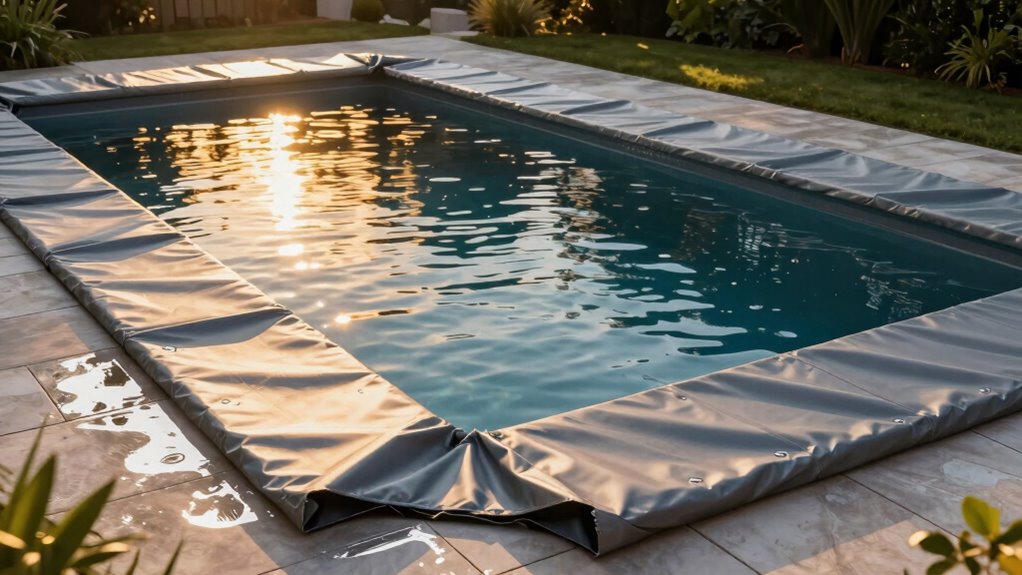
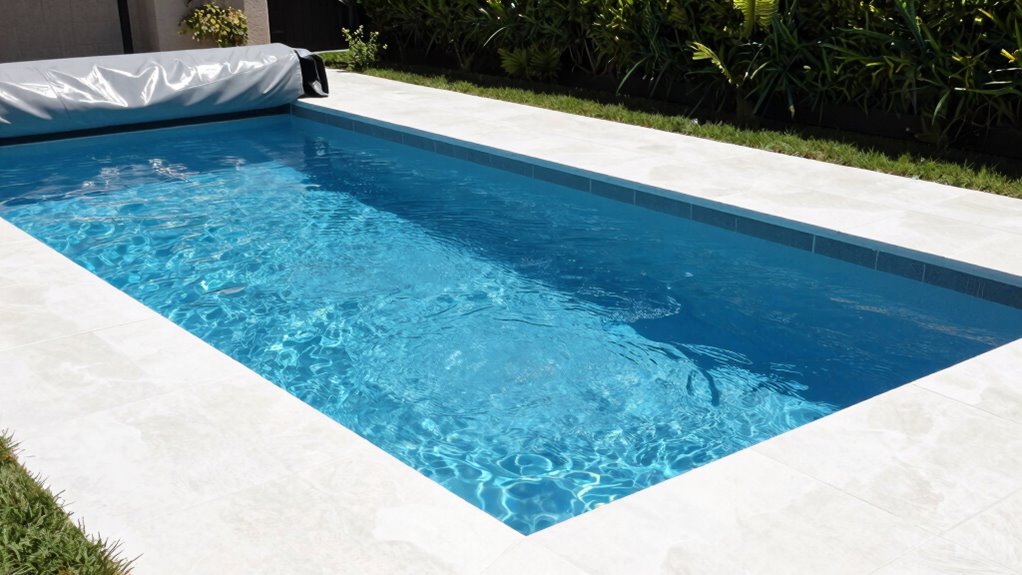
When designing a pool, maximizing heat retention is vital to extend the swimming season and reduce energy costs. One of the most effective ways to achieve this is by using solar covers, which trap heat and prevent evaporation overnight. These covers act like a solar blanket, absorbing sunlight during the day and releasing stored warmth into the water. When you cover your pool with a solar cover, you’ll notice a significant decrease in heat loss, especially during cooler evenings. Additionally, solar covers are simple to use: just roll them off when you want to swim and lay them back on when you’re done. They’re a practical investment that pays off by maintaining higher water temperatures with less energy input.
Alongside solar covers, implementing insulation techniques is vital for retaining heat. Insulating the pool’s perimeter and the surrounding ground minimizes heat transfer away from the water. You might consider installing foam board insulation or spray foam around the edges of the pool or beneath the decking to create a barrier against heat loss. For above-ground pools, insulating the exterior walls with foam or other insulating materials can make a noticeable difference. Even more, if your pool has a cover, ensure it fits snugly to prevent heat from escaping through gaps. Proper insulation doesn’t just keep the water warm; it also reduces the workload on your pool’s heating system, leading to lower energy bills. Recognizing the importance of heat retention techniques can greatly improve your pool’s efficiency and comfort. Incorporating insulation materials with high R-values as part of your pool construction can significantly enhance heat retention, especially in colder climates. When choosing insulation, consider the thermal resistance to ensure maximum effectiveness.
Furthermore, understanding how climate conditions influence heat loss can help in selecting appropriate insulation and cover strategies, tailoring solutions to your specific environment. Using materials with better insulating properties, like insulated pool walls or thicker shells, can help keep heat in. When designing your pool, consider the local climate and how much natural sunlight it receives, as these factors influence how much insulation and cover you’ll need. For instance, in cooler regions, investing more in insulation and a high-quality solar cover can extend your swimming season by several weeks. Combining these techniques—solar covers and insulation—creates a thorough strategy that ensures your pool stays warm longer, with less reliance on expensive heating systems.
As an affiliate, we earn on qualifying purchases.
Frequently Asked Questions
How Does Climate Affect Pool Heat Retention?
Climate impacts your pool’s heat retention by influencing evaporative cooling and ambient temperature. In hot, dry climates, evaporation speeds up, causing more heat loss, so you might need better insulation or a cover. Cooler or humid environments help retain warmth better because less heat escapes through evaporation. Understanding your climate allows you to optimize pool design, like adding windbreaks or solar covers, to maintain comfortable water temperatures effectively.
Are Certain Pool Shapes Better for Heat Retention?
Round pools generally offer better heat retention than irregularly shaped ones because they have fewer corners and edges, which reduces heat loss. A compact, simple pool shape minimizes surface area exposed to cooler air, helping to hold in heat more effectively. If you want to maximize heat retention, opt for a smooth, symmetrical pool shape. This design minimizes heat escape, keeping your pool warmer for longer periods.
What Maintenance Improves Heat Retention Over Time?
You can enhance heat retention over time by maintaining proper chemical balance, which prevents algae growth and keeps the water warm. Regularly cleaning your pool also helps. Using the right cover type, like a solid or solar cover, traps heat effectively when the pool isn’t in use. Consistently checking and adjusting chemical levels guarantees the cover functions efficiently and reduces heat loss, keeping your pool warmer longer.
Can Solar Covers Significantly Reduce Energy Costs?
Did you know that using a solar cover can cut your energy costs by up to 70%? Yes, solar covers greatly reduce heat loss, making your pool more energy-efficient. When choosing one, consider cover durability to guarantee it withstands weather and frequent use. A high-quality solar cover not only boosts solar efficiency but also lasts longer, saving you money and keeping your pool warmer all season long.
How Does Insulation Impact Pool Heating Efficiency?
Insulation greatly improves your pool’s heating efficiency by acting as a thermal barrier, reducing heat loss. Using quality insulation materials around the pool, such as foam or fiberglass, keeps the water warmer longer. This means your heater doesn’t have to work as hard, saving energy and costs. Proper insulation guarantees consistent water temperature, especially during colder months, and enhances overall heat retention, making your pool more energy-efficient and comfortable.
As an affiliate, we earn on qualifying purchases.
Conclusion
In pool planning, prioritizing proper insulation and thoughtful features can markedly boost heat retention. By blending basic barriers with clever covers and consistent circulation, you can keep your pool cozy and inviting longer. Remember, smart strategies and simple solutions seamlessly secure your swimming sanctuary against the chill. So, stay savvy, select suited systems, and enjoy endless endless, warm water wonders whenever you wish!
As an affiliate, we earn on qualifying purchases.
As an affiliate, we earn on qualifying purchases.
Fall Picks
fall essentials
As an affiliate, we earn on qualifying purchases.