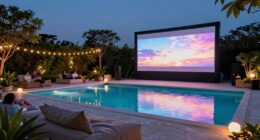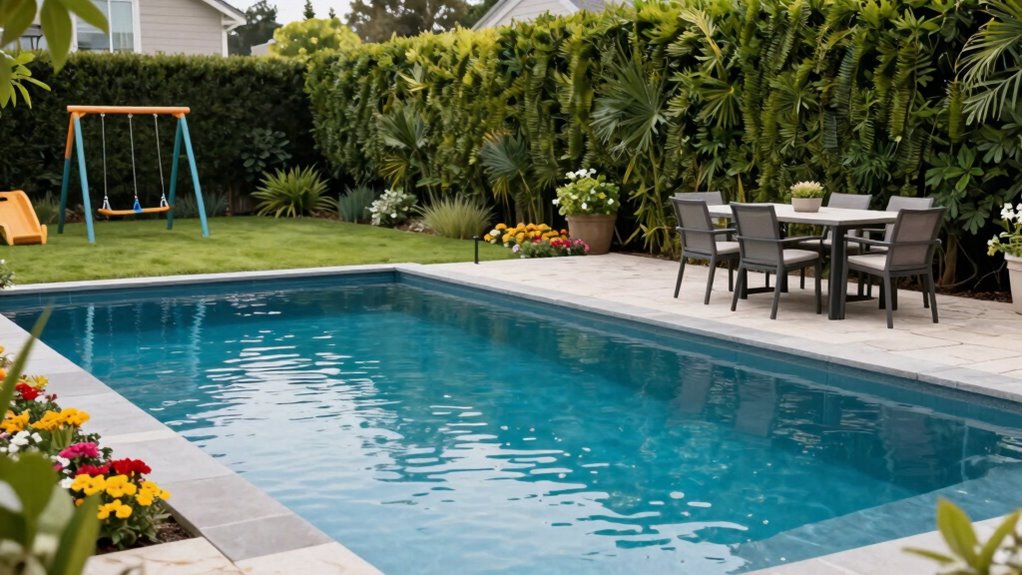

When designing a pool in a shared yard, you need to balance aesthetics, safety, and privacy while considering other activities like gardening or lounging. Use landscaping, fences, or privacy screens to create seclusion without blocking sunlight or disrupting flow. Place the pool thoughtfully to avoid crowding and make sure easy access to all areas. Incorporate safety features seamlessly into the design, and think about multi-use elements like shade structures. For practical tips on optimizing your yard, keep exploring.
Key Takeaways
- Integrate the pool seamlessly with existing landscaping to maintain aesthetic harmony and prevent space conflicts.
- Position the pool to maximize sunlight and shade, balancing it with other yard activities like gardening or dining.
- Use privacy screens, fencing, and landscaping to create secluded areas without obstructing shared space functionality.
- Incorporate safety features such as non-slip surfaces and visual boundaries to ensure security without disrupting design flow.
- Plan for multi-use zones by adding shade structures, seating, or play areas that complement the pool and other outdoor activities.
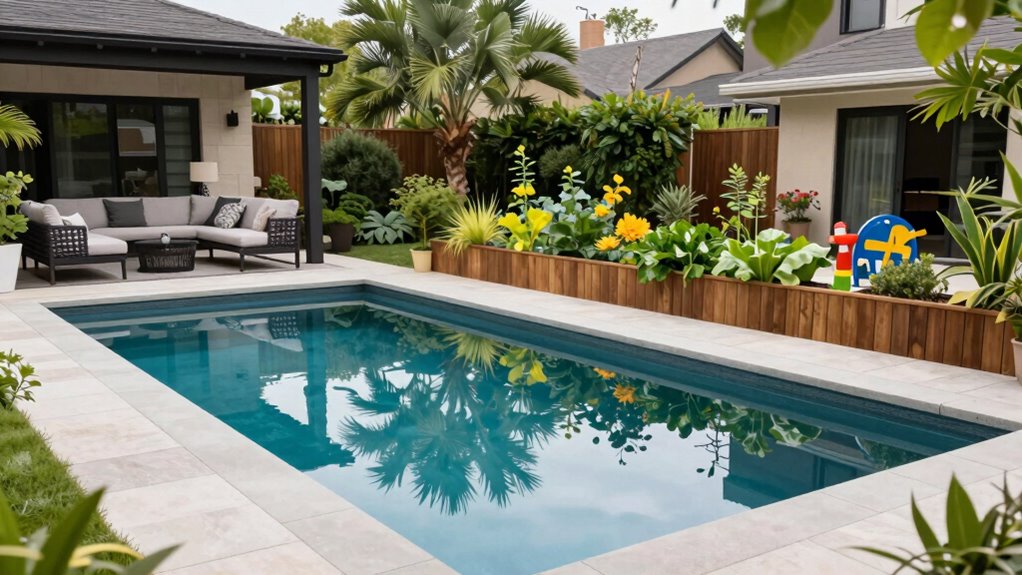
Creating a pool in a shared yard space can be be a rewarding project, but it requires careful planning to guarantee it fits seamlessly into the existing environment. You’ll need to contemplate how the pool interacts with the surrounding landscape, ensuring landscaping harmony that complements the entire yard. Think about how trees, shrubs, and lawn areas can frame the pool, creating a natural flow that enhances visual appeal without overwhelming other uses of the space. The goal is to make the pool feel like an integrated part of the yard, not an isolated feature that disrupts the overall aesthetic.
Since the yard is shared, privacy solutions become essential. You want to enjoy your pool without feeling exposed to neighbors or passersby. Tall hedges, fences, or privacy screens can serve as effective barriers, providing a sense of seclusion while also defining your personal space. These solutions don’t have to be plain or unattractive; they can be creatively incorporated into your landscaping to add visual interest and cohesion. For example, a living wall of climbing plants or a decorative wood fence can serve as both privacy and design elements, blending functionality with style. Additionally, considering landscape integration can help your pool blend more naturally into the overall yard design. Proper planning of cabling solutions and electrical safety measures is also vital to ensure your pool area remains functional and secure. Incorporating appropriate safety measures will help protect your family and ensure compliance with local regulations.
When designing your pool, you should also think about how it impacts other yard activities. If the space is used for gardening, play, or outdoor dining, plan the pool placement carefully to avoid crowding or creating friction between different zones. Position the pool where it maximizes sunlight exposure but also offers shade options for hot days. You might also want to incorporate features like built-in seating, shade structures, or pergolas nearby to make the area more versatile and comfortable.
Another key consideration is ensuring safety and minimizing disturbance to your neighbors. A well-designed pool area with appropriate fencing, non-slip surfaces, and clear boundaries helps prevent accidents and maintains good neighborly relations. Keep in mind that shared spaces often come with local regulations or homeowners’ association guidelines, so check these before finalizing your plans. Additionally, understanding content formats can help you explore innovative ways to make your pool area more engaging and adaptable to various uses.
As an affiliate, we earn on qualifying purchases.
Frequently Asked Questions
How Can I Ensure Privacy With a Shared Yard Pool?
To guarantee privacy with a shared yard pool, you should install privacy screens around the pool area. These could be tall fencing or decorative panels that block views from neighbors. Additionally, use landscaping barriers like shrubs, trees, or hedges to create a natural privacy wall. Combining these strategies helps you enjoy your pool without feeling exposed, while also enhancing the yard’s aesthetic and providing a peaceful retreat.
What Safety Measures Are Essential in Shared Yard Pool Areas?
A stitch in time saves nine, so prioritize safety in your shared yard pool area. Install proper pool lighting to guarantee visibility at night, and keep a close eye on water temperature to prevent accidents like hypothermia or overheating. Always have safety equipment nearby, such as life rings and a first aid kit. Regularly check the area for hazards, and establish clear rules for all users to stay safe and enjoy the pool responsibly.
Who Is Responsible for Pool Maintenance in Shared Spaces?
In shared yard spaces, pool ownership usually falls on all users or a designated individual, depending on your agreement. Maintenance responsibilities often include cleaning, chemical balancing, and equipment upkeep. You should clarify these responsibilities upfront to avoid confusion or disputes. Regularly coordinate with others to guarantee the pool remains safe and clean. Assigning clear maintenance duties helps everyone enjoy the space without concerns about neglect or safety hazards.
How Can Noise Be Minimized Around a Shared Pool?
Think of your pool as a calm lake amidst a bustling landscape. To minimize noise, install soft pool lighting that glows gently without disrupting neighbors, and add water features like fountains or waterfalls that mask sounds with soothing water flow. Keep conversations at a low volume and consider soundproof barriers or dense plantings around the pool area. These steps help preserve peace, turning your shared space into a tranquil retreat.
Are There Specific Regulations for Installing a Pool in Shared Yards?
Yes, there are specific regulations for installing a pool in shared yards. You need to check local zoning restrictions, which often dictate pool placement, fencing requirements, and safety measures. Also, make sure your pool stays within your property boundaries to avoid disputes. Contact your local zoning office or homeowners’ association to get the exact rules for your area, so you can install your pool legally and safely.
As an affiliate, we earn on qualifying purchases.
Conclusion
When designing a pool in a shared yard, think of it like fitting a puzzle piece—you want everything to work harmoniously. Prioritize versatile layouts, use fencing for privacy, and choose multi-purpose elements to maximize space. With thoughtful planning, your yard becomes a seamless retreat rather than a crowded area. By balancing style and function, you’ll create a backyard oasis that feels as natural as a calm lake, even in a busy shared space.
outdoor shade structures for pool
As an affiliate, we earn on qualifying purchases.
As an affiliate, we earn on qualifying purchases.
landscape privacy screens for yard
As an affiliate, we earn on qualifying purchases.
As an affiliate, we earn on qualifying purchases.