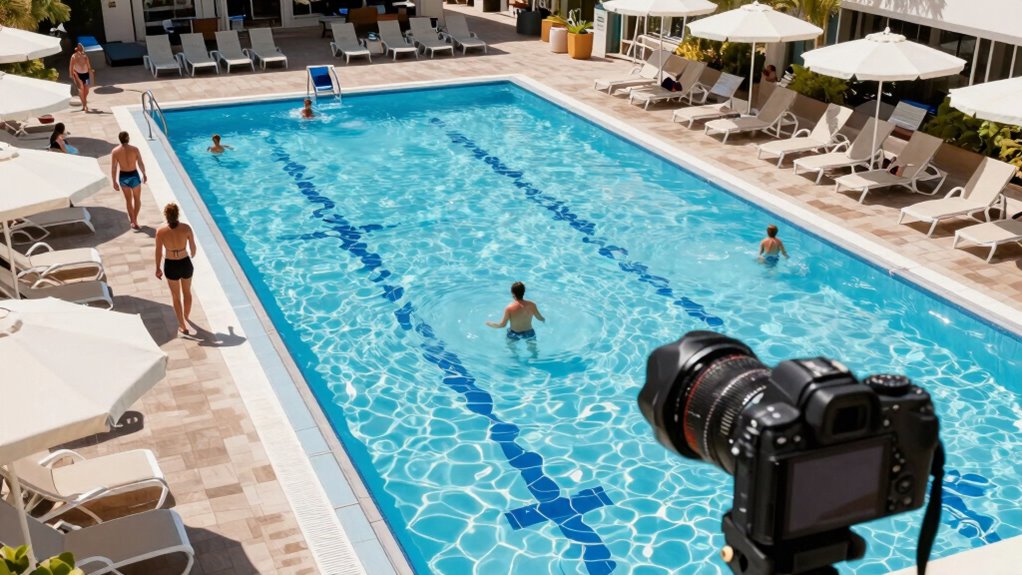

To optimize public pool user flow and space planning, you need to guarantee lifeguard stations are highly visible and accessible near entry points. Design water slides and zones with clear pathways, signage, and safety barriers to guide visitors smoothly and prevent congestion. Understanding how people move helps you organize zones for different age groups and activities, reducing interference and improving safety. Continuing with these principles can help you create a more efficient, enjoyable environment for all visitors.

Get pool and patio gear delivered free with Prime
- Fast, free delivery on millions of items
- Prime Video, Amazon Music and more included
- Member-only deals all year
Key Takeaways
- Design lifeguard stations for high visibility, easy access, and quick emergency response, while avoiding obstruction of pathways or views.
- Position water slides and attractions to attract visitors, ensuring safe queuing, loading areas, and unobstructed access to other amenities.
- Analyze user movement patterns to optimize zone separation, pathway width, and signage, reducing congestion and improving flow.
- Use visual cues, color coding, and clear signage to guide visitors between zones, minimizing confusion and enhancing safety.
- Incorporate flexible open spaces and conduct regular reviews to adapt to changing needs, weather, or new features for better flow management.
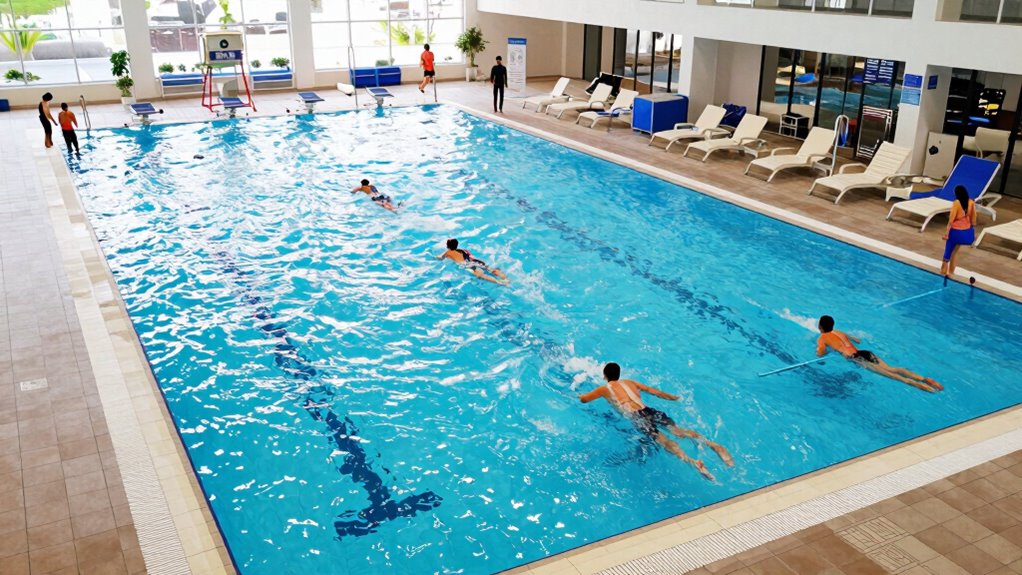
Effective public pool design hinges on understanding how users move through the space, guaranteeing safety, efficiency, and a positive experience. When planning your pool layout, pay close attention to the placement of key features like the lifeguard station and water slide design. These elements considerably influence how people navigate the area and how smoothly operations run. Your goal is to create a flow that minimizes congestion while maximizing safety and enjoyment.
Start by positioning the lifeguard station strategically. It should be highly visible from all major areas but not obstruct pathways or views. A well-placed lifeguard station allows staff to monitor the entire pool efficiently, respond quickly to emergencies, and maintain a sense of security among visitors. Consider the natural flow of foot traffic when placing the station—near entry points and busy zones—so lifeguards can cover maximum ground without excessive movement or blind spots. Incorporating user flow principles during the planning process can further enhance overall safety and efficiency. Additionally, understanding how user behavior impacts flow can help tailor the layout to actual visitor patterns. Recognizing typical movement patterns can lead to more intuitive space arrangements that better serve the needs of all users.
Water slide design is another critical aspect of user flow. Slides tend to attract a lot of attention, drawing visitors into specific zones. When planning their placement, guarantee there’s enough space for safe queuing, loading, and unloading. The slide’s position should not block access to other amenities or create bottlenecks on pathways. Instead, design clear, designated routes that guide users smoothly from the slide area to other parts of the pool, such as lounging zones or shallow play areas. Effective signage and barrier controls can help manage flow, preventing overcrowding at the slide and ensuring safety at all times. Incorporating visual cues and signage can significantly improve navigation and reduce confusion among visitors.
As you develop your space plan, keep in mind the importance of separate zones for different purposes. For example, adult swimmers, families with children, and those seeking relaxation should each have designated areas that don’t interfere with one another. Pathways connecting these zones should be wide enough to accommodate expected traffic and include visual cues like signage or color coding to guide users intuitively. This way, you reduce confusion and prevent congestion, especially during peak times.
Additionally, incorporating proper signage and visual cues can greatly enhance user flow and safety by providing clear directions and information throughout the pool area. Finally, always leave room for flexibility. Pools are dynamic environments, and user flow can change based on weather, special events, or new features you add later. Incorporate wide corridors and open spaces to adapt as needed, and regularly review your layout to identify and address potential bottlenecks. Thoughtful space planning, combined with strategic placement of the lifeguard station and water slide, ensures your public pool remains a safe, enjoyable, and efficiently operated space for everyone.
Products Worth Considering
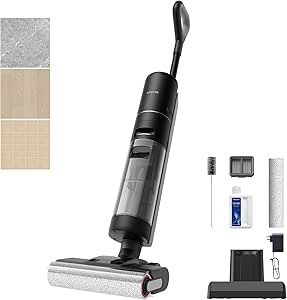
Dreame G10 Pro Wet and Dry Vacuum Mop

TCL 65 Inch QM8L Series SQD-Mini LED QLED 4K Smart Google TV

TCL 65-Inch QM6K QLED Mini-LED 4K HDR Smart Google TV, 144Hz
As an affiliate, we earn on qualifying purchases.
Frequently Asked Questions
How Do Weather Conditions Affect Pool User Flow?
Weather conditions greatly influence your pool’s user flow. During certain weather patterns, like hot summer days, more people flock to the pool, increasing congestion. Conversely, seasonal shifts, such as cooler months, reduce attendance, allowing for easier space management. You should plan for these fluctuations, adjusting staffing and facilities accordingly, to guarantee a smooth experience. Keeping an eye on weather forecasts helps you anticipate changes and optimize your pool’s capacity and safety.
What Safety Measures Influence Space Planning Decisions?
Safety measures are the guiding stars in your space planning. You must guarantee water filtration systems keep the water crystal clear and safe, like a shield against germs. Emergency exits should be like open gates, easily accessible and unobstructed for quick escape if needed. These elements help create a safe environment, guiding your design decisions and ensuring swimmers feel secure, so everyone can enjoy the water without worry.
How to Balance Adult and Children’s Pool Areas?
To balance adult and children’s pool areas, you should strategically position lifeguards near both zones to guarantee safety, while thoughtfully planning water feature placement to enhance each space’s appeal. Keep the adult area more secluded for relaxation, and make the children’s zone lively and engaging. Use clear signage and barriers where needed, maintaining a safe, enjoyable environment for all users. Regularly assess user flow to make adjustments as needed.
What Role Does Accessibility Play in Pool Design?
Accessibility plays a vital role in pool design because you want everyone to enjoy the water without a hitch. By prioritizing inclusive design and ADA compliance, you make certain that people with disabilities can easily access and navigate the space. Think of it as opening the door to all users, creating a welcoming environment. Making thoughtful adjustments, like ramps and accessible pathways, guarantees your pool is inviting and safe for everyone.
How Does Seasonal Variation Impact User Flow Management?
Seasonal variation greatly impacts user flow management by increasing crowd density during peak hours in warmer months. You should plan for higher attendance and adjust staffing, signage, and entry points accordingly. During off-peak seasons, reduce congestion by encouraging staggered visits or promoting alternative activities. Being proactive helps maintain safety, comfort, and smooth movement, ensuring everyone enjoys the pool regardless of seasonal fluctuations.
Conclusion
By understanding user flow and smart space planning, you’ll create a public pool that feels welcoming and efficient. Some might worry about added complexity or costs, but the benefits—happy visitors and smoother operations—far outweigh the initial effort. With thoughtful design, you’ll reduce congestion, enhance safety, and guarantee everyone enjoys the pool experience. Don’t let concerns hold you back; investing in good planning pays off in happy users and a thriving facility.