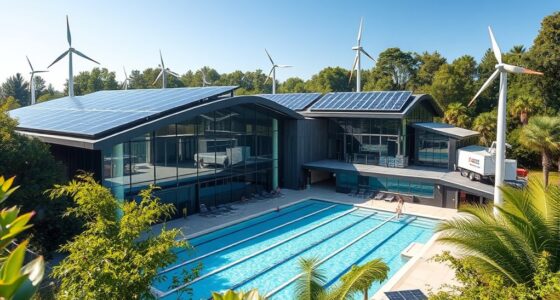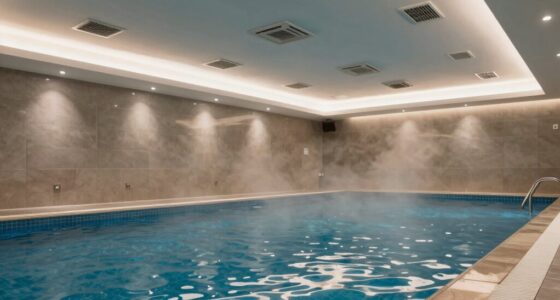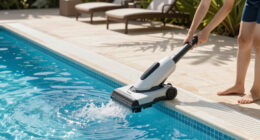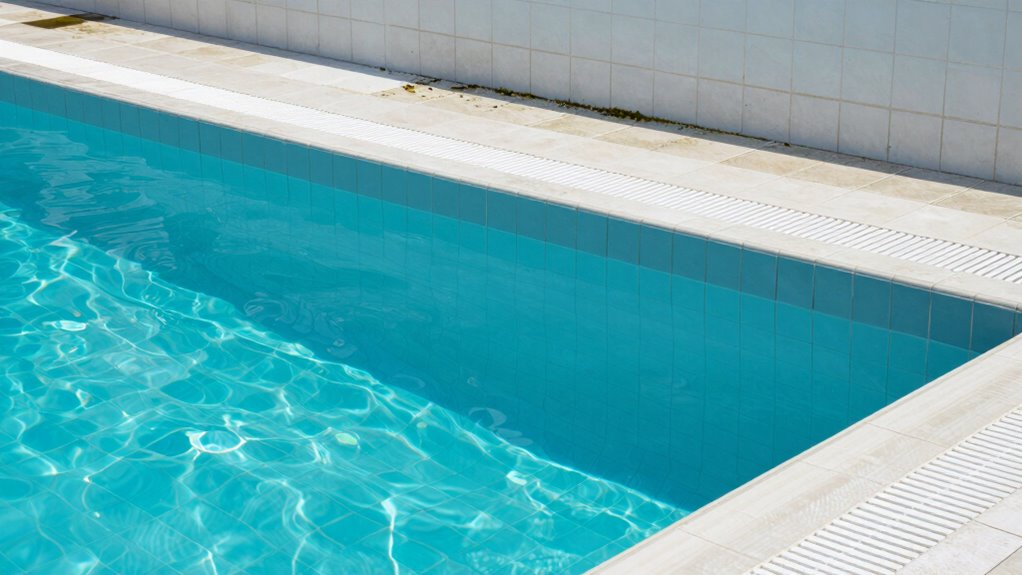

Public pools face higher visitor volumes and longer hours, demanding more rigorous maintenance to keep water safe and clear. You must regularly monitor and adjust chemical levels precisely to prevent issues like algae or bacteria. Stronger, more reliable equipment and advanced systems are essential to handle this heavier load. If you want to learn how tailored maintenance strategies can improve your pool’s safety and performance, keep exploring these differences.
Open a free Amazon Business account
Business pricing, bulk buying and tax-exempt orders.
As an affiliate, we earn on qualifying purchases.
Key Takeaways
- Public pools experience higher usage, requiring more frequent and precise chemical balancing to maintain water safety.
- Enhanced equipment robustness and capacity are necessary to handle increased visitor volume and prevent system failures.
- Automated monitoring and chemical dosing systems are vital for consistent water quality in busy public pools.
- Infrastructure must be more resilient and well-integrated to support continuous operation and quick maintenance responses.
- Maintenance strategies must prioritize reliability and durability to minimize downtime and ensure safety during peak usage.
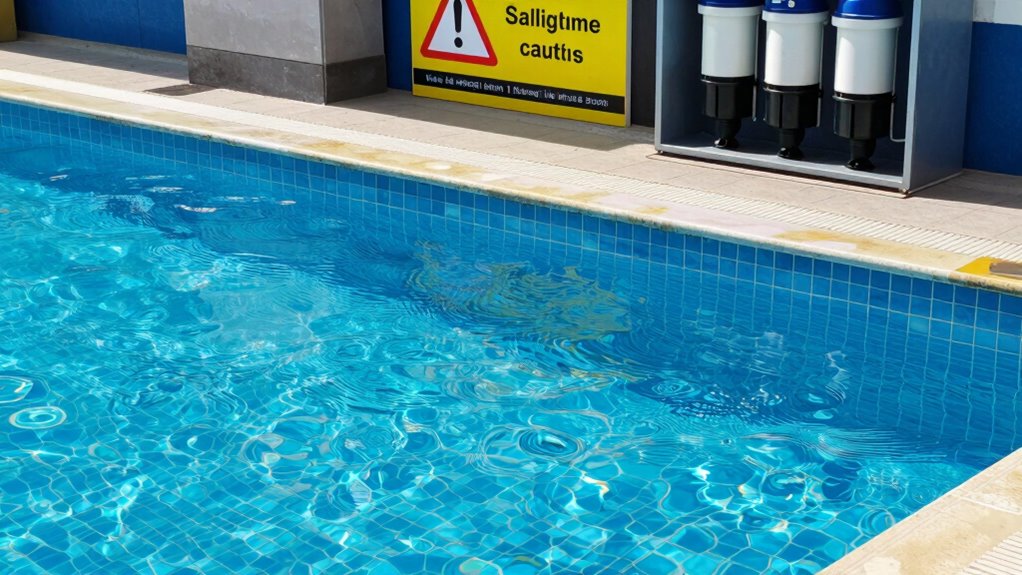
Are there significant differences between maintaining a public pool versus a commercial pool? Absolutely. While both require regular upkeep to guarantee safety and cleanliness, the scale and usage patterns mean you need to approach maintenance differently. Public pools are often open for longer hours and see a higher volume of visitors daily, which puts more stress on your equipment and water quality. This continuous use demands meticulous chemical balancing because even minor imbalances can quickly lead to cloudy water, algae growth, or bacteria proliferation. You’ll need to monitor pH levels, chlorine, alkalinity, and other chemical parameters more frequently and precisely to keep the water safe and inviting. Failing to do so risks health hazards and potential shutdowns, so your attention to chemical balancing becomes critical.
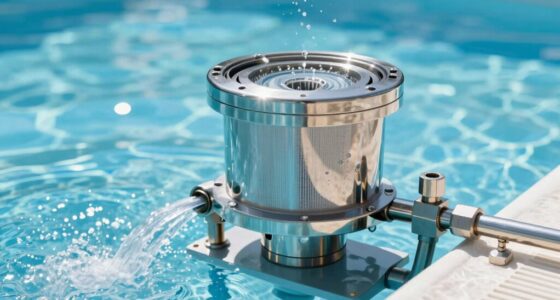
When it comes to equipment upgrades, public pools demand more robust, durable systems. You might need higher-capacity filtration systems, faster circulation pumps, and automated chemical dosing equipment to handle the high throughput of swimmers. Upgrading equipment isn’t just about capacity; it’s also about reliability. Equipment failure in a public or commercial setting can disrupt operations, create safety issues, and damage your reputation. Investing in high-quality, resilient equipment ensures consistent performance, reduces downtime, and simplifies maintenance routines. Additionally, modern equipment often comes with smart technology that allows you to monitor water quality remotely, making it easier to respond swiftly to any issues. Incorporating advanced monitoring technology can significantly enhance your maintenance efficiency. It’s also essential to consider cabling solutions and proper installation techniques to support these advanced systems effectively. Properly planned infrastructure, including system integration, can prevent system failures and extend the lifespan of your equipment.
public pool chemical testing kit
As an affiliate, we earn on qualifying purchases.
As an affiliate, we earn on qualifying purchases.
Frequently Asked Questions
How Does Usage Frequency Affect Pool Chemical Balancing?
Usage frequency directly impacts your pool’s chemical balancing because higher use causes more chemical fluctuations. When the pool is used often, pH levels can shift quickly, risking instability. You need to monitor chemical stability carefully and adjust treatments promptly to counteract pH fluctuations. Regular testing and balancing ensure safe, clean water, especially in busy public or commercial pools where consistent chemical management is crucial for swimmer safety and equipment longevity.
What Are the Specific Safety Standards for Commercial Pools?
You must follow strict safety standards for commercial pools, including maintaining water temperature within safe ranges and guaranteeing lifeguard safety. Regulations require proper filtration, chemical levels, and emergency equipment. You’re responsible for regular training and clear signage to protect swimmers. By adhering to these standards, you prevent accidents, promote safety, and ensure a secure environment, making sure your pool meets all legal and health requirements.
How Often Should Public Pools Undergo Deep Cleaning?
Think of your pool as a living entity needing regular care. You should deep clean a public pool at least once every 1-3 months, depending on usage, to combat pool algae and prevent chemical corrosion. Heavy traffic and environmental factors make frequent cleaning essential to maintain water clarity and safety. Regular deep cleaning keeps your pool healthy, safe, and inviting, preventing issues before they turn into costly repairs or health hazards.
What Are the Best Filtration Systems for High-Traffic Pools?
For high-traffic pools, you should opt for advanced filtration systems like high-capacity sand filters or cartridge filters, which enhance filtration efficiency and maintain water clarity. These systems are designed to handle large volumes of water and frequent use, ensuring contaminants are effectively removed. Regular maintenance and timely backwashing or cartridge replacement keep the filters working best, helping you preserve water clarity and providing a safe, inviting environment for swimmers.
How Do Maintenance Costs Compare Between Public and Commercial Pools?
Back in the day, maintenance costs for public pools often outpaced those of commercial pools. Today, you’ll find public pools demand higher expenses due to larger sizes and increased usage. You focus on chemical stability and regular upkeep, which drive costs. A thorough cost analysis shows public pools need more frequent treatments, higher chemical consumption, and more intensive filtration, making their maintenance budget substantially higher than that of commercial pools.
automatic pool chemical dosing system
As an affiliate, we earn on qualifying purchases.
As an affiliate, we earn on qualifying purchases.
Conclusion
You might think one-size-fits-all maintenance suffices, but public and commercial pools face unique challenges that demand tailored approaches. Overlooking these differences can lead to costly repairs, safety issues, and unhappy users. Imagine a clean, safe pool that attracts more visitors—it’s achievable when you comprehend each pool’s specific needs. By customizing your maintenance plan, you guarantee longevity, safety, and satisfaction, making your pool a welcoming, worry-free oasis for everyone who dives in.
high capacity pool filtration system
As an affiliate, we earn on qualifying purchases.
As an affiliate, we earn on qualifying purchases.
pool water quality monitoring system
As an affiliate, we earn on qualifying purchases.
As an affiliate, we earn on qualifying purchases.
Fall yard work Picks
leaf blowers
As an affiliate, we earn on qualifying purchases.