Pool alarms are a helpful safety feature, but they work best when combined with supervision and physical barriers like fencing and covers. You shouldn’t rely solely on alarms since they can malfunction or be triggered by accidents. Continuous supervision and secure barriers are essential to prevent accidents, especially with children around. When you keep these measures in place together, you create a stronger safety net. Keep exploring to discover how to integrate all these strategies effectively.
Key Takeaways
- Pool alarms provide quick alerts but should be used with supervision and physical barriers for comprehensive safety.
- Constant adult supervision remains the most effective method to prevent pool accidents involving children.
- Physical barriers like fencing and covers prevent unauthorized access, reducing reliance solely on alarms.
- Regular maintenance and proper installation ensure alarms function correctly as part of a layered safety system.
- Combining alarms with other safety measures, including supervision and emergency preparedness, offers stronger overall protection.
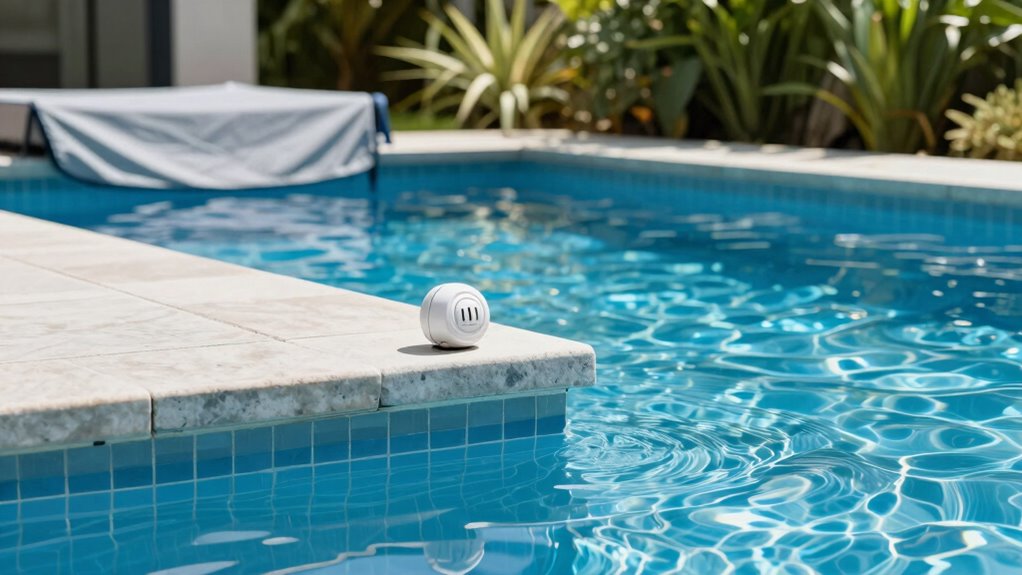
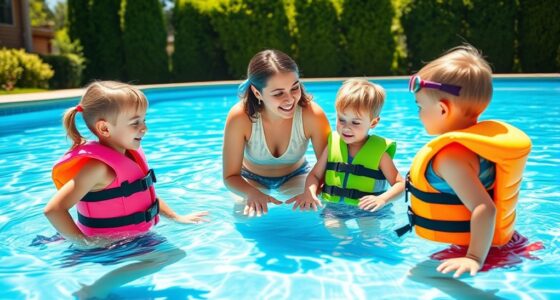
Have you ever wondered how to keep your pool safe for everyone? It’s a common concern, especially when you want to enjoy your backyard without worry. One essential aspect is understanding that pool alarms are only one layer of protection. They shouldn’t be relied on alone but should be part of a thorough safety plan that includes child supervision and safety equipment. Pool alarms are designed to alert you when someone enters the water unexpectedly, but they aren’t foolproof. A child could accidentally trigger the alarm and still fall in without immediate adult intervention, or the alarm might malfunction. That’s why supervision remains the most effective way to prevent accidents. You need to be constantly attentive, especially when children are around, making sure they stay away from the pool unless supervised. Always designate a responsible adult to watch over kids near the water—never rely solely on the alarm to do that job.
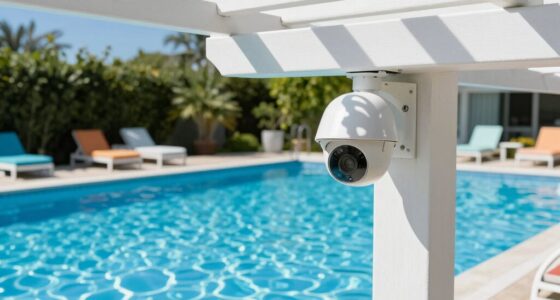
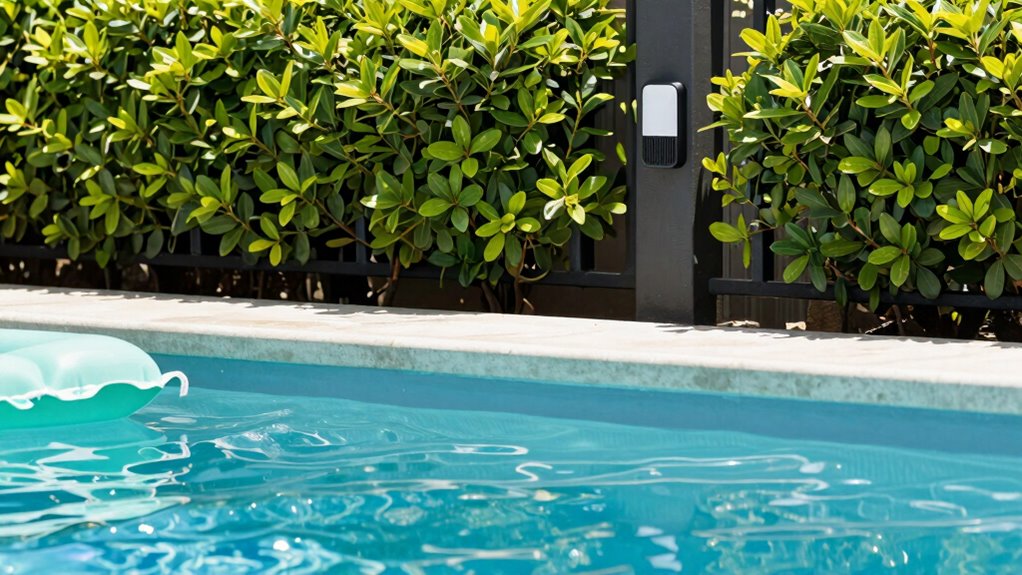
In addition to supervision, safety equipment plays a key role. Items like pool covers, fencing, and self-closing gates create physical barriers that keep children out of the pool area when not supervised. These barriers are essential because they reduce the likelihood of unauthorized or accidental access. Pool alarms can complement these measures by providing an extra warning if a barrier is bypassed or fails. For example, a door alarm on the pool gate can notify you immediately if someone enters the area unexpectedly. Safety equipment isn’t just about preventing falls; it also includes life-saving devices like life rings, reaching poles, and CPR training. Knowing how to use this equipment quickly can make a difference in an emergency. Additionally, understanding pool safety systems and how they work can help you choose the best combination of alarms, barriers, and supervision to protect your loved ones. Regular maintenance and testing of these systems are crucial to ensure they function properly when needed. Proper installation and maintenance of these systems are equally vital to ensure they function correctly when needed. Regularly reviewing safety protocols ensures everyone in your household knows how to respond swiftly and effectively during an emergency. Incorporating comprehensive safety measures into your plan further enhances protection and peace of mind.
While pool alarms are helpful, they shouldn’t replace vigilant supervision or physical barriers. Think of alarms as an added layer of security to alert you instantly if something goes wrong, but they’re only effective when used alongside active supervision and safety equipment. Remember, children can be unpredictable, and accidents can happen in seconds. That’s why your focus should always be on constant child supervision and maintaining strong physical defenses. Incorporating alarms as part of your overall safety strategy, along with additional protective measures, can significantly reduce the risk of accidents.

Pool Alarm for Inground & Above Ground Pools,Adjustable Sensitivity Water Detection Alarms Covers 20x40ft,85dB+ Safety Alert for Kids,Pets & Accidental Entry,Weatherproof UV&Corrosion Resistant BU&GR
- Child and Pet Safety: Protects against unexpected water entry
- Easy Setup: No app or WiFi required
- Loud Audible Alarm: 85dB+ alert audible from 10 ft
As an affiliate, we earn on qualifying purchases.
As an affiliate, we earn on qualifying purchases.
Frequently Asked Questions
How Effective Are Pool Alarms in Preventing Drowning Incidents?
Pool alarms can be quite effective in preventing drowning incidents when they work properly. They utilize water detection sensors to identify unexpected entry or movement in the pool, alerting you instantly. However, alarm reliability varies depending on quality and maintenance. While they aren’t foolproof, combining pool alarms with active supervision and barriers creates a stronger safety system, giving you peace of mind and reducing risks around your pool.
Can Pool Alarms Be Used Underwater or Only on Surfaces?
Your pool alarm isn’t a superhero—so it can’t work underwater. Most alarms are surface-mounted and use underwater sensors to detect movement at the water’s surface. Alarm placement is essential; they’re typically installed on doors, windows, or the pool itself to alert you when someone enters or falls in. For underwater monitoring, specialized underwater alarms with submerged sensors are needed, ensuring you get real-time alerts even beneath the water’s surface.
Are There Specific Alarms Recommended for Children or Pets?
Yes, there are specific alarms designed for children and pets. Look for pool alarms with child-proof features and pet-safe alarms that emit gentle alerts or have sensitive sensors to prevent false alarms. These alarms help guarantee safety without causing unnecessary panic. Choose models that are easy to install and operate, providing peace of mind while keeping your loved ones protected around the pool.
How Often Should Pool Alarms Be Tested and Maintained?
You should test your pool alarm weekly to guarantee it functions correctly, especially since studies show that consistent alarm maintenance reduces accidental drownings. Follow a regular maintenance schedule, checking the alarm’s battery and sensors. Proper alarm installation is key, and routine testing confirms it’s working. By staying vigilant with your maintenance schedule, you make certain the alarm remains dependable, providing vital protection for children and pets around your pool.
Do Pool Alarms Comply With Local Safety Regulations or Standards?
You should verify that your pool alarm complies with local safety regulations and meets certification standards to guarantee legal compliance. Check with your local authorities or safety agencies to confirm that the alarm’s specifications align with required standards. Making sure your pool alarm is certified guarantees it’s effective and legally compliant, helping you avoid fines or liability issues. Regularly review standards, as regulations may update over time.
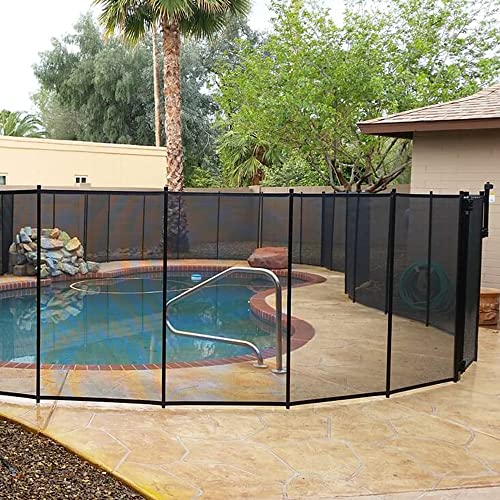
VINGLI Swimming Pool Fence 4Ft x 108Ft, Ground Safety Fencing, Black
- Material: Premium mesh fabric and aluminum
- Durability: Strong, crack-resistant, long-lasting
- Storage: Rolls up for easy storage
As an affiliate, we earn on qualifying purchases.
As an affiliate, we earn on qualifying purchases.
Conclusion
Remember, pool alarms are just one piece of the safety puzzle, like a sturdy fence in a backyard. They help catch accidents early but shouldn’t be your only defense. Combine alarms with vigilant supervision, proper barriers, and safety skills to create a safer environment. Think of it as weaving a strong net—each layer catches potential dangers before they reach your loved ones. Together, these measures form a shield that keeps everyone protected and your mind at ease.
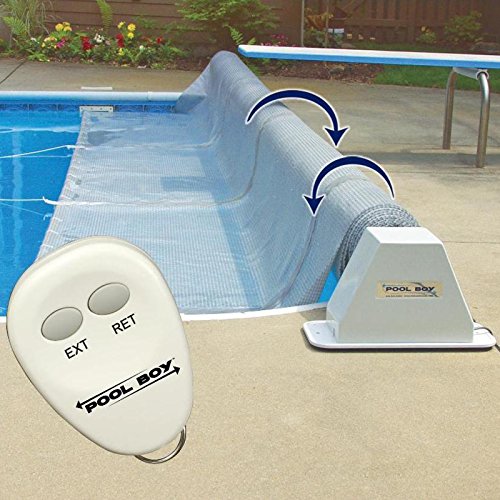
Pool Boy 1 Powered Pool Solar Blanket Reel – Extends and Retracts on The Click of a Button – Works on Inground Pools Up to 20 Feet Wide and 40 Feet Long – Made in The USA – 3 Year Prorated Warranty
- Adjustable hub size: 4 to 9 inches adjustable
- Pool size compatibility: Fits pools up to 20×40 ft
- Diving board clearance: Adjustable hub for diving boards
As an affiliate, we earn on qualifying purchases.
As an affiliate, we earn on qualifying purchases.
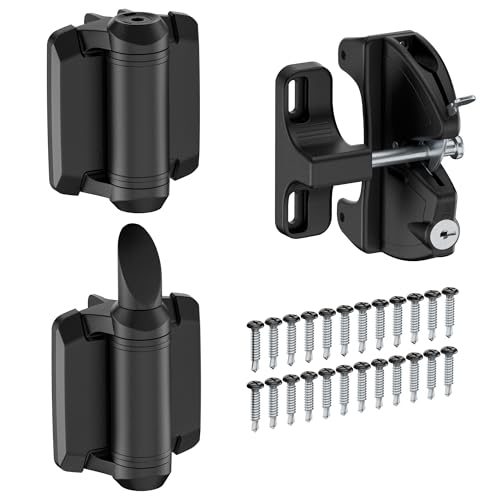
Self Closing Gate Hinges and Key Lockable 2 Sided Gate Latch Gate Hardware Kit,Two Sided Self Locking Gate Latch and No Rust Pool Gate Hinges for Outdoor Metal/Vinyl Fence,Locking Gate Door Lock Latch
- Double-Sided Locking: Key-lockable gate latch for both directions
- Adjustable Spring Tension: Customize closing speed and strength
- Safety Cap Design: Prevents toddler footholds on hinges
As an affiliate, we earn on qualifying purchases.
As an affiliate, we earn on qualifying purchases.