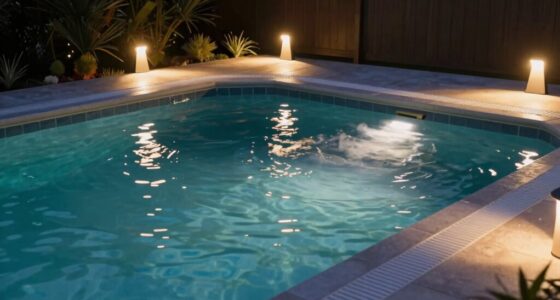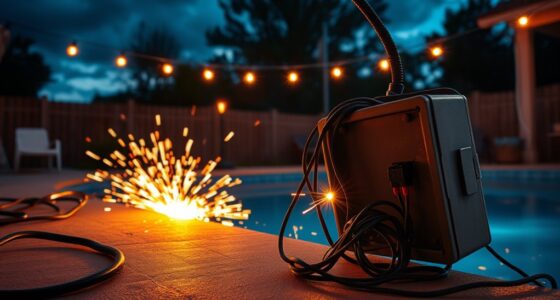
To guarantee your backyard is safety-ready, you should stage essential lifesaving equipment like life jackets, rescue poles, and ropes near water access points. Keep well-stocked first aid kits, waterproof communication devices, and fire safety tools like extinguishers and blankets within easy reach. Install proper signage, safety covers, alarms, and emergency lighting to prevent accidents and respond quickly. Keep everything maintained and visible—if you want detailed guidance, continue exploring these key safety essentials.

Get pool and patio gear delivered free — and shop member deals
- Fast, free delivery on millions of items
- Access to Prime Big Deal Days deals on October 6–7
- Prime Video, Amazon Music and more included
Key Takeaways
- Ensure water safety equipment like life jackets and rescue poles are accessible, properly maintained, and stored near water access points.
- Keep well-stocked first aid kits and waterproof emergency communication devices for quick response.
- Place fire extinguishers, blankets, and clear signage in visible, easily reachable locations for fire safety.
- Install safety barriers, alarms, and rescue tools around pools and water areas to prevent accidents and aid rescue efforts.
- Use emergency lighting, perform regular safety equipment checks, and maintain signage to ensure readiness during emergencies.
First Aid Supplies
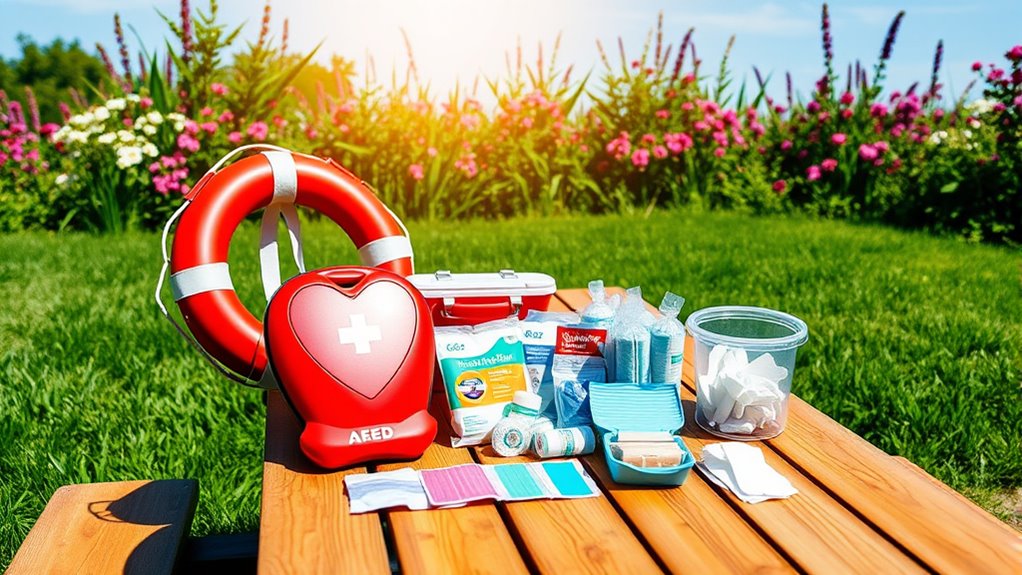
Having the right first aid supplies on hand is essential for responding quickly and effectively to emergencies. You should keep a well-stocked first aid kit in an accessible location, like your garage or shed. Include essentials such as adhesive bandages in various sizes, sterile gauze, and adhesive tape to control bleeding and cover wounds. Antiseptic wipes and antibiotic ointment help prevent infections, while scissors and tweezers make it easier to remove debris and cut gauze. Don’t forget to add disposable gloves to protect yourself and others. Keep pain relievers, allergy medications, and cold packs nearby for quick relief. Regularly check and replenish supplies to guarantee everything remains usable. Being prepared with these essentials can make all the difference in managing minor injuries before professional help arrives.
Life Jackets and Personal Flotation Devices
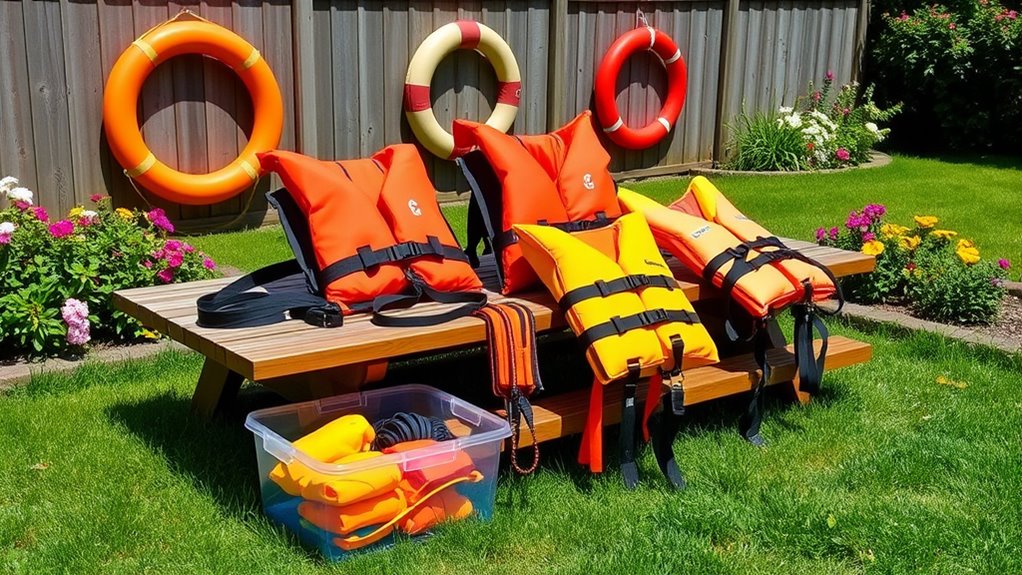
You need to guarantee your life jackets and personal flotation devices fit properly and are the right size for everyone on board. Keep them stored where they’re easy to access quickly in an emergency, so you’re never searching for them when it matters most. Regular maintenance checks will keep your equipment in top condition and ready to save lives. Ensuring your equipment is in good condition can help prevent sudden emergencies from turning tragic.
Proper Fit and Size
Ensuring a proper fit and size for life jackets and personal flotation devices is essential for safety on the water. When selecting a jacket, it should fit snugly without restricting movement or causing discomfort. Check that the straps and closures are secure and adjustable to accommodate different body types. The jacket should sit high on your chest and not ride up when you move or float. For children, size is critical—use weight and height guidelines to choose the right fit. An ill-fitting device can slip off or fail to provide adequate buoyancy. Always have everyone try on their life jacket before heading out, ensuring it stays securely in place. Properly fitted flotation devices are your first line of safety in an emergency. Additionally, understanding the contrast ratio of your projector can significantly enhance the clarity and depth of your displayed images, making your home cinema experience more immersive.
Easy Accessibility Storage
Storing life jackets and personal flotation devices in an easily accessible location is essential for quick retrieval during an emergency. Choose a designated spot near the pool, pond, or water access point where everyone knows to find them instantly. Use hooks, wall-mounted racks, or bins to keep the devices organized and visible. Make certain they’re not buried under other items or stored in hard-to-reach places. Clear signage can help remind everyone where to locate the equipment quickly. Regularly check that the storage area is unobstructed and that jackets are in good condition. Accessibility can be the difference between a swift rescue and wasted precious moments. Keep everything simple, visible, and always ready for immediate use when it matters most. Incorporating tuning principles like organization and quick access can enhance overall safety preparedness in your backyard setup.
Regular Maintenance Checks
Regular maintenance checks are essential to keep life jackets and personal flotation devices reliable and safe to use. You should inspect them regularly for any signs of wear, tears, or damage. Check the straps, buckles, and zippers to ensure they function properly and haven’t become brittle or broken. Make sure labels and safety instructions are still legible. Test the flotation material by pressing it to confirm it remains firm and buoyant; if it feels soggy or lumpy, replace the device. Store your equipment in a cool, dry place away from direct sunlight to prevent deterioration. Also, review the manufacturer’s guidelines for specific maintenance instructions. Performing these checks consistently guarantees your safety gear performs correctly when you need it most. Remember, fathers often emphasize the importance of safety and preparedness, which can inspire you to stay vigilant with your equipment.
Rescue Equipment for Water Safety
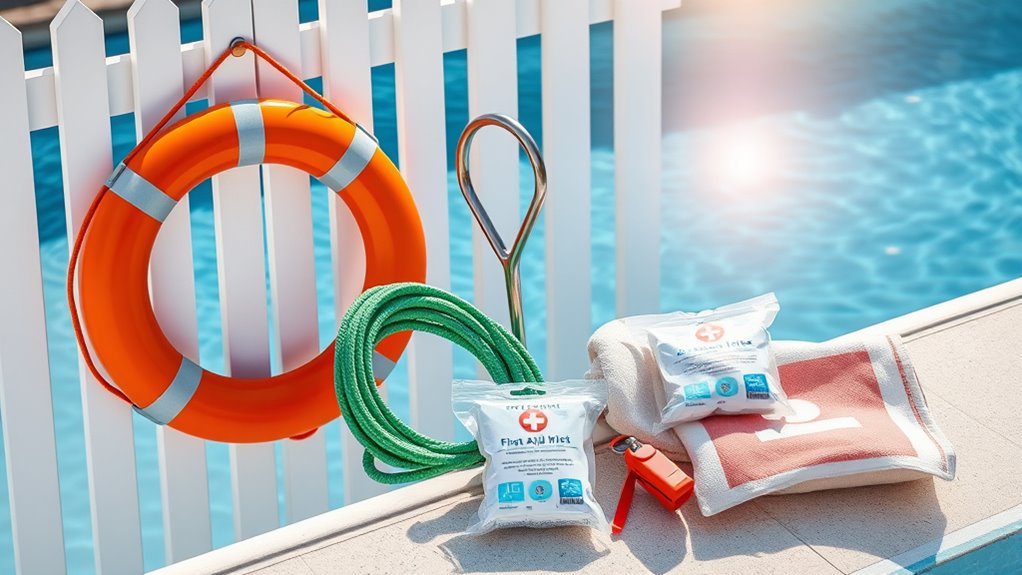
Having the right rescue equipment is vital for water safety. Life jackets, vests, rescue poles, and ropes can make the difference in saving someone in distress. Let’s explore how these tools help you respond effectively in emergencies. Proper safety solutions can significantly enhance your preparedness and response capabilities during water emergencies.
Life Jackets and Vests
Life jackets and vests are essential rescue tools that can mean the difference between life and death in water emergencies. They provide buoyancy, keeping you afloat until help arrives. When choosing jackets or vests, make certain they fit properly and are Coast Guard-approved for safety and reliability. Keep a variety of sizes for all family members, including children and pets. Regularly inspect them for damage, wear, or deterioration. Properly stored and easily accessible, they’re ready when needed. Remember, wearing a life jacket isn’t enough—it must be the right type and fit correctly. Recognizing angel numbers can also be a helpful reminder to stay alert and trust your intuition during water activities.
- Choose jackets with reflective strips for visibility
- Opt for bright colors to stand out in water
- Check for secure straps and fastenings
- Ensure they are comfortable enough to wear for extended periods
Rescue Poles and Ropes
Have you ever considered how rescue poles and ropes can make a critical difference in water emergencies? These tools are essential for reaching and pulling a person to safety quickly. Rescue poles extend your reach, allowing you to assist someone without putting yourself at risk. Ropes, especially when anchored securely, give you a reliable way to pull a struggling swimmer to safety or help them stay afloat. Make sure your rescue rope is strong, durable, and resistant to water damage. Keep rescue poles within easy reach near pools, docks, or ponds. Regularly inspect your equipment for wear and tear. Having these rescue tools on hand can mean the difference between a safe rescue and a tragedy. Staying aware of water safety protocols and practicing emergency response skills can further enhance your readiness. Stay prepared, and always prioritize safety.
Emergency Communication Devices

Are you prepared to communicate effectively in an emergency? Having reliable communication devices is vital for quick response and safety. Make sure you have a waterproof, fully charged cell phone or satellite phone to reach emergency services instantly. Consider installing a two-way radio or walkie-talkies for local communication, especially if cell service is unreliable. Keep a whistle on hand to attract attention if needed. Additionally, storing emergency contact numbers and a list of nearby medical facilities can save precious time. Incorporating antioxidants in your emergency kit can help protect your skin and health during stressful situations. These tools enhance your ability to alert others, coordinate rescue efforts, and stay connected until help arrives. Being prepared with the right communication devices can make all the difference during a backyard emergency.
Fire Extinguishers and Fire Safety Tools
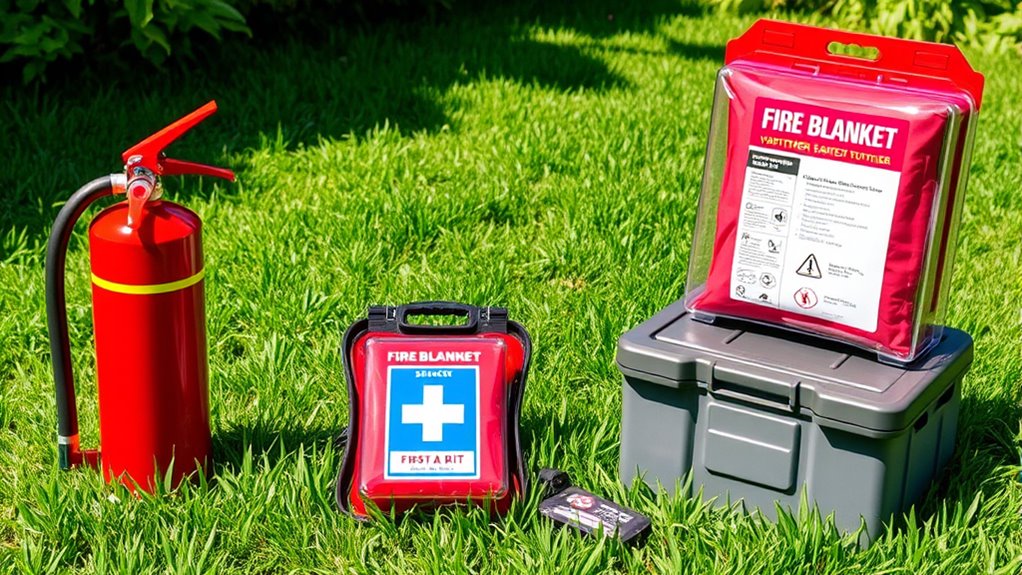
Fire extinguishers and fire safety tools are essential for preventing small fires from becoming emergencies. You should place them strategically around your backyard, especially near the grill, shed, and fire pit. Regularly check the pressure gauge and verify they’re fully charged. Keep a fire blanket nearby for quick access and a fire extinguisher within easy reach. Proper maintenance and understanding testing methodologies are key to ensuring these safety tools work effectively when needed. Stay proactive—fire safety tools are your first line of defense.
Safety Signage and Warning Labels
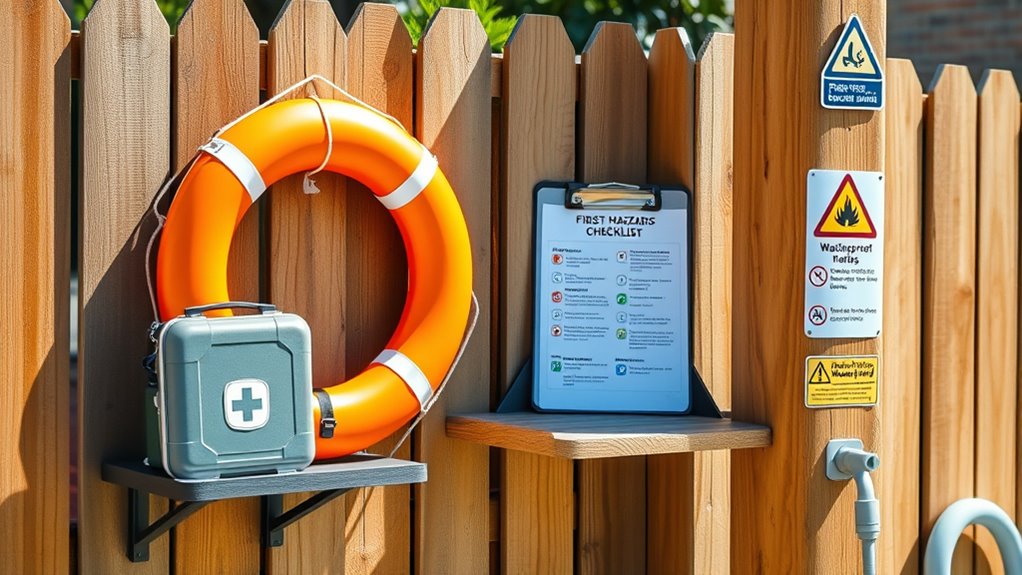
Safety signage and warning labels play a critical role in alerting you to potential hazards and guiding proper safety procedures. They provide immediate visual cues to help you recognize dangers and respond appropriately. Properly placed signs can prevent accidents before they happen, especially around equipment or areas with specific risks. Make sure your signs are clear, legible, and positioned where they’re easily seen. Labels should include instructions, warnings, and emergency contact information. Remember, effective signage promotes awareness, reinforces safety habits, and reduces confusion during emergencies. To maximize safety, regularly inspect signs and labels for damage or fading. Keep your signage updated and relevant to current hazards, ensuring everyone in your backyard understands the risks and knows how to stay safe. Incorporating safety standards into your signage ensures consistent and effective communication of hazards.
Pool and Water Area Safety Accessories

Having the right pool and water area safety accessories is essential for preventing accidents and ensuring everyone’s safety. You should equip your pool with rescue equipment like a reaching pole and a life hook, making it easier to assist someone in trouble. Keep a sturdy, waterproof first aid kit nearby to handle minor injuries quickly. Install safety covers and barriers to prevent unsupervised access, especially for young children. Consider installing alarm systems that alert you if someone enters the water unexpectedly. Floatation devices, such as life vests and pool noodles, provide extra security for swimmers of all skill levels. Regularly inspect these accessories to ensure they’re in good condition. Proper safety accessories help you respond swiftly and reduce potential hazards around your water area.
Emergency Lighting and Power Sources

Proper lighting is essential during emergencies to guarantee quick and safe responses around your water area. Without adequate illumination, you risk delays or accidents when seconds matter. Make certain you have reliable power sources that can operate even during outages. Consider installing battery-operated or rechargeable emergency lights that turn on automatically. Keep backup power options readily accessible and tested regularly. Additionally, portable flashlights and glow sticks can be lifesavers if main power fails. Remember to store these items in known, easy-to-access locations. Effective emergency lighting not only helps rescuers see clearly but also reassures everyone during stressful situations. * Battery-powered emergency lights
- Rechargeable flashlights
- Backup generator
- Glow sticks
Frequently Asked Questions
How Often Should Safety Equipment Be Inspected and Maintained?
You should inspect and maintain your safety equipment at least once a month to guarantee it’s in good working order. After each use, check for damage or wear and replace or repair as needed. Regular maintenance keeps your equipment reliable and ready for emergencies. Don’t forget to test safety devices like smoke alarms and fire extinguishers annually, and follow manufacturer instructions for specific maintenance guidelines.
Are There Specific Safety Standards for Backyard Lifesaving Equipment?
Yes, there are specific safety standards for backyard lifesaving equipment. You should follow guidelines from organizations like the American Red Cross or ASTM International, which cover proper equipment selection, placement, and maintenance. Confirm flotation devices, life rings, and other safety gear meet these standards. Regularly check for damage, proper functioning, and accessibility to keep your backyard safe. Adhering to these standards helps prevent accidents and ensures quick response during emergencies.
What Training Is Recommended for Effective Emergency Response?
You should get trained in CPR and basic first aid to respond effectively in emergencies. Consider taking certified courses from organizations like the Red Cross or American Heart Association. Practice using lifesaving equipment regularly to stay confident. Remember, quick and correct action can save lives, so staying educated and prepared is essential. Keep your skills current by revitalizing your training annually or as recommended by certification providers.
How Can I Ensure Children Understand Water Safety Rules?
Have you ever wondered how to make water safety rules stick? You can guarantee children understand by keeping lessons simple, clear, and consistent. Use engaging activities and demonstrations to show them the importance of rules like no running near the pool or never swimming alone. Reinforce these messages regularly and model safe behavior yourself. Will you make water safety a fun, ongoing part of their playtime?
What Are the Legal Requirements for Backyard Safety Equipment?
You need to comply with local safety laws, which typically require fencing around pools, self-closing gates, and safety covers. You should also have appropriate lifesaving equipment, such as life rings, reaching poles, and a first aid kit, easily accessible. Regularly inspect and maintain this equipment to guarantee it’s functional. Always stay informed about updates in regulations to keep your backyard safe and legally compliant.
Conclusion
By keeping these lifesaving items on hand, you might find yourself better prepared for unexpected emergencies. It’s funny how a simple checklist can make a huge difference, turning your backyard into a safe haven. When you least expect it, having the right equipment nearby could be the moment that saves a life. So, take a quick look around—sometimes, the smallest safety measures turn coincidence into confidence.
Fall Picks
fall essentials
As an affiliate, we earn on qualifying purchases.