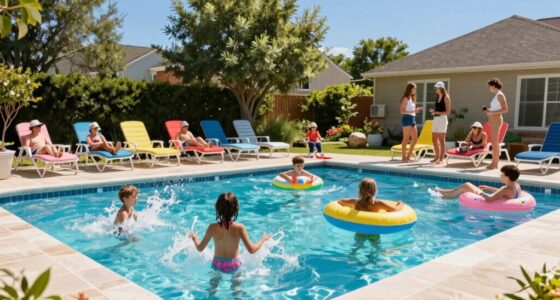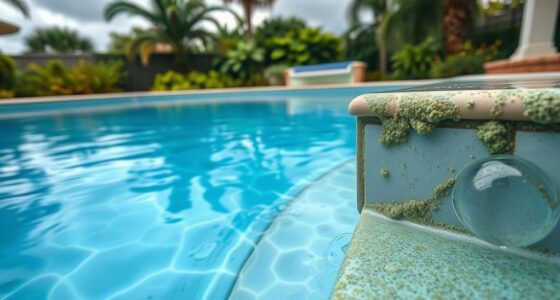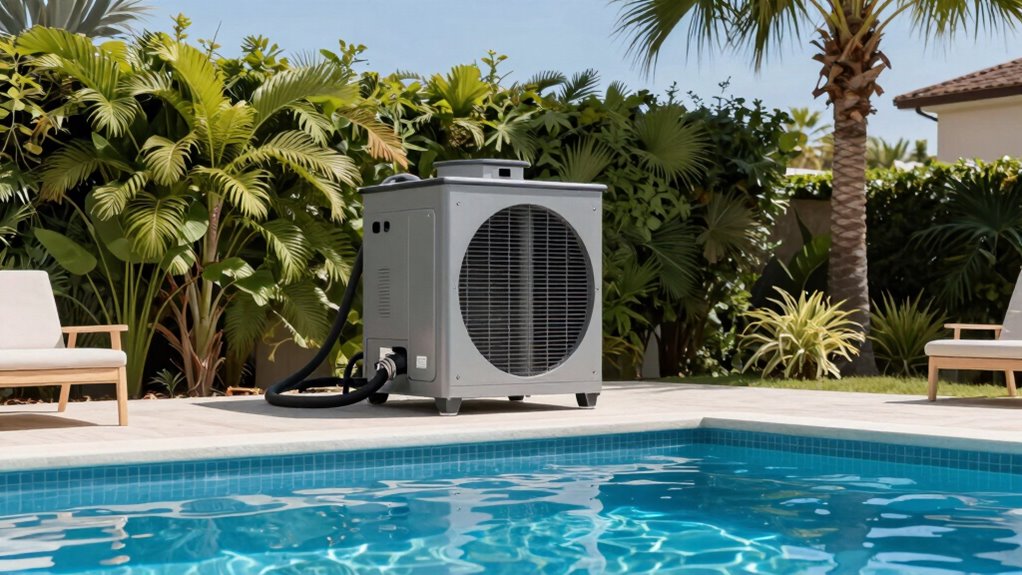

Pool chillers make more sense in hot, humid climates where they help prevent water from becoming uncomfortably warm. In cooler regions, they mainly extend swimming seasons and keep water temperature steady. Energy-efficient and solar-powered options further improve their value in suitable climates. If you want to discover how climate influences chiller choices and find the best system for your location, keep exploring the details that follow.
Key Takeaways
- Hot, humid regions require chillers to prevent water from overheating and ensure comfort.
- Cooler climates use chillers mainly to extend swimming seasons and maintain consistent temperatures.
- Energy-efficient and solar-powered chillers are more beneficial in regions with abundant sunlight.
- Climate-specific needs influence whether chillers are a practical and cost-effective solution.
- In cooler areas, chillers focus on temperature regulation rather than cooling, making them more suitable.
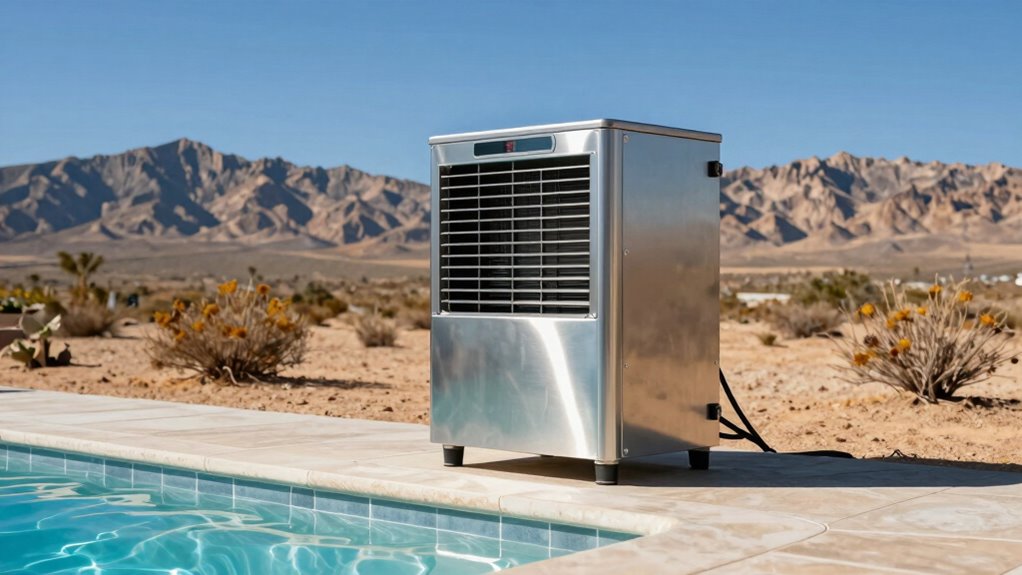
Whether you live in a hot, humid region or a cooler, temperate climate, choosing the right pool chiller can make a notable difference in maintaining comfortable water temperatures. In warmer areas, where the sun beats down relentlessly and air temperatures soar, a pool chiller helps prevent your pool from becoming uncomfortably hot. Cooler climates might not require a chiller for cooling, but if you want to extend your swimming season or keep the water at a consistent, inviting temperature, investing in a good system can be worthwhile. Modern pool chillers often incorporate energy efficient technologies that help reduce operating costs, making them more sustainable and affordable over time.
Additionally, solar powered systems have gained popularity as an eco-friendly way to operate pool chillers. They harness the abundant sunlight to power the cooling process, markedly lowering electricity bills and reducing your carbon footprint. If you’re in a region with ample sunlight, a solar-powered chiller can be an excellent choice, providing efficient cooling without adding to your energy expenses. These systems tend to be more expensive upfront but offer long-term savings and environmental benefits, especially in sunny climates.
In hotter climates, the need for a pool chiller becomes more apparent. When temperatures consistently hover above comfortable swimming levels, a chiller ensures your pool remains an oasis rather than a heat trap. Using energy efficient technologies, you can cool your water without skyrocketing your energy bills. Many modern chillers adapt to your pool’s specific needs, allowing you to set precise water temperatures and avoid unnecessary energy consumption. This is especially important if you’re concerned about sustainability or want to minimize your environmental impact. Understanding climate-specific needs can help you choose a system that offers the best balance of efficiency and functionality. Additionally, selecting a system with smart controls can optimize performance based on environmental conditions.
In cooler climates, pool chillers are often used less for cooling and more for temperature regulation, helping you extend your swimming season or maintain a consistent temperature regardless of weather fluctuations. Solar powered systems shine here too, as they can leverage seasonal sunlight to operate efficiently, reducing reliance on grid electricity. If you’re considering a pool chiller for variable climate conditions, look for models that incorporate smart, energy-efficient features. These systems optimize performance based on ambient temperatures and pool usage, ensuring you get the most out of your investment. Being aware of seasonal climate variations can help you select the most suitable and sustainable system for your needs.

Dialorys 79 Gallon 1/3HP Aquarium Chiller – Energy Efficient Fish Tank Water Chiller for Axolotl, Freshwater & Saltwater Tanks, Quiet & Durable, Model AL-300
Precise Temperature Control: Our 79 gallons aquarium chiller provides precise and consistent temperature control, keeping your aquarium water…
As an affiliate, we earn on qualifying purchases.
As an affiliate, we earn on qualifying purchases.
Frequently Asked Questions
How Do Pool Chillers Impact Energy Consumption?
Pool chillers impact your energy consumption by enhancing energy efficiency through advanced cooling technology. When you use a pool chiller, it reduces the need for excessive energy compared to traditional methods, especially in hot climates. This means you can keep your pool comfortably cool without skyrocketing your energy bills. By choosing an efficient cooling technology, you help conserve energy while enjoying a invigorating pool experience.
Are Pool Chillers Suitable for Indoor Pools?
Yes, pool chillers can be suitable for indoor pools. They help control indoor humidity levels by reducing water temperature, preventing mold and damage. Using a pool cover enhances efficiency, as it minimizes heat loss and evaporation, making the chiller more effective. You should guarantee proper ventilation and humidity control systems are in place, so the chiller operates at its best without causing excess moisture or humidity issues indoors.
What Maintenance Is Required for Pool Chillers?
To maintain your pool chiller, you should regularly clean filters and coils to guarantee peak efficiency and prevent buildup. Check refrigerant levels and inspect for leaks, as these impact pool chiller efficiency. Routine maintenance also includes verifying electrical connections and lubricating moving parts. While maintenance costs vary, doing these tasks yourself can reduce expenses, making the cost comparison favorable. Proper upkeep keeps your pool chillers running smoothly and saves you money in the long run.
Can Pool Chillers Be Used With Solar Heating Systems?
Yes, you can use pool chillers with solar heating systems, especially if you focus on solar integration. It’s important to take into account climate considerations because in sunnier, warmer climates, solar-powered chillers work more efficiently, helping you save energy. Combining these systems allows you to regulate your pool’s temperature year-round, making your swimming experience more comfortable while reducing energy costs. Just make certain your system is properly set up for your specific climate.
How Long Does Installation Typically Take?
Think of installation as planting a seed—its growth depends on the soil’s richness. Typically, the installation timeline for pool chillers spans one to three days, but installation complexities like existing plumbing or system integration can extend this. You’ll want to work closely with professionals to guarantee a smooth process. While straightforward setups are quicker, complex configurations demand more time, so plan accordingly to enjoy your refreshed pool sooner.

Pool Fountain with Lights for Above and Inground Pools, Dual-Layer Spray Solar Power Pool Waterfall Sprinkler Chiller Aerator, Water Fountain Swimming Pool Accessories with 9-Color Lights and 4 Modes
NOTE!: Designed for compatibility with In-Tex, Bestway, Hayward, and Coleman pools. Package Includes 2 rubber rings for stability—please…
As an affiliate, we earn on qualifying purchases.
As an affiliate, we earn on qualifying purchases.
Conclusion
In warmer climates, pool chillers can reduce water temperatures by up to 20°F, making your swimming experience more comfortable and extending your swimming season. If you live in areas where summer temperatures regularly soar above 90°F, investing in a chiller is a smart choice. Conversely, in cooler regions, the energy costs may outweigh the benefits. Ultimately, understanding your climate’s impact helps you decide whether a pool chiller is a practical and worthwhile addition for your backyard oasis.

CHILLA Decreases Water Temperature 6-10 Degrees NO ENERGY REQUIRED Inground Swimming Pool Cooler Chiller Fountain DIY Install and Remove Waterfall Spray In-Ground Return Sprayer Relaxation Chilling
Effective Pool Cooling: Designed to significantly reduce pool water temperatures through aeration up to 10 degrees F. For…
As an affiliate, we earn on qualifying purchases.
As an affiliate, we earn on qualifying purchases.

2 Pack Pool Fountain for Above and Inground Pools, Dual-Layer Spray Pool Waterfall Sprinkler Chiller Aerator, Water Fountain Swimming Pool Accessories (for in-tex & Best-Way & Hay-Ward & Cole-Man)
✔[PoolCoolPro Exclusive Dual-Layer Fountain] Witness the elegance of hyperbolic water arcs! Unlike conventional single/dual spray systems, PoolCoolPro pool…
As an affiliate, we earn on qualifying purchases.
As an affiliate, we earn on qualifying purchases.