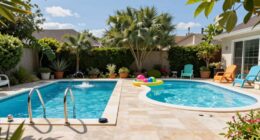

Managing pool regulations in the UK means understanding safety standards, permit requirements, and ongoing compliance to keep everyone protected and avoid legal issues. You need to make certain fencing is secure, safety signage is clear, and emergency equipment is accessible. Permits are necessary for construction and operation, and regular inspections are required to stay compliant. If you want to learn how to fully meet all requirements and secure your pool’s safety, keep exploring the key steps involved.
Key Takeaways
- Check local planning and health regulations for required permits before constructing or operating a pool in the UK.
- Ensure pool fencing is secure, of appropriate height, and complies with safety standards for preventing accidental falls.
- Display clear safety signage, depth markings, and ensure emergency equipment is accessible at all times.
- Regularly schedule safety inspections and maintain documentation to demonstrate ongoing compliance with regulations.
- Stay informed about updates to UK safety standards and legal requirements through official resources and local authorities.

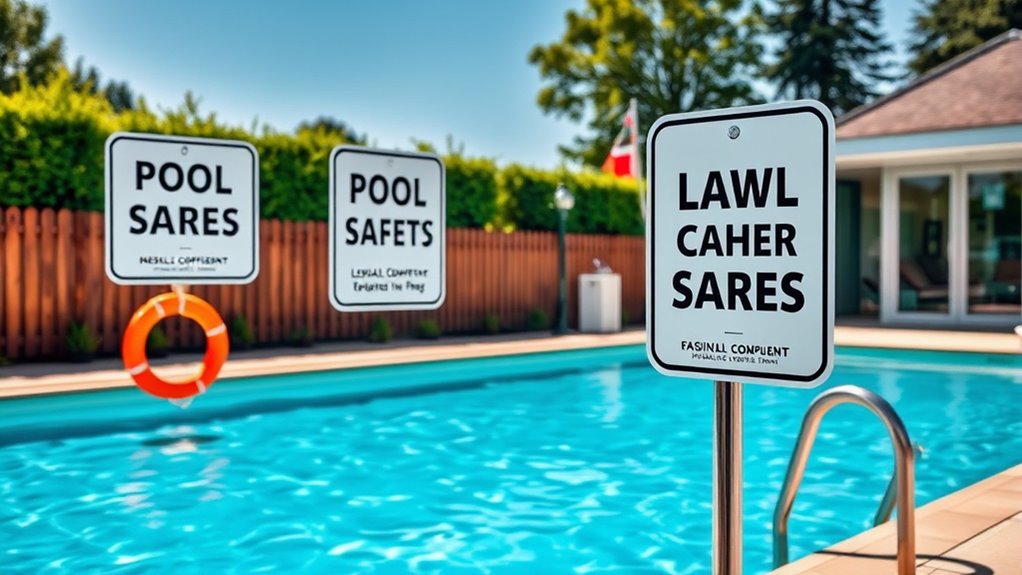
Swimming pools in the UK are subject to strict regulations designed to guarantee safety, hygiene, and environmental standards. If you’re planning to build, operate, or even use a pool, understanding these rules is essential to stay compliant and avoid penalties. One of the most critical aspects of pool regulation is adherence to safety standards. These standards are put in place to protect everyone who uses the pool, whether they’re swimmers, staff, or visitors. They cover various elements, including pool fencing, signage, emergency equipment, and supervision requirements. For instance, you need to ensure that fencing around the pool is secure and high enough to prevent accidental falls, especially if children are involved. Proper signage must clearly display safety instructions and depth markings. Emergency equipment such as life rings or poles should be easily accessible, and staff training on emergency response is often mandated. Meeting these safety standards isn’t just about compliance; it’s about creating a safe environment for all users. Additionally, staying updated on local regulations can help prevent unintentional violations as rules evolve over time.
Alongside safety standards, permit requirements play a vital role in the regulation process. You may need to obtain specific permits before constructing or operating a pool, depending on its size, location, and purpose. For example, commercial pools, such as those in hotels or leisure centers, generally require planning permission and health and safety permits from local authorities. Even if you’re installing a private pool, certain regulations might apply, especially if the pool is large or involves complex infrastructure. Failing to secure the necessary permits can result in fines, forced closures, or legal action. To avoid these issues, you should contact your local planning department early in your project. They will inform you about the permit requirements, application procedures, and any additional conditions you must meet. Keep in mind that permits often involve inspections during and after construction to ensure compliance with safety standards and building codes.
You should also be aware that permit requirements may include regular inspections and ongoing compliance checks. This means you’ll need to maintain documentation, records of safety inspections, and maintenance routines to demonstrate your commitment to meeting the regulations. Staying proactive and informed about the specific safety standards and permit requirements in your area can save you time, money, and headaches down the line. Whether you’re a homeowner, a business owner, or a facility operator, understanding and adhering to UK pool regulations ensures that your pool remains safe, legal, and enjoyable for everyone involved. Being aware of local safety standards is essential for maintaining compliance and ensuring the well-being of all pool users.
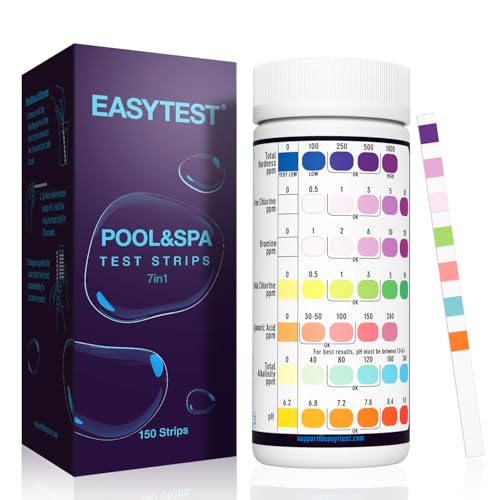
EASYTEST 7-Way Pool Test Strips, 150 Strips Water Test for Hot tub and Spa
- Includes 150 Test Strips: Enough for regular water testing
- Quick and Accurate Results: Soak for 1 second, read in 15 seconds
- 7-in-1 Water Testing: Tests Bromine, pH, Chlorine, and more
As an affiliate, we earn on qualifying purchases.
Frequently Asked Questions
Are Private Pool Installations Subject to the Same Regulations as Commercial Pools?
No, private pool installations aren’t subject to the same regulations as commercial pools. You still need to follow safety standards, maintain proper water quality, and guarantee regular pool maintenance to prevent health risks. While commercial pools face stricter rules, private pools require you to keep the water clean, monitor chemical levels, and ensure safety measures are in place. Staying compliant helps protect your family and ensures your pool remains safe and enjoyable.
How Often Should Safety Inspections Be Conducted on Residential Pools?
You should conduct safety inspections on your residential pool at least once a year—unless you enjoy the thrill of unexpected accidents. Regular pool maintenance isn’t just about keeping the water clear; it’s about meeting safety standards and preventing mishaps. Make sure to check the filtration system, barriers, and electrical components. Staying vigilant with inspections guarantees your pool remains a fun and safe oasis, not a hazard waiting to happen.
What Are the Penalties for Non-Compliance With UK Pool Regulations?
If you don’t comply with UK pool regulations, you could face serious liability penalties and legal consequences. Authorities may impose fines, orders to close your pool, or even criminal charges for safety violations. Non-compliance risks not just financial penalties but also legal action if someone gets injured. It’s vital to follow all regulations to avoid these consequences and guarantee your pool is safe and lawful.
Do Regulations Vary Between England, Scotland, Wales, and Northern Ireland?
Regional differences do exist in pool regulations across England, Scotland, Wales, and Northern Ireland, but overall, there’s a focus on regulatory consistency to make sure safety standards are maintained. You’ll find that while certain rules may vary slightly, the core safety and operational requirements remain similar across the UK. It’s important to check specific regional guidelines to ensure compliance, especially if you’re managing a pool or planning construction in different parts of the UK.
Are There Specific Requirements for Pool Fencing or Barriers in the UK?
A stitch in time saves nine, so you must know that UK pool safety requires specific fencing standards. You generally need a secure barrier around your pool, usually at least 1.2 meters high, to prevent unsupervised access. The fencing must be difficult to climb and have self-closing, self-latching gates. Always check local regulations, as requirements can vary slightly across England, Scotland, Wales, and Northern Ireland to guarantee you meet all safety standards.

Pool Test Strips with App 7 in 1 (150 Strips) Easy & Accurate Testing
- Large, easy-to-read strips: Extra long with large pads and color chart
- 7-in-1 pool parameter testing: Alkalinity, pH, chlorine, hardness, stabilizer, bromine, total chlorine
- Smart pool management app: Get personalized recommendations for pool balancing
As an affiliate, we earn on qualifying purchases.
Conclusion
By understanding and following the pool regulations in the UK, you become the captain steering your own aquatic ship through calm and stormy waters alike. Think of these rules as your lighthouse, guiding you safely to shore amid the waves of legal requirements. When you stay informed and compliant, you create a sanctuary where relaxation flows freely, and safety shines bright like the morning sun. Embrace the regulations—they’re your compass to a worry-free swimming experience.

LIME POOL 162 Pcs 7-Way Hot Tub, Spa & Pool Test Strips - Accurate Readings in 15 Seconds
- High Accuracy: ±3% precision in readings
- 7-in-1 Testing: Measures 7 water parameters
- Easy to Use: Dip for 2 seconds, read after 45 seconds
As an affiliate, we earn on qualifying purchases.

Highest Performing Design - DIY Solar Pool Heater Kit - 15-20 Year Life Expectancy (4-4x10 / 1.5" I.D. Header)
- High-Heat Performance: Captures more heat with advanced technology
- Efficient Water Flow: Eliminates flow barriers for optimal transfer
- Durable Construction: Built to last 15-20 years in harsh conditions
As an affiliate, we earn on qualifying purchases.