
This checklist is for pool owners who want to review practical water-safety equipment for a home pool. It covers ways to help limit access, check the water, and keep rescue equipment in mind. Choose equipment that suits your pool and the people who use it.
The sections follow six product slots: a fence, gate alarm, safety cover, rescue hook, life ring, and water test kit. Each one addresses a different part of pool care, so use the checklist to consider them individually rather than treating one item as a substitute for another.
Before choosing, compare each product’s stated dimensions and intended pool type with your setup. Confirm fit and compatibility from the product details, and consider where equipment will be kept and who will use it. Check the specifics before making a selection.
Pool Safety Fence
A fence is the checklist’s access-control slot. The listed pick is a 40-inch x 110-foot black-silver in-ground pool safety fence, so its stated dimensions are the first details to compare with the pool area you intend to enclose. Consider the layout, where the fence will begin and end, and whether the listed length suits that perimeter. The product name specifies in-ground pools; check the product information for any additional installation or compatibility details.
A common mistake is to focus on the material or appearance while overlooking the overall boundary and installation requirements. Measure the intended run carefully and account for the actual pool layout before deciding whether the listed length fits. Also check how the fence is installed, what surfaces it is designed for, and what access points are needed. Verify the dimensions and installation details against your own setup, and follow the manufacturer’s guidance. This pick fills the fence slot; it does not answer every question about securing a pool area, so consider the rest of the checklist as separate equipment choices.
What to look for:
- Compare the 110-foot length with the intended perimeter.
- Confirm the 40-inch height suits your needs and local requirements.
- Check that the product is intended for your in-ground pool setup.
- Review installation instructions and compatible surfaces.
- Plan where gates or other access points will be located.
40-inch x 110-foot Black-Silver In-Ground Pool Safety Fence

This durable metal pool fence provides a secure barrier around pools, patios, and gardens. It features reinforced stakes, modular panels, and a double-latch gate for safety and flexible layout options, suitable for outdoor use.
Pros:
- Sturdy metal construction with reinforced stakes for stability
- Modular panels allow flexible layout and easy disassembly
- Double-latch gate enhances safety and controlled access
Cons:
- Assembly may require some effort and basic tools
- Limited color options
- Designed primarily for in-ground pools, less suitable for above-ground setups
Best for: Pool owners whose in-ground layout suits the stated dimensions.
Not ideal for: Setups that need different dimensions or pool compatibility.
Bottom line: Measure the intended boundary and confirm installation details before choosing this fence.
Pool Gate Alarm
The gate alarm slot focuses on an alert at a pool access point. The listed pick is described as a smart pool alarm with an app for in-ground and above-ground pools, with adjustable settings. Those details make pool type and app use the first compatibility points to check. Confirm that the alarm is designed for the gate or access point where you plan to use it, and review which devices and setup steps are required for the app.
A frequent buying mistake is assuming that “smart” or “adjustable” automatically means the alarm will work with a particular gate, phone, or home setup. Check the product details for installation requirements, supported devices, and how adjustment works. Consider who will receive or respond to alerts and whether the setup is practical for your household. Check compatibility before relying on app features, and read the product instructions for the intended use. This alarm is one part of a broader checklist: assess the fence and cover separately, and keep rescue equipment in mind as well.
What to look for:
- Confirm compatibility with your in-ground or above-ground pool setup.
- Check how the alarm attaches to or monitors the intended gate.
- Review supported phones, app requirements, and setup steps.
- Understand which settings are adjustable and how to change them.
- Check the product instructions for alert behavior and intended use.
Smart Pool Alarm with App for Inground & Above Ground Pools, Adjustable Sensitiv

This pool safety alarm helps protect children and pets from accidental pool entry, suitable for inground and above ground pools up to 20×40 ft. It features electronic water detection, app connectivity for remote control, and multiple operation modes to reduce false alarms.
Pros:
- Effective water detection with adjustable sensitivity
- Works without app for immediate protection
- Durable, UV-resistant outdoor design
- Multiple operation modes to minimize false alarms
Cons:
- Requires batteries for operation
- Limited to pools up to 20×40 ft
- Alarm may be loud for some users
Best for: Pool owners seeking an app-based alarm for either pool type.
Not ideal for: Buyers whose gate or device setup is incompatible.
Bottom line: Verify gate fit, app support, and setup requirements before selecting the alarm.
Pool Safety Cover
A safety cover is the checklist’s cover slot. The listed pick is an in-ground pool safety cover for 23 × 43 ft rectangular pools, in blue. Its stated shape and dimensions are the essential starting points: compare them with the pool’s measured size and outline rather than relying on a rough estimate. The product name identifies a rectangular in-ground pool, so check the product information if your pool differs in shape or has features that affect fit.
A common mistake is choosing a cover from approximate measurements or assuming that a listed pool size guarantees a fit for every layout. Measure carefully and review the manufacturer’s sizing guidance, attachment method, and installation requirements. Check whether the pool’s steps, edges, or other features affect the specified fit. Confirm fit details before ordering, and follow the cover instructions for installation and use. This cover occupies its own checklist slot; assess fencing, alarms, and rescue gear separately as part of your overall equipment choices.
What to look for:
- Measure the pool and compare it with the stated 23 × 43 ft size.
- Confirm the pool is rectangular and in-ground as specified.
- Review manufacturer guidance for edge and feature compatibility.
- Check the attachment method and installation requirements.
- Follow the product instructions for fitting and use.
Inground Pool Safety Cover for 23 × 43 ft Rectangular Pools, Blue

This blue polypropylene mesh safety cover is sized 25 × 45 ft to fit a 23 × 43 ft inground pool. Its double straps and triple stitching are designed for durability, while the mesh allows water to drain and helps keep leaves and debris out.
Pros:
- Includes hardware and tools for installation
- Mesh design allows water drainage
- Double straps and triple stitching are designed for durability
- Helps keep leaves and debris out and restrict access by children and pets
Cons:
- Cover size is larger than the stated pool size, so dimensions should be checked before ordering
- No warranty details are provided in the product information
Best for: Owners of rectangular in-ground pools matching the stated size.
Not ideal for: Pools with different dimensions, shapes, or compatibility needs.
Bottom line: Measure the pool and confirm the manufacturer’s fit guidance before choosing this cover.
Pool Rescue Hook
The rescue hook slot covers equipment intended to extend reach around a pool. The listed pick combines a 12-foot rescue pole with a pool safety hook and an aluminum telescopic design. Check the product information to understand the pole’s adjustment range, how the hook attaches, and how the equipment is intended to be handled. Consider where it will be stored so it can be found when needed.
A common mistake is to treat a long reach or telescopic design as a reason to skip checking assembly and handling details. Review the product’s instructions, verify how the pole extends and locks, and make sure the hook attachment suits the intended use. Consider who may need to handle it and whether its size is practical for your storage location. Review the handling details before selecting this pick, and keep the manufacturer’s directions accessible. This item is a specific checklist choice for rescue equipment; it does not replace evaluating the other pool-safety slots.
What to look for:
- Confirm the stated 12-foot pole length suits your intended use.
- Check how the telescopic sections extend and secure.
- Review how the safety hook attaches to the pole.
- Consider storage space and access to the equipment.
- Read the manufacturer’s handling and use instructions.
Pool Safety Hook with 12Ft Rescue Pole, Aluminum Telescopic Pool Rescue Equipmen

This lightweight, rust-resistant aluminum rescue pole extends up to 12 feet, providing a durable and safe tool for emergency pool rescues. It features a secure twist lock, quick-assemble rescue hook, and compatibility with standard pool cleaning attachments, making it versatile for both safety and maintenance tasks.
Pros:
- Lightweight and durable aluminum construction
- Secure twist lock prevents accidental collapse
- Multi-function with compatibility for cleaning attachments
- Extendable from 5.6 ft to 12 ft for versatile use
Cons:
- May be less suitable for very large commercial pools
- Requires proper handling to avoid damage to locking mechanisms
Best for: Pool owners looking for a hook paired with a long pole.
Not ideal for: Those needing a different reach or storage profile.
Bottom line: Check reach, attachment, and handling instructions before choosing this rescue hook.
Pool Life Ring
A life ring fills the checklist’s buoyancy-equipment slot. The listed pick is a USCG Approved Ring Buoy; its name identifies the product and approval claim, but does not provide dimensions or storage details. Review the product information for those specifics and consider where the ring will be kept so it is accessible to the people who use the pool. Check the manufacturer’s directions for its intended use.
A common buying mistake is to assume that a product name alone answers questions about size, handling, or placement. Confirm the ring’s dimensions and any instructions that matter for your pool area. Think through how it will be stored and whether it can be reached without delay. Check the product details rather than inferring fit or handling from the approval wording. This checklist slot is for a ring buoy; review the rescue hook and other equipment as separate picks, and follow the product instructions for use and care.
What to look for:
- Confirm the product details and approval information.
- Review the ring’s dimensions and handling instructions.
- Choose an accessible, clearly considered storage location.
- Check the manufacturer’s directions for intended use and care.
- Make sure household members know where the equipment is kept.
USCG Approved Ring Buoy
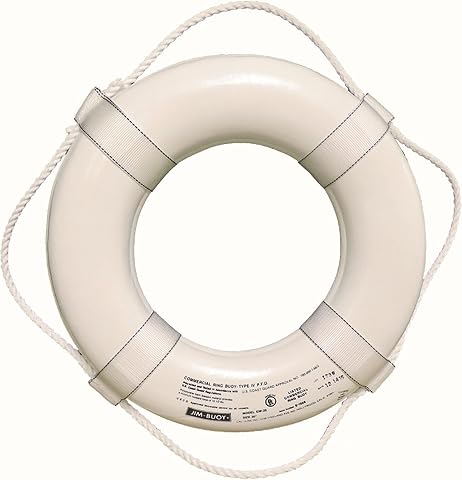
This G-series life ring is made of solid closed-cell foam, making it soft, resilient, and resistant to weather, temperature extremes, rot, and mildew. It features webbing straps and is USCG approved, ideal for safety and rescue purposes.
Pros:
- Made of durable, weather-resistant foam
- USCG approved for safety
- Resistant to rot, mildew, and temperature extremes
- Includes webbing straps for secure attachment
Cons:
- Rope color may vary, which could affect visibility
- Limited to 20-inch size, may not suit all rescue scenarios
Best for: Pool owners seeking a ring buoy for their equipment checklist.
Not ideal for: Buyers who need dimensions or details not confirmed in the listing.
Bottom line: Review the ring’s specifications and instructions, then plan accessible storage.
Pool Water Test Kit
The water test kit slot focuses on checking pool water. The listed pick is the ITS Pool Exact EZ Photometer Master Pool Test Kit, described as covering 10 parameters. Review the product details to see which parameters are included, how the photometer is used, and what supplies or steps are required. Consider whether the kit’s stated coverage matches the water-checking routine you want to follow.
A common mistake is to assume a parameter count tells you exactly what the kit measures or how results should be interpreted. Check the included test list, the instructions for collecting and testing a sample, and any guidance on reading results. Confirm what consumables or accessories are included and what may need separate attention. Check the test list and procedure in the product information before choosing. Use the kit according to its directions and consult appropriate pool-care guidance for interpreting results. This pick addresses water testing; it does not replace the other equipment choices in the checklist.
What to look for:
- Review which 10 parameters the kit tests.
- Check photometer operation and sample-testing instructions.
- Confirm included supplies and any separate consumables needed.
- Read how the kit presents and interprets results.
- Compare the test coverage with your intended pool-care routine.
ITS Pool Exact EZ Photometer Master Pool Test Kit, 10 Parameters

This digital photometer kit tests pool water across 10 parameters and displays results without requiring color matching. It includes a carrying case, cleaning brush, instructions, and 25 tests for each included parameter.
Pros:
- Digital readout eliminates color matching
- Tests 10 pool water parameters
- Includes 25 tests for each parameter
- Comes with a carrying case and cleaning brush
Cons:
- The description does not specify the photometer’s power source or display details
Best for: Pool owners seeking a photometer kit with broad stated coverage.
Not ideal for: Those whose required tests are not included in its parameter list.
Bottom line: Check the included parameter list and testing instructions before selecting this kit.
If you are prioritizing purchases, start by checking the pool’s measurements and access points so you can assess the fence and cover fit. Then review the alarm’s compatibility and app requirements. Consider the rescue hook and ring buoy as separate equipment choices, and compare the test kit’s parameter list with your water-checking needs. Fit and compatibility are useful first checks across the list.
Use each section to compare product details with your pool and household, and follow the manufacturer’s instructions for installation and use. A careful review of dimensions, setup, and included features can make the checklist easier to apply. Take it one slot at a time and choose equipment that matches your setup.