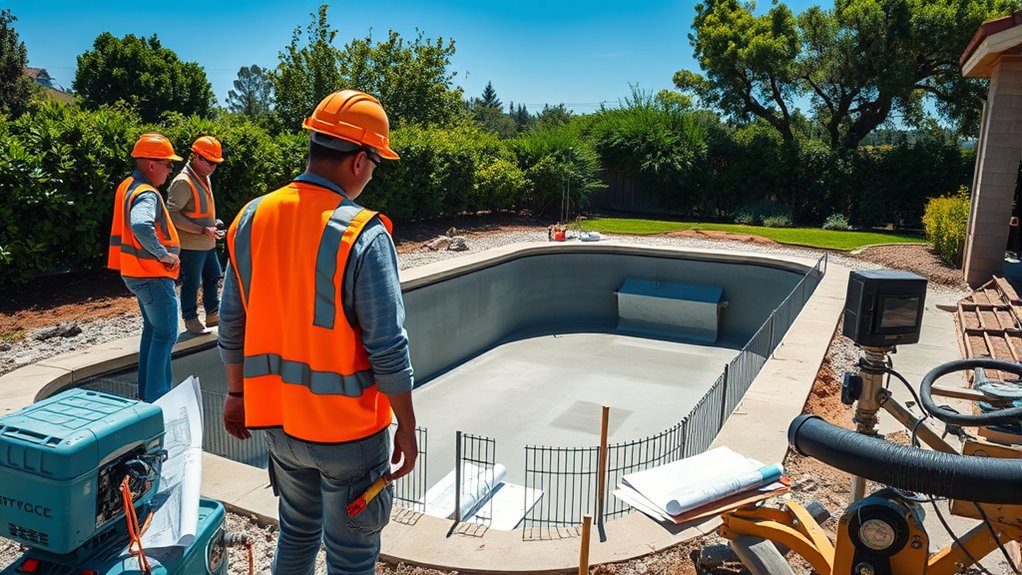

To guarantee your pool installation complies with safety standards and local laws, you need to obtain the necessary permits before starting construction. You’ll submit detailed plans covering location, design, electrical, and safety features for review and approval. During construction, inspections verify fencing, electrical work, and barriers meet requirements, helping prevent issues later. Following these steps protects your loved ones and streamlines approval. Keep exploring to discover how to navigate the permitting process smoothly and stay compliant.

Get pool and patio gear delivered free with Prime
- Fast, free delivery on millions of items
- Prime Video, Amazon Music and more included
- Member-only deals all year
Key Takeaways
- Obtain necessary permits by submitting detailed pool plans and designs for local authority review.
- Ensure plans meet safety standards, including fencing, electrical, and drainage requirements, before approval.
- Schedule inspections during construction to verify fencing, electrical wiring, and barrier compliance.
- Comply with safety regulations such as gate security, electrical grounding, and safety devices to avoid penalties.
- Passing inspections guarantees legal operation, safety, and adherence to local codes for your pool project.
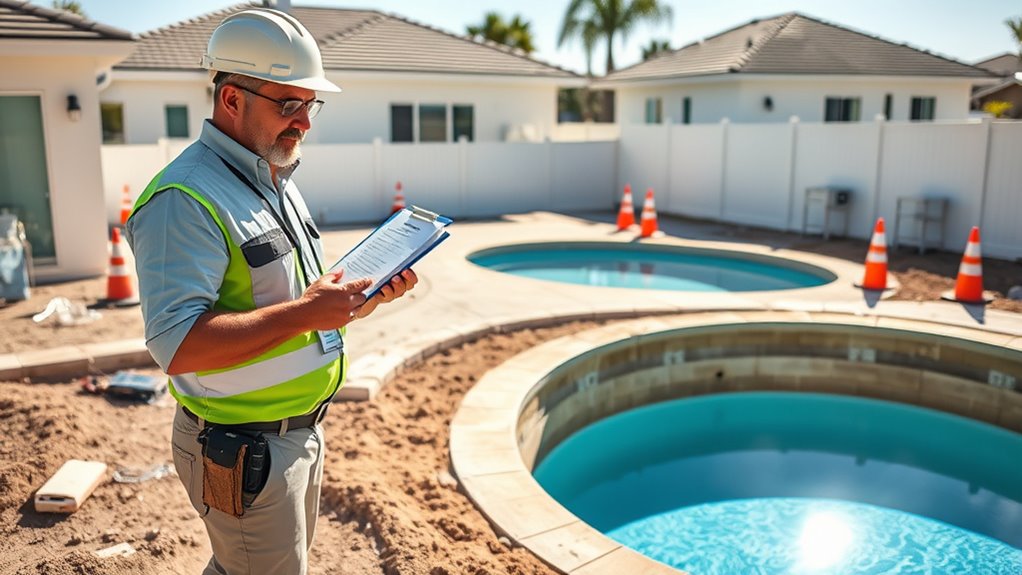
Installing a pool requires more than just digging a hole and filling it with water; it also involves maneuvering permit requirements and inspections to guarantee safety and compliance. One of the most important aspects of this process is understanding the local regulations that govern pool construction. These rules are designed to ensure your pool is safe for everyone and to prevent accidents or legal issues down the line. Before starting, you need to research your city or county’s specific codes related to pool safety, fencing, electrical wiring, and drainage. Ignoring these regulations can lead to costly fines or the need to redo work that doesn’t meet code. By familiarizing yourself with local requirements upfront, you can plan accordingly and avoid delays.
Getting the necessary permits is a crucial step in pool installation. Typically, you’ll need to submit detailed plans that show the location, size, and design of your pool. These plans often require drawings, safety features, and details about electrical and plumbing systems. Once you submit your application, local authorities will review your plans to verify they meet all safety standards and regulations. It’s common for inspectors to visit your property during different phases of construction to ensure the work complies with approved plans and regulations. These inspections focus on several key safety aspects, such as fencing height and gate security, proper electrical grounding, and the integrity of pool barriers to prevent unauthorized access, especially for children. Ensuring compliance with essential safety standards is vital for the safety of all pool users.
Adhering to pool safety standards isn’t just about passing inspections—it’s about protecting your loved ones and neighbors. Local regulations often specify fencing requirements, including height and self-closing gates, to prevent accidental falls or unsupervised access. Electrical inspections ensure that all wiring is safe, grounded properly, and installed by qualified professionals. Drain covers, pool alarms, and safety signage may also be mandated to help prevent accidents. Skipping or rushing through these steps can result in legal penalties or unsafe conditions that put everyone at risk. It’s in your best interest to follow the permit process carefully and work closely with local inspectors to address any issues they identify.
As an affiliate, we earn on qualifying purchases.
Frequently Asked Questions
How Long Does the Permit Approval Process Typically Take?
The permit approval process usually takes between one to four weeks, depending on your local regulations and the complexity of your pool project. Your permit timeline can be faster if you submit complete, accurate paperwork and meet all zoning requirements. To avoid delays, make certain all documents are prepared correctly. Keep in touch with your local permitting office to track your application’s progress and address any issues promptly.
Are There Specific Inspections Required During Different Pool Installation Phases?
You’ll need to undergo several inspections during your pool installation to guarantee safety and compliance. These include a foundation inspection, plumbing check, and final safety inspection. Each phase has a specific inspection checklist that must be completed meticulously. Think of these inspections as the backbone of your project, holding everything together. Pool safety is paramount, so don’t skip any steps — it’s the key to a worry-free, sparkling oasis.
What Are Common Reasons for Permit Application Delays?
Permit delays often happen because of permit myths and inspection myths you might believe, like thinking permits are unnecessary or inspections are optional. These misconceptions can cause you to overlook required documentation or deadlines. Other common reasons include incomplete applications, incorrect plans, or delays in approval from authorities. To avoid these issues, double-check all paperwork, understand local regulations, and stay proactive in addressing any questions from inspectors or permit offices.
Can I Start Construction Before Permits Are Approved?
You shouldn’t start construction before your permits are approved, as doing so can lead to permit violations and hefty fines. Even if some inspection exemptions apply, unauthorized work can cause delays or require costly corrections later. Always wait for approval to guarantee your project complies with local regulations. Starting prematurely risks legal trouble and setbacks, so it’s best to wait until your permits are officially issued and inspections are scheduled.
Are There Any Post-Installation Inspection Requirements?
Yes, there are post-installation inspection requirements. These inspections guarantee your pool meets safety standards and zoning compliance, preventing hazards and legal issues. You might need a final inspection to verify proper fencing, equipment, and drainage systems. Skipping this step risks safety violations and potential fines. Always check with local authorities to confirm specific requirements, so your pool remains safe, compliant, and enjoyable for everyone.
As an affiliate, we earn on qualifying purchases.
Conclusion
Finding permits and inspections might seem like a maze, but think of it as paving the path to your perfect backyard oasis. By staying informed and proactive, you’ll make certain your pool project flows smoothly from start to finish. When you adhere to local guidelines, you’re building not just a pool, but peace of mind. Remember, each permit and inspection is a stepping stone toward turning your backyard dream into a safe, sparkling reality.
As an affiliate, we earn on qualifying purchases.
pool inspection safety equipment
As an affiliate, we earn on qualifying purchases.
As an affiliate, we earn on qualifying purchases.
Fall Picks
fall essentials
As an affiliate, we earn on qualifying purchases.