TL;DR

Get pool and patio gear delivered free with Prime
- Fast, free delivery on millions of items
- Prime Video, Amazon Music and more included
- Member-only deals all year
A Homes & Gardens report says homeowners should inspect trees after leaves fall and before winter storms, when deadwood and structural problems may be easier to spot. Arborists quoted in the report advise contacting a professional for major hazards, including large limbs, significant leaning or possible root failure.
A Homes & Gardens report is urging homeowners to inspect trees before winter storms, when wind, snow and ice can put added stress on weak limbs and potentially hazardous trees. Arborists quoted in the report recommend checking trees after deciduous leaves fall, and seeking professional help for serious structural concerns that could threaten people or property.
The report says a visual check in fall can help identify dead or damaged branches and other warning signs before winter weather arrives. With foliage gone, some problems in the canopy may be easier to see. The inspection is intended to spot potential hazards over homes, driveways, vehicles and walkways—not to suggest that every tree needs pruning or removal.
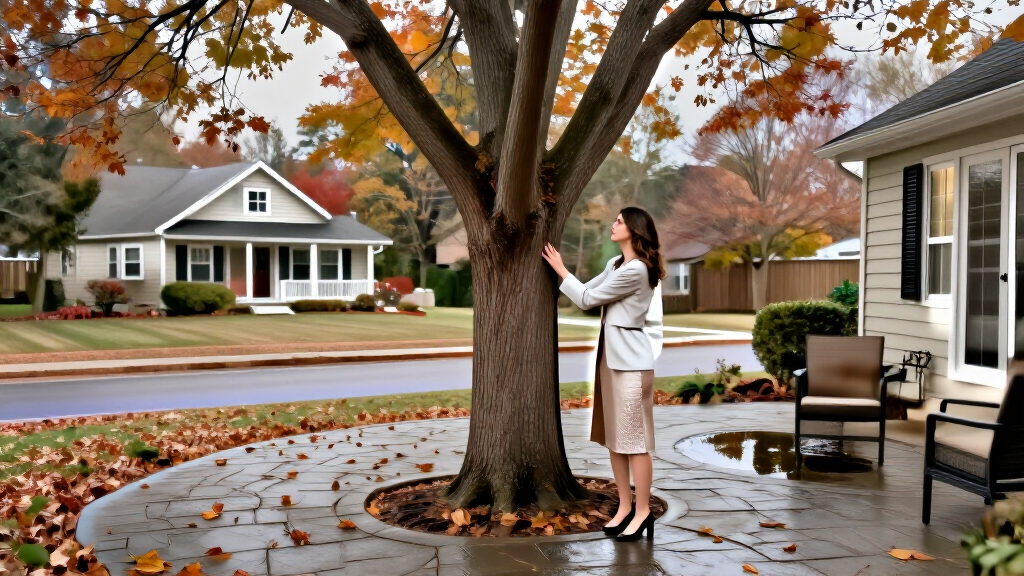
Levi Williams, a Tree Risk Assessment Qualified ISA Certified Arborist with Tree Scouts Tree Service, advises homeowners to inspect trees ahead of incoming storms. The report lists signs to look for, including hanging limbs, cracks, weak branch unions, fungal growth and changes in a tree’s lean. At ground level, it says, cracks, mushrooms near the base or roots lifting on one side may warrant attention.
Homeowners can make a visual assessment from several safe vantage points, but the report says larger or more complex problems should be assessed by a qualified professional. Small branches may be within reach of appropriate hand tools, but high limbs, large branches and unstable trees can pose risks during attempted pruning. The article does not provide a location-specific inspection schedule or a formal assessment of any individual tree.
Storm Exposure Makes Weak Trees Riskier
Finding a problem before severe weather can give homeowners time to decide how to address it, rather than discovering damage after a limb falls. The report identifies possible consequences including harm to people, homes, vehicles and paths. Snow and ice add weight to branches, while strong winds can place pressure on limbs that are already weakened.
The advice is also a reminder that a visible defect does not automatically mean a tree should be cut down. Basil Camu, co-founder of Leaf & Limb, advises considering what a branch or tree would hit if it fell. For trees near people or property, the appropriate response may involve professional structural pruning or other stabilization, depending on the assessment. The source does not quantify how much an inspection reduces damage risk or establish that it prevents storm-related failures.
As an affiliate, we earn on qualifying purchases.
Why Fall Is a Useful Inspection Window
The article frames the check as part of fall tree care, after leaves have begun to drop and before winter conditions make access and repair more difficult. Deciduous trees without foliage can offer a clearer view of branches, although the report does not claim that every defect will be visible from the ground.
Winter preparation can also include protecting young trees, which the report describes as less fully hardy, and applying mulch around roots or using a shield against snow damage. These measures address different concerns from an inspection for structural hazards. The report distinguishes routine visual checks from more technical tree-risk assessment by a TRAQ-qualified arborist.
“I would always advise homeowners to do basic inspections of their trees before incoming winter weather storms.”
— Levi Williams, Tree Risk Assessment Qualified ISA Certified Arborist with Tree Scouts Tree Service
As an affiliate, we earn on qualifying purchases.
A Visual Check Has Limits
The report offers general seasonal guidance, not an inspection of a specific property or a guarantee that a tree is safe after a visual check. It does not identify a geographic area, a particular storm forecast or a universal deadline for inspections. Whether a defect requires pruning, support or removal depends on the tree and its surroundings.
Some signs—such as cracks, fungal growth or a new lean—may need expert interpretation. The report does not set out detailed instructions for working at height or establish that homeowners can safely assess every canopy themselves. It also does not provide data on the likelihood of a tree failing, the cost of professional work, or how much risk is reduced by pruning.
As an affiliate, we earn on qualifying purchases.
Arrange Help for Serious Hazards
Homeowners can start with a ground-level visual check of trees and branches near buildings, vehicles and pedestrian areas. If they see large dead limbs, substantial cracks, a newly leaning tree or signs of root movement, the report advises contacting a professional arborist rather than attempting major pruning themselves. A qualified arborist can assess the specific tree and recommend whether work is needed and when.
Any immediate threat to people or property should be treated as a safety matter, not a do-it-yourself pruning project. The source does not name a specific follow-up date or additional reporting milestone; the practical next step is to address identified hazards before winter weather arrives.
As an affiliate, we earn on qualifying purchases.
Key Questions
When should homeowners inspect trees for winter hazards?
The report recommends checking in fall, after leaves begin to drop and before winter storms. It does not give a fixed date, since timing and weather vary by location.
What warning signs should I look for?
The report lists dead or hanging branches, cracks, weak branch unions, fungal growth, a new lean and roots lifting from the ground. These signs may call for a professional assessment, especially near people or property.
Should I remove a tree with a defect?
Not necessarily. The report says the response depends on the risk and what the tree could hit if it failed. An arborist can advise whether pruning, stabilization or removal is appropriate.
Can I prune a large or high branch myself?
The report says small dead or damaged branches may be handled with suitable tools, but recommends professionals for large, high or structurally significant limbs. It does not provide instructions for working at height.
Source: rss
Fall Picks
fall essentials
As an affiliate, we earn on qualifying purchases.